It is one of the most disorienting small betrayals in beauty. Nothing in your routine has changed, but the face looking back at you at two in the afternoon has gone textured around the nose, tight across the cheekbones, and oddly flat. You buy a new foundation. It does the same thing. You buy a setting spray. It does the same thing, glossier.
The reason is usually not the makeup at all. It is what the makeup is being asked to sit on. Skin's surface changes — with the season, with age, with a retinol you started in September, with a week of bad sleep — and the base you built for last year's skin is now being applied to a slightly different canvas.
Start with the ten minutes before, not the makeup bag
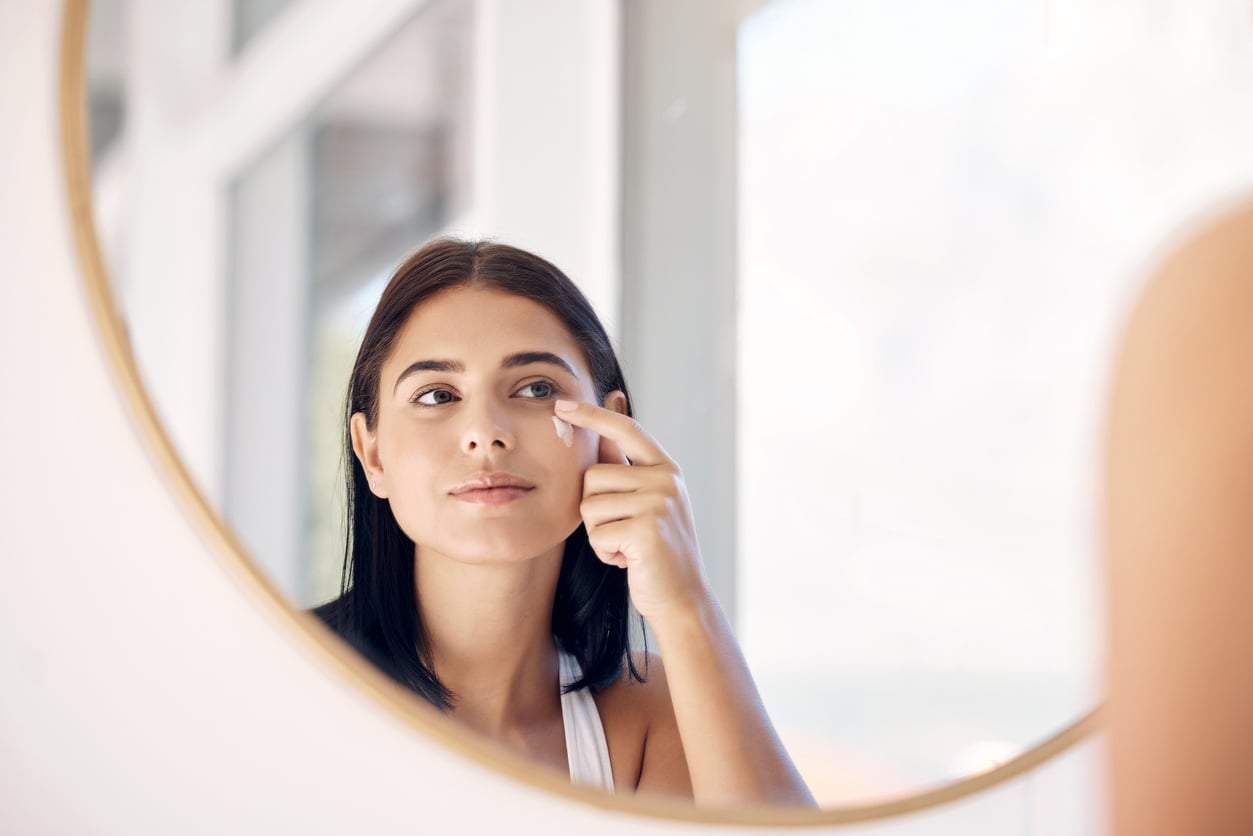
If you change one thing, change your prep timing. Most of us moisturise and start applying base within about ninety seconds, which is far too soon. A moisturiser that has not fully absorbed behaves like a slip layer: foundation slides across it, pools in the creases and separates by lunchtime.
Give it three to five minutes. Brush your teeth, find your shoes, answer one message. Then apply. People who do nothing else but this report their base looking noticeably more settled, and the reason is simply that they stopped mixing two wet layers together.
The second prep change: if skin feels tight or looks dull, the issue is dehydration rather than dryness, and richer cream often makes it worse rather than better. A hydrating layer underneath — a watery essence, a hyaluronic serum, even a damp-skin application of your usual moisturiser — puts water where the surface needs it, and foundation stops clinging to the driest patches.
Powder is often the culprit, not the cure
When makeup starts looking off, the instinct is to set it harder. This is usually the wrong direction. Skin that has lost a little surface plumpness reads every powdered area as texture, and all-over powder flattens the light that used to bounce off cheekbones and brow bones and made the whole thing look alive.
Move to targeted setting. Powder only where you actually get movement and shine: the centre panel of the nose, a small triangle under the eyes if concealer travels, and the inner part of the chin. Leave the cheeks, the outer face and the temples bare. If you already set everything and hate the result, a light mist afterwards and gentle pressing with clean fingertips will partly reverse it.
Rethink the formula and the amount
Full-coverage matte foundations are the least forgiving thing you can apply to skin with any dryness, and they tend to be what we reach for when we feel less confident about our complexion — a loop worth breaking. Cream and serum textures, applied thinly and built only where you want them, look more like skin because they let some of your own surface show through.
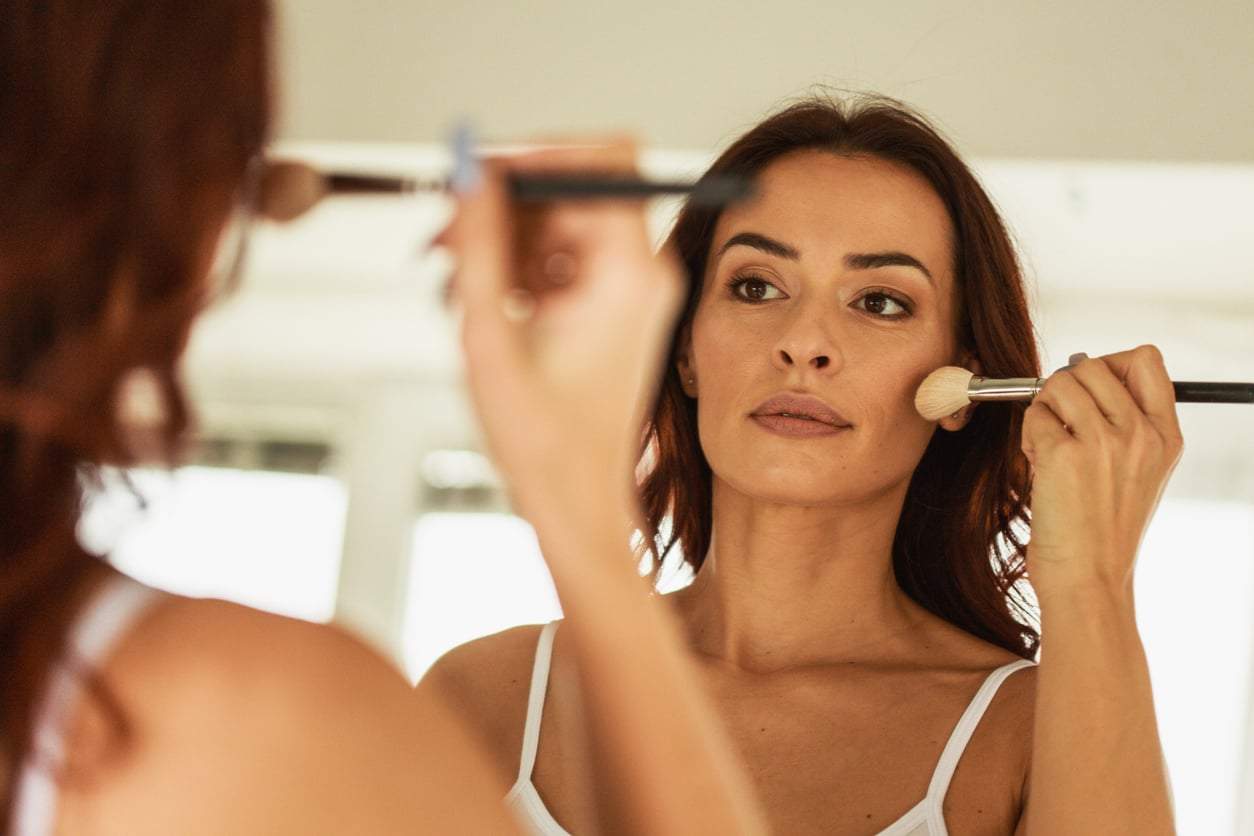
On amount: most of us use roughly twice what we need. Try a pea-sized quantity for the whole face, pressed in with a damp sponge or fingers rather than buffed in circles with a brush, then add a second small amount only around the nose and chin. Cream blush and cream bronzer over that will look more natural than powder versions, and they move with your face rather than sitting on top of it.
One more small thing that makes a large difference: wash your brushes and sponges. Product build-up changes how tools deposit and drag, and dirty sponges are genuinely the reason plenty of "bad foundation" is bad.
Why does my foundation settle into lines by midday?
Usually a combination of too much product, too much powder, and applying onto skin that had not finished absorbing its skincare. Thin the layer, powder only the centre of the face, and give your moisturiser several minutes before you begin. If it still travels, look at your concealer: heavy, thick formulas under the eyes are the most common offenders, and a sheerer one patted on with a fingertip often solves it outright.
Do I need a primer, or is it my moisturiser?
Nine times out of ten a well-chosen moisturiser, properly absorbed, does what people hope a primer will do. Primer earns its place when you have one specific problem in one specific zone — visible pores around the nose, or a T-zone that goes shiny by eleven — in which case use it there and nowhere else. A whole extra layer across the entire face mostly adds slip, and slip is what made the makeup move in the first place.