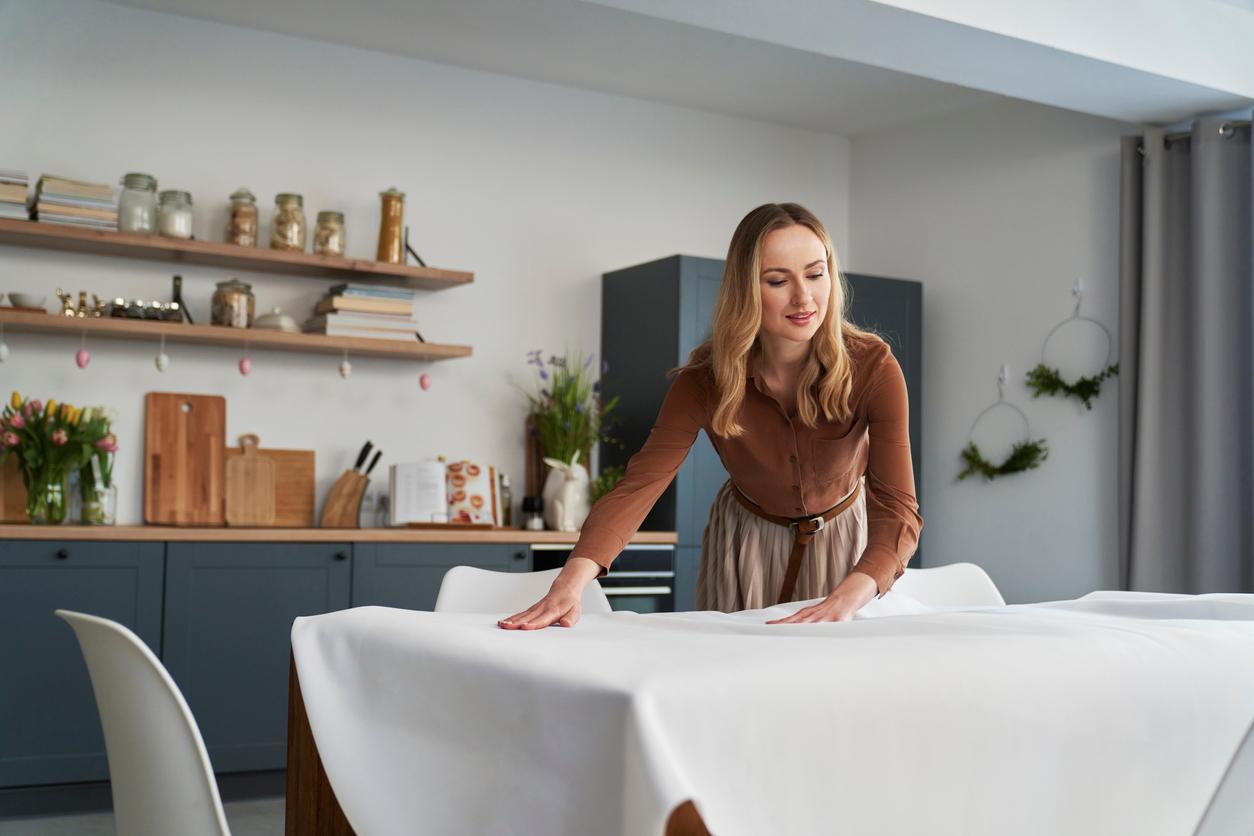
There’s something deeply calming about a tidy space, a room that looks like Marie Kondo herself has been there. But if you look a little closer—not just at the angle of the throw pillows, but at the person living in that space—you might discover something quite different. Sometimes, outer order isn’t a reflection of inner harmony, but a form of protection. A carefully built little fortress against life’s storms.
Minimalism – Practical Choice or Inner Need?
The blanket on the couch is perfectly placed like in a home decor magazine, there are no random items on the shelves, and the kitchen counter always shines… Walking into such a home, you immediately admire it and think, “Everything must be in order here.” But the truth is often more complex.
Our home is minimalist in many ways. Not just because we like the simple, clean style—though that’s part of it—but because we’ve consciously designed it to be easy to live in. If someone drops by unexpectedly, a quick tidy-up hides any mess, and daily cleaning takes less than 10 minutes. But looking deeper, I see there’s more behind this mindfulness.
Memories of my childhood’s chaotic spaces, the inherited closets that swallowed belongings, and constant disorder live deeply within me—and they probably influence the kind of environment I create around myself now.
It no longer surprises me that the urge to clean hits strongest when something’s stirring inside me. When I’m a bit fed up with everything, when I don’t feel like talking to anyone, or when a recent therapy session really made an impact. That’s when decluttering and organizing become my focus—and in that process, not only does the space refresh, but so do I.
Order as a Lifeline
Psychology tells us this isn’t a coincidence. Research shows that excessive external control often masks inner uncertainty, anxiety, or unresolved past experiences. Cleaning, organizing, and sticking to strict daily routines aren’t just habits—they’re coping strategies. By creating order outside, we try to influence what feels uncontrollable inside.
I have a friend whose life was scheduled like a military routine. Monday was grocery day, Tuesday laundry, Wednesday vacuuming, Thursday ironing. Nothing could be skipped, or it would throw off the whole week—and maybe their peace of mind. Back then, I marveled at this discipline, but now I see it differently. For them, it wasn’t just organization—it was about preserving a delicate inner balance.
One of the most interesting studies on this topic appeared in the American Personality and Social Psychology Review. Experts found that controlling your physical environment can temporarily reduce anxiety, but it doesn’t replace emotional processing in the long run. This doesn’t mean everyone who loves order is secretly struggling, but if you recognize yourself here, it might be worth some gentle self-reflection.
Childhood Imprints – Adult Patterns
I’ve noticed that the past often sneaks into our present unnoticed. Childhood memories of chaos—whether emotional or physical—continue to affect us as adults. In these cases, order isn’t just about aesthetics; it’s about seeking predictability and safety.
For me, this desire showed up (though unconsciously at first) as wanting a home that’s clear, predictable, and uncluttered. Not because I experienced unmanageable trauma—my childhood wasn’t extremely difficult—but chaos often surrounded me. Constantly adapting sparked a need for something different in my adult life.
Here’s the Key: Order Is Good, But Why You Cling to It Matters
Order soothes and inspires. But ask yourself: why do you need it? Is it truly helping you stay balanced? Or is it a distraction from something you don’t want to face? Is it a task you can control when other things feel overwhelming?
Having a little chaos at home or in life isn’t a problem—it’s human. If you don’t mind a day of dirty dishes or a bit of clutter, you’re probably doing just fine with yourself. But if it stresses you out when a paper isn’t exactly in place, it’s worth asking: what’s really going on inside? What does that reveal?
Order serves you when it frees you, gives you space and momentum—not when it binds or restricts you. (Of course, the other side is interesting too: I know people who see tidying and cleaning as a waste of time and happily skip it.)
What I’ve learned over the years is that true peace can’t be boxed in. A spotless kitchen counter and a “no clutter allowed” mindset only offer a false sense of security if there’s a storm raging inside. When I allow myself to be a little messy—inside or out—I’m telling myself it’s okay not to be perfect all the time. And that’s more freeing than the cleanest living room ever.