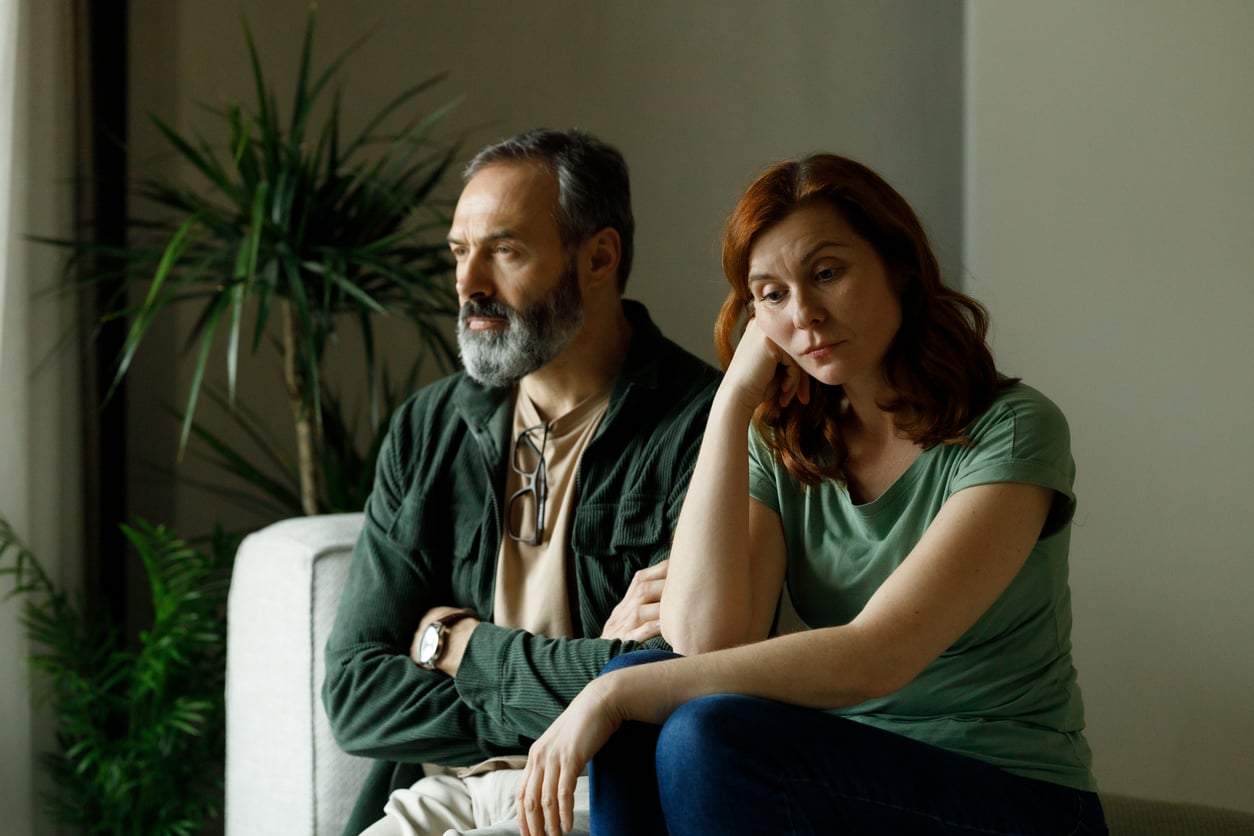
Many women live in relationships that may seem perfectly "normal" from the outside, but inside, daily life is marked by constant tension and fear. Emotional abuse leaves no visible scars, yet it deeply wounds self-esteem, sense of safety, and the whole personality. One of the most common forms is constant, controlling yelling—when a partner reacts with outbursts over every little thing, making it impossible for anyone at home to feel at ease.
Five women share honestly what it’s like to live with this—in the hope that others will recognize: it’s not normal to come home with a knot in your stomach every day.
"He never hits me, he just always yells"
(Nóra, 34 years old)
When I talk about my husband to others, I always make excuses for him. Because he’s really "not a bad person," "he’s never hit me," "he’s just a tense type." But for years now, I’ve come home with a knot in my stomach, knowing he’ll explode over any little thing. If the shoes aren’t exactly where he likes them, if I forget to buy his favorite yogurt, if the child doesn’t say goodbye loudly enough. He yells about everything.
Our whole house is filled with tension. My son doesn’t even react when his dad shouts; he just quietly withdraws. And I blame myself for tolerating it. The worst part is that others think I’m lucky—"at least he doesn’t drink," "at least he doesn’t hit." I’m already thinking about divorce, but for now, financial obstacles keep me from having anywhere to move.
"I even plan when to flush the toilet so I don’t upset him"
(Kata, 41 years old)
It’s unbelievable, but I’ve gotten to the point where I calculate when to flush the toilet so I don’t disturb him. My husband is constantly tense, and every noise, every little mess sets him off. He yells. Swears. And blames me for everything.
At first, I thought it would pass—that he was just stressed. But years went by, and everything only got worse. Now I wake up each morning quietly, moving silently around. The kids have learned: when dad’s home, no jumping, no loud laughter, no questions.
This isn’t living. It’s surviving. And the saddest part is my friends stopped inviting me because I always make excuses—I don’t want anyone to witness how he talks to me.
"His voice hurts more than any slap"
(Anikó, 38 years old)
I used to think verbal abuse wasn’t so "serious." I thought I was just too sensitive. But being yelled at every day, made to feel worthless, completely broke me down. There was a time when I talked back. Now I just stay silent. I don’t argue anymore. I don’t even cry. I just stand there like a wall, trying to be invisible.
Every day starts and ends with stress. I don’t know when it became like this. Maybe it always was, but I had more patience before. Now I know it’s abuse when someone controls you with their voice. And after a while, you don’t know who you are—just a person who’s always afraid of something.
"He says he only yells because I matter to him"
(Éva, 44 years old)
Classic emotional manipulation. He says if he didn’t care, he wouldn’t get so upset. That he only yells because I matter to him and it hurts when I make mistakes. For a while, I believed it. Then the yelling came more and more often—for cooking, for how I raise the kids, for replying late to a message.
I’m starting to believe it’s all my fault. That I really mess everything up. But deep down, I know this isn’t normal. That a relationship shouldn’t be like this. And yet, here I am, years later. Because on good days, he can be so kind. And I always hope he’ll be like he used to be. But I see that face less and less.
"My daughter once asked: why does dad yell at you if you’re not bad?"
(Laura, 36 years old)
That was the sentence that broke me. Until then, I somehow survived—I was the "understanding wife." But when my six-year-old daughter tearfully asked me this, I realized what I tolerate, she learns too. My husband has no patience. If things aren’t the way he imagined, he gets angry, and the yelling starts.
But he doesn’t yell like someone losing control—it’s cold, calculated anger. Like he knows this is how he controls us. He doesn’t hurt me physically, but inside, I’ve long since fallen apart. And now that my daughter is starting to feel it too, I know I have to take action. I don’t want her to believe love comes with fear.