I have organised my wardrobe perfectly at least six times. Colour-coded rails, matching hangers, the whole cinematic reveal. And every single time it degraded within a fortnight into the same reality: three-quarters of the rail untouched, and the same eleven items cycling through the wash. The problem was never my discipline. It was that I kept organising the wardrobe I imagined owning instead of the one I actually wear.
Start with your last two weeks, not with the rail
Before you touch anything, do the least glamorous step. Think back over the last fortnight — school runs, office days, one dinner, two weekends — and write down what you genuinely wore. Not what you'd like to have worn. Most people land on somewhere between eight and fifteen items, plus underwear and one or two pairs of shoes.
That list is your brief. Everything in the wardrobe now falls into three honest categories: things on the list, things that serve a real occasion you actually attend, and things that exist for a version of your life that isn't happening. You don't have to be ruthless with the third group today. You just have to stop letting it occupy prime real estate.
Zone by frequency, not by category
The single change that made mine stick: I stopped grouping by type and started grouping by how often I reach for something. The easiest-to-reach third of the rail — eye level, front and centre, no stretching — holds the fortnight list. Nothing else. Middle zone: real-occasion pieces, the wedding-guest dress, the interview blazer, the proper coat. Top shelves and far ends: out of season, sentimental, or genuinely once-a-year.
It looks slightly chaotic at first because your favourite jeans now hang next to your favourite shirt rather than with the other trousers. Give it a week. Getting dressed becomes faster because your hand goes to one zone instead of scanning the whole room. And the zoning does the editing for you: anything that sits in the middle zone untouched for two seasons is quietly telling you something.
Decide hanging versus folding by fabric behaviour
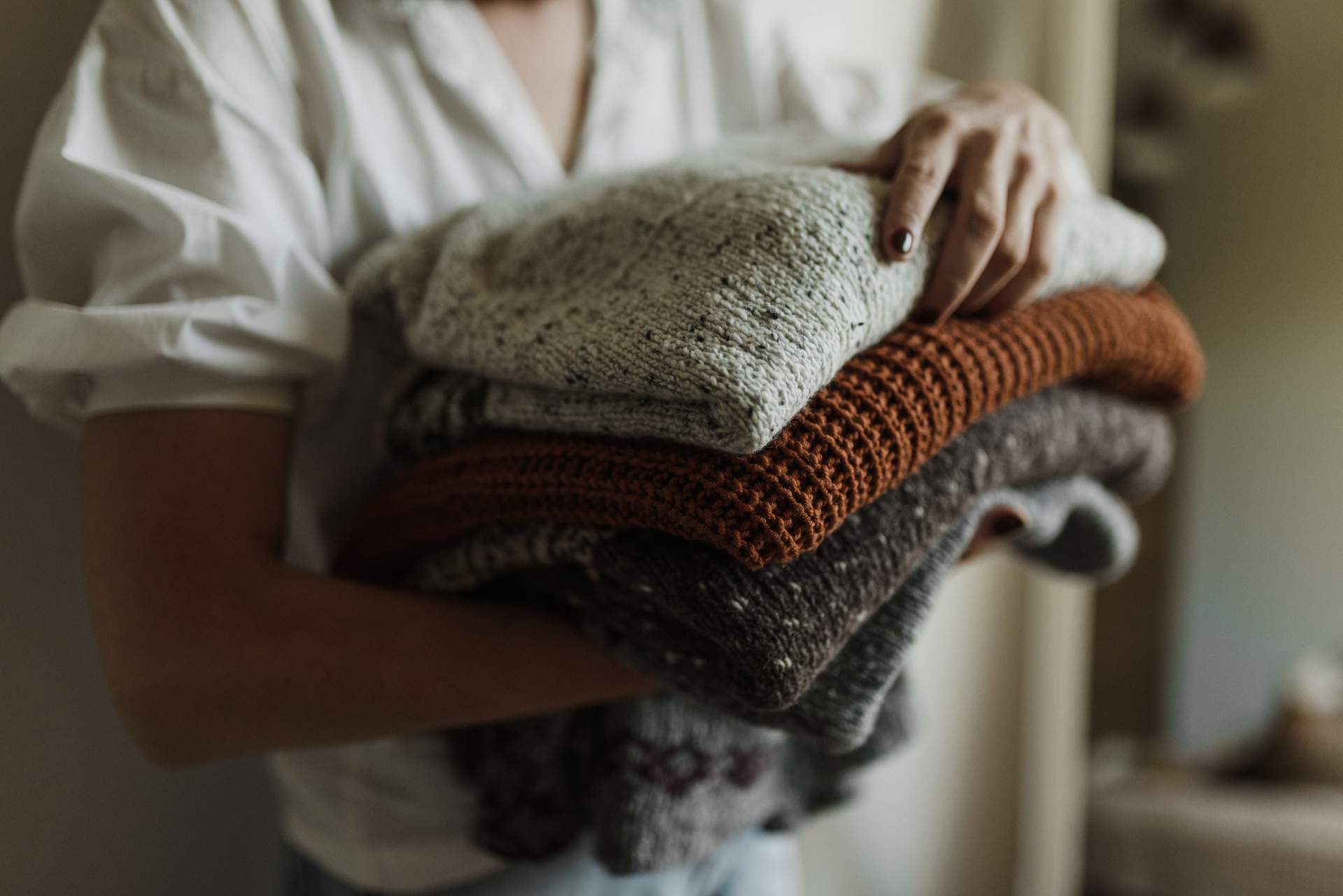
Rail space is the resource you're short of, so spend it on things that suffer when folded: anything tailored, linen, silky blouses, dresses, structured jackets. Knitwear, jersey, jeans and T-shirts do better folded, and they do far better folded in shallow stacks than deep ones, because a stack more than four items high means you'll only ever wear the top two. Filing tops vertically in a drawer, spines facing you, sounds fussy and takes about four minutes per drawer.
Two small things carry disproportionate weight. Uniform hangers, even cheap ones, gain you visible centimetres and stop the rail looking like a jumble sale. And a hook or small tray for the in-between clothes — worn once, not dirty — prevents the chair pile that eventually swallows the whole system.
Build in the exit route
Every wardrobe needs somewhere for the undecided. Put a labelled box on the top shelf or under the bed and use it for the maybes: fine, but you keep skipping them. Date the lid. Anything still in there when the season turns has answered its own question, and you can pass it on without the guilt of a snap decision.
Then set one maintenance rule that requires no willpower. Mine is that I re-hang whatever came out of the wash into the front zone, so the front zone constantly updates itself to reflect what I'm actually wearing this month. The organising becomes a by-product of laundry rather than a project.
How do I organise a small closet with only one rail?
Halve your visible wardrobe by season and store the other half elsewhere — under the bed, in a case on top of the cupboard — because a single rail can only really serve one climate at a time. Then add a second tier: a slim hanging rail or a set of S-hooks under the existing one turns dead vertical space beneath short tops into a whole extra row for skirts and trousers.
Should I organise clothes by colour or by type?
Colour is the prettiest and the least useful on a busy Tuesday morning, because you look for a shirt, not for beige. Organise primarily by frequency, then by type within each zone, and use colour only as the final sort inside a type — all the white shirts together, all the dark trousers together. That way it looks calm and still answers the question you're actually asking at seven in the morning.