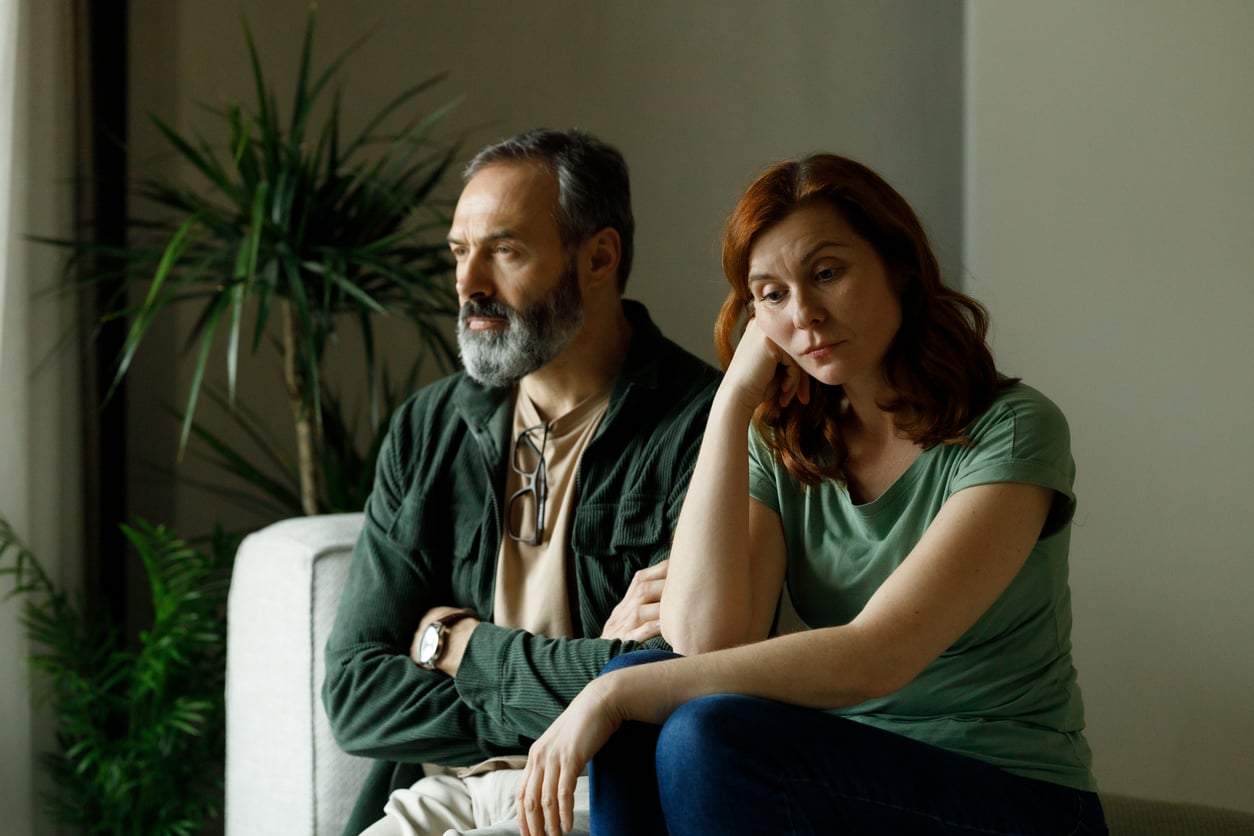
It doesn't happen because women are weak. It happens because so many of us were taught — quietly, persistently — that love means putting yourself last.
The trap of overcompensating
I am, by nature, someone who desperately wants to keep the peace. So when my marriage felt off-balance, my instinct was to try harder. After an argument, when my husband would punish me with days of cold silence, I didn't pull back — I doubled down. I cooked his favorite meals, baked, made myself look nice, smiled when I didn't feel like it.
When he was in a bad mood, I cleaned the apartment top to bottom because I knew he liked things spotless. I fixed my hair, put on makeup, performed cheerfulness I didn't feel. But none of it created closeness. It created a hierarchy. He didn't love me more — he just found me useful. Without realizing it, I had built a dynamic where one person dominates and the other quietly serves.
It happens so gradually you don't even notice
Losing yourself in a marriage rarely happens all at once. There's no single moment you can point to and say, "That's where it went wrong." It's more like a slow erosion — a little piece of yourself chipped away each time you stay quiet, each time you back down, each time you decide it's not worth the fight.
And the saddest part? I didn't even recognize it as self-betrayal. I called it maturity. "Marriage is about compromise," I told myself — right up until I realized I was the only one compromising, quietly dissolving inside a relationship that was slowly breaking me. By the time I understood the price I'd paid, I wasn't even angry anymore. Just exhausted.
When sacrifice becomes survival
We're told that marriage requires sacrifice. I took that message so seriously that my commitment quietly turned into mere survival. I had always been outspoken — someone who stood her ground. But somewhere along the way, I became convinced that wasn't compatible with being a good wife. I didn't want to be seen as difficult or nagging.
So when I could have screamed, I went silent instead — for the sake of peace. But that silence wasn't acceptance. It was resignation. And the result was that I normalized his bad behavior, built up quiet resentment for years, and eventually left. I'll never know what would have happened if I'd stood up for myself from the beginning. Maybe it would have ended differently.
Together, but completely alone
My sister has slowly let go of her friendships and drifted away from her family — all for the sake of her marriage. Her husband spends every Friday night out with his friends, spends Saturday recovering in bed, and Sunday is reserved for his parents. Every single weekend, she is alone with the kids — no time, no energy, and eventually, no desire for a social life of her own.
I know she's lonely. I know she's not okay. But she has accepted loneliness as just part of being married. When I told her that she might actually feel less alone if she were on her own — that she had become invisible beside her husband — she was offended. That reaction broke my heart more than anything.
Settling for less, piece by piece
Over ten years of marriage, I kept shrinking. I accepted less time together, fewer kind words, less warmth. Nobody asked me to. I just told myself it made the relationship more stable.
I thought playing small would make my marriage safer. I was wrong. My husband fell for someone who was bold and alive — exactly the woman I used to be. Since then, I've had to live with the knowledge that I was loyal to someone who replaced me the first chance he got — while I had been quietly honoring promises he never intended to keep.
The curse of tolerating too much
I let the little digs slide. The jokes that always seemed to land at my expense. The moments he humiliated me in front of others, dressed up as humor. When he spoke to me badly, I made excuses — he's stressed, he didn't mean it, it'll pass.
I believed my patience would eventually pay off. That he would change. That things would get better. But the verbal cruelty only escalated, and I had to face an uncomfortable truth: my so-called patience was just submission. The bad behavior you tolerate never disappears on its own — it only grows bolder with time.
What you accept becomes what you get. And what you silence in yourself doesn't disappear — it just waits, quietly, until there's nothing left.