There's something about wandering a flea market on a slow Saturday morning, or settling into a worn leather chair at a tucked-away local café, that feels deeply right. Not just pleasant — genuinely restorative. Like a long conversation with someone who really knows you, or a walk through a neighborhood that holds your memories. These spaces offer a comfort that a gleaming shopping mall or a perfectly curated chain café simply can't replicate. And as the world grows more uniform and fast-paced, that feeling is becoming harder to find — and more precious than ever.
If you've always been drawn to vintage style, antique markets, and spaces that feel steeped in history, you've probably wondered why. After all, modern spaces are faster, cleaner, and more convenient. So what is it about the old and imperfect that pulls us in so strongly?
The answer goes much deeper than simple nostalgia. Psychologists point to a concept called "place authenticity" — and understanding it might change the way you think about your home, your habits, and even yourself.
What is place authenticity?
"Place authenticity refers to the unique essence of a space that makes it feel real, alive, and connected to its own history, culture, or community," explains Ashley Krause, a doctoral researcher in psychology at the University of Florida and co-author of a study on the subject.
Crucially, place authenticity is deeply intertwined with personal authenticity — our need to live in a way that feels true to who we are. That's why spaces with a distinct, unrepeatable character tend to make us feel so at ease. They are genuinely one of a kind. And on some level, so are you.
In Krause's research, participants were asked to recall a moment when they felt a profound sense of connection to a particular place. The results were striking.
"We found that the authenticity of the described places was directly linked to deeper emotional and psychological attachment," says Krause. "An authentic place can become a source of continuity, stability, and identity — a refuge from the homogenized, cookie-cutter spaces that dominate modern life."
Of course, this experience is personal. What feels deeply authentic to you — say, a dusty record shop full of vintage vinyl — might feel alienating to someone else whose childhood favourite spot was replaced by it. What matters is the effect it has on your inner world.
The 5 hallmarks of an authentic space
That instant, gut-level sense of belonging you sometimes feel in an unfamiliar place? It's not random. Even when it registers as a vague, inexplicable calm, there are very specific elements working beneath the surface. According to Krause, place authenticity is typically made up of a combination of these qualities:
- Distinctive aesthetics: The architecture, materials, and design reflect a specific cultural or historical context — nothing about them feels mass-produced or generic.
- Sensory richness: The smells, sounds, textures, and visual details that engage your senses in a layered way — the scent of aged wood, the feel of worn upholstery.
- Human connection: Gathering places where people know each other and real interactions happen, not just transactions.
- History and tradition: The space has roots in a local past, with preserved architectural features or handcrafted, locally made elements.
- Warmth and character: The space feels lived in — welcoming, personal, and shaped by the people who have passed through it.
How to bring authentic energy into your own home
You might assume that your own home is automatically authentic — but if you've recently moved into a brand-new, sterile apartment, that's not always the case. As the slow decorating movement reminds us, authenticity takes time. You can't buy a soul from a catalogue in a single weekend.
"Authenticity comes from real connections, history, and emotional resonance — it can't simply be mimicked by copying the right aesthetic elements," Krause warns.
The good news? If you already love antique and vintage pieces, you're already instinctively following the right approach. Here are three psychology-backed ways to make your home feel like a genuinely authentic sanctuary:
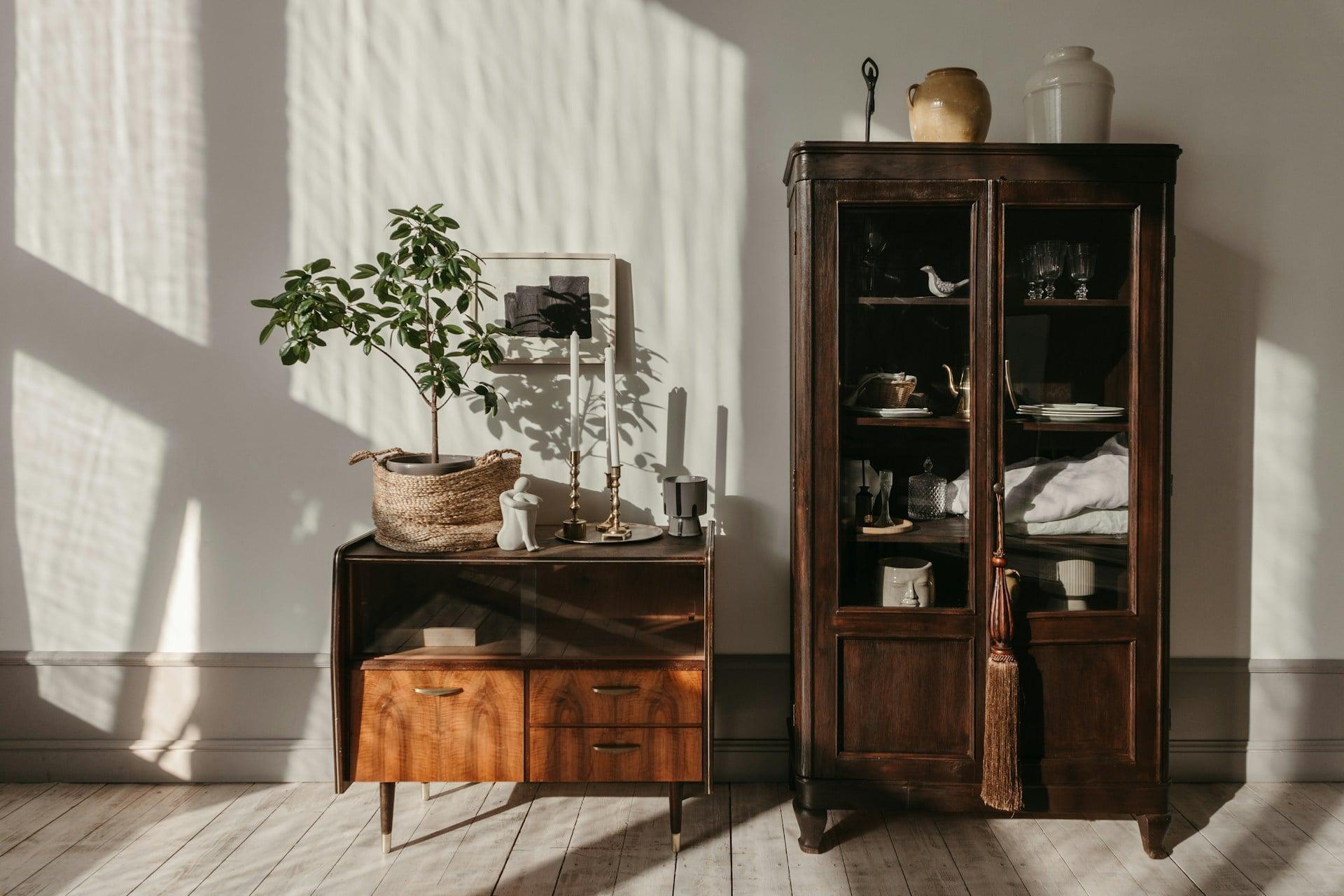
- Bring the past inside. Family heirlooms, antique furniture, and objects with their own cultural history help your home feel grounded and real. A patinated dresser or a mirror with a worn frame adds depth that no flat-pack piece ever could.
- Let your personality lead, not trends. Truly authentic spaces reflect your own taste and values, not a Pinterest board. Instead of replicating a look wholesale, seek out pieces from local makers, or decor that connects to your heritage, your travels, or your personal memories.
- Design for connection. A home becomes warm through the moments lived in it. Create spaces that invite people to linger — a cosy living room built for long conversations, a kitchen that welcomes guests. The more a space is tied to the people you love, the more authentic it will feel.
Your pull toward vintage finds and antique spaces isn't a passing trend or a quirky preference. It's your inner self seeking out what is real, lasting, and singular in a world full of sameness. So keep collecting, keep remembering, and build slowly — it's worth it.