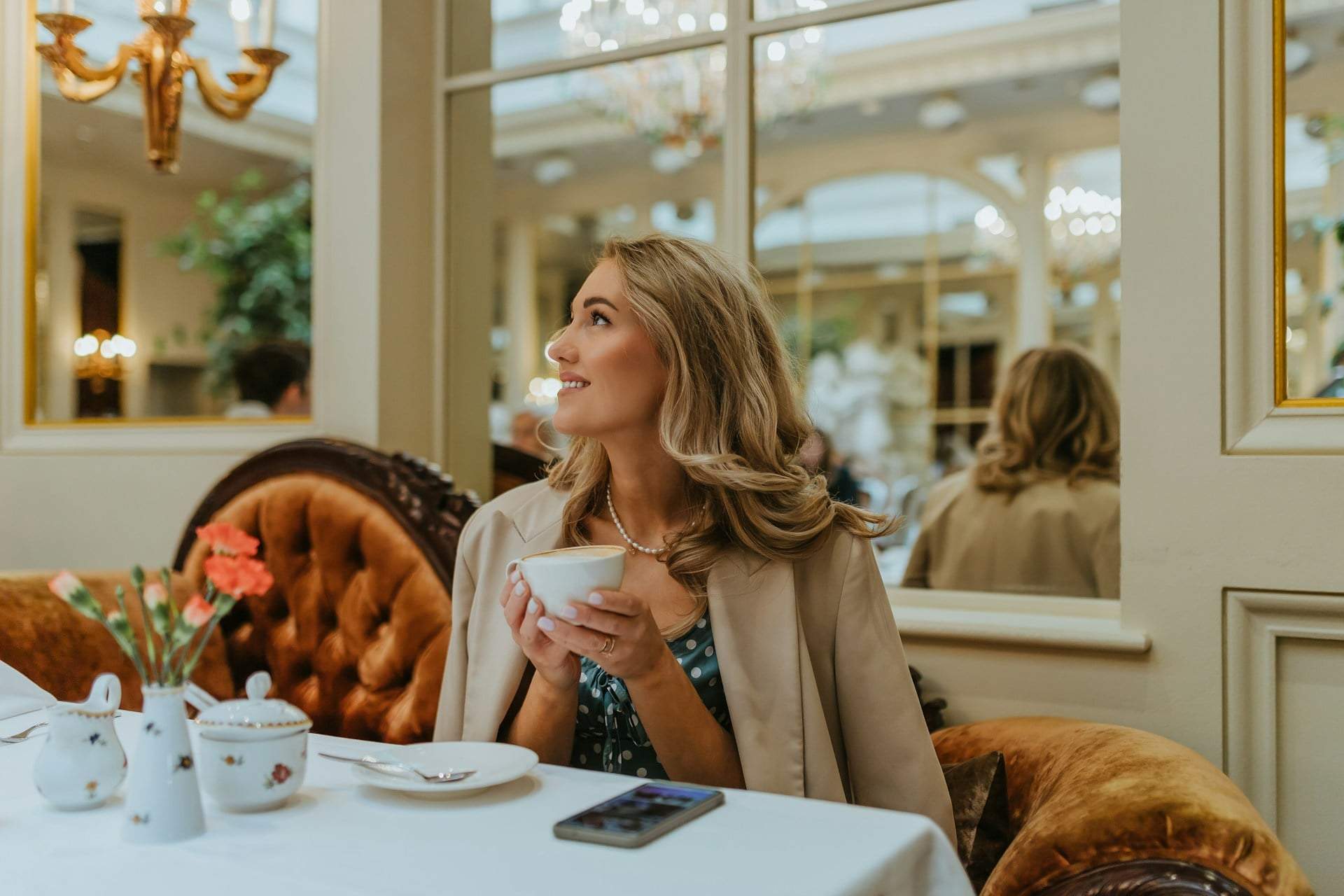
Some days, everything feels like it's moving at full speed. Tasks pile up, your mind races ahead to tomorrow, and somewhere in the blur, the moments that actually matter slip right past you. In relationships, this is especially common — while you're busy "moving forward," you stop truly being together.
But psychology is increasingly clear on one thing: the simple act of pausing and being present — what we might call the "stop and smell the roses" approach — doesn't just improve your personal wellbeing. It can quietly strengthen your relationship in ways that are hard to replicate any other way.
What does it actually mean to "smell the roses"?
"Sometimes you just need to stop and smell the roses."
It's one of those phrases we've all heard — but it's worth taking seriously. It's not really about flowers. It's about a way of moving through life: the ability to pause, notice what's around you, and let yourself actually experience it.
That might look like noticing the cherry blossoms on your morning walk, sharing a genuine laugh with your partner over something small, or simply sitting together on the sofa without reaching for your phone. The moment doesn't have to be grand. What matters is the quality of your attention.
The psychology of presence — why it's so good for us
Research consistently links present-moment awareness with higher levels of wellbeing and life satisfaction. Psychologists Rush and Grouzet (2012) found that people who are able to stay consciously grounded in the present tend to feel more balanced and content — a finding highlighted by psychology professor Glenn Geher in Psychology Today.
This doesn't mean planning ahead or thinking about the future is harmful. It's really about balance. When life becomes a permanent state of "later," something important gets lost. We need to arrive in the present sometimes — not just pass through it.
When two people live at different speeds
One of the most common — and underappreciated — sources of tension in relationships is a mismatch in time orientation. Some people are natural planners: always looking ahead, setting goals, structuring the next step. Others are more naturally present-focused, attuned to the small pleasures of everyday life.
Neither approach is wrong. But when they collide in a relationship, friction can build. If one partner is always racing ahead while the other wants to slow down and savour the moment, it's easy to start feeling like you're simply not on the same wavelength.
Picture a weekend museum visit: one person wants to linger in front of every exhibit, while the other is already mentally ticking off the afternoon's to-do list. Over time, small moments like this can create not just frustration, but a quiet sense of distance.
Why being present actually brings couples closer
Research suggests that shared thinking styles and similar ways of interpreting the world contribute significantly to relationship satisfaction (Rentzsch, 2022). Partners don't need to be identical — but when there's a basic alignment in how you approach life, many conflicts simply don't arise.
Practising presence together helps couples:
- notice and appreciate each other's small gestures more readily,
- let go of the pressure to make every shared moment "productive,"
- and build a deeper emotional connection.
When two people can genuinely slow down together — not just physically, but mentally — those shared moments stop being just pleasant and start becoming the glue that holds the relationship together.
How to smell the roses together — practical ideas
Presence is a skill, and like any skill, it can be practised. A few simple habits can make a real difference in daily life:
- Intentional slowing down: every now and then, drop "rush mode" — even if it's just for a short walk together.
- Shared attention: when you're with your partner, try not to let your mind drift to the next task on your list.
- Sensory awareness: notice the sounds, smells, and small details of your surroundings together — it sounds simple, but it works.
- Phone-free moments: even 10 to 20 minutes a day of undistracted, screen-free time together adds up over time.
These small shifts won't overhaul your relationship overnight. But they can move it from merely functioning to genuinely flourishing.
The rose worth not missing
The point of the "roses trick" isn't to live slowly all the time. It's to pause consciously, every once in a while. Presence isn't a luxury reserved for holidays or special occasions — it's a learnable habit that, over time, can strengthen both your personal wellbeing and the bond you share with your partner.
Maybe the real question isn't whether you have time to stop and smell the roses. It's whether you've learned to notice them at all.