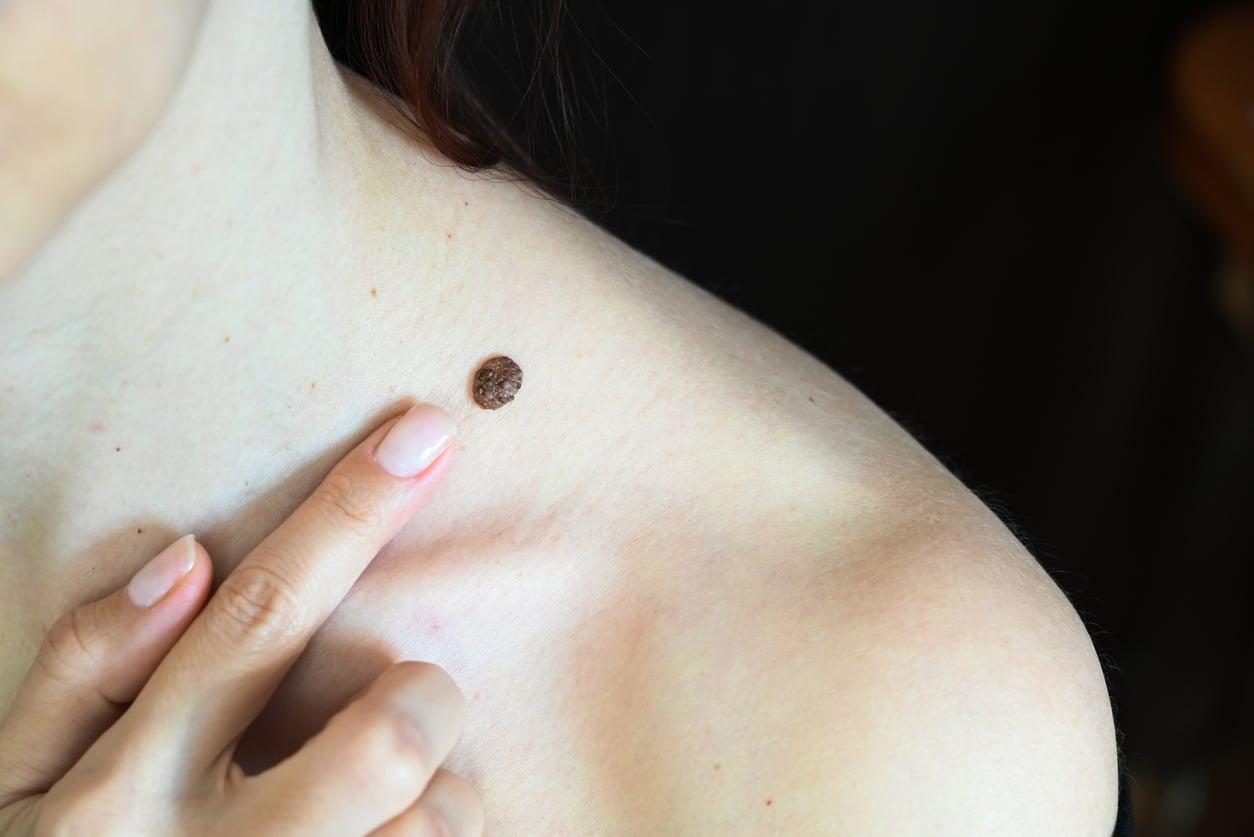
The neck is one of those places we rarely think about — yet in many spiritual traditions, it holds remarkable significance. It's the narrow bridge between thought and feeling, between the mind and the heart. It's where our words are born, where our throat tightens when we hold something back, and where most of us instinctively reach when we're anxious or overwhelmed. According to old folk beliefs passed down through generations, a mole on the neck isn't just a skin marking — it's a sign of a unique gift you carry within you.
A mole on the front of the neck, near the throat
If your mole sits close to the throat, near the Adam's apple, tradition holds that your words carry more weight than you realize. This spot has long been seen as the seat of spoken truth. People with a mark here often feel an almost compulsive need to say what they mean — even when it's uncomfortable, even when the room would prefer silence.
This isn't a flaw. It's more like an internal compass that refuses to let important truths stay buried. If this sounds familiar, you may be the kind of person others secretly rely on for honesty, even when they don't openly ask for it.
A mole on the side of the neck, below the ear
A mole positioned along the side of the neck — somewhere between the ear and the jaw — is said to mark someone with a rare gift for listening and intuition. These are the people others seek out before a hard conversation, not necessarily because they have all the answers, but because their calm, attentive presence makes everything feel more manageable.
You may not be the loudest voice in the room. But you're the one who actually hears what's being said — and what isn't. That kind of quiet attentiveness is rarer and more valuable than most people realize.
A mole at the back of the neck, near the nape
A mole at the nape of the neck is widely interpreted as a sign of protection. According to folk belief, this mark appears on those who have been quietly guided through life — people who, more than once, have felt as though an invisible hand steered them away from harm at just the right moment.
If your mole is here, you might recognize that feeling: a decision that seemed to make itself, a sudden change of plans that turned out to save you, a gut feeling that proved right when logic said otherwise. Many believe this mark signals a life watched over by something beyond the visible world.
A mole where the neck meets the collarbone
A mole sitting lower, at the point where the neck meets the collarbone, is traditionally associated with steadiness, groundedness, and quiet strength. People with this mark tend to let their actions speak rather than their words. They don't make grand promises — they simply show up, again and again, when it matters most.
If this is where your mole falls, chances are you're the person others lean on in a real crisis — the friend who arrives without being asked, the family member who holds things together without needing credit for it. That kind of reliability is a rare and deeply human gift.
A playful mirror, not a rulebook
Of course, none of this is science. These are beliefs carried across generations, shaped by the human desire to find meaning in the small, quiet details of our bodies and our lives. Think of them less as fixed rules and more as gentle prompts for self-reflection.
If you glanced at your neck while reading this and recognized something true in what you read — maybe that's not pure coincidence. Our bodies have always been maps of the stories we carry. Sometimes it's worth pausing to read them.
Where exactly is your mole on the neck?
The location matters in folk tradition. The front is linked to truth-telling, the side to listening, the nape to protection, and the collarbone area to quiet reliability and strength.
Do these meanings have any scientific basis?
No — these are traditional folk beliefs and cultural interpretations, not medical or scientific findings. They are best treated as a fun, reflective tool for self-knowledge rather than literal fact.
Can a mole have more than one meaning?
In folk tradition, meanings are sometimes layered depending on the exact position and other features. The descriptions in this article are based on the broad locations most commonly referenced in these belief systems.
Is it common to have a mole on the neck?
Yes, moles can appear virtually anywhere on the body, including the neck. Their placement is determined by biology, not destiny — but folk traditions have long found meaning in exactly where they appear.