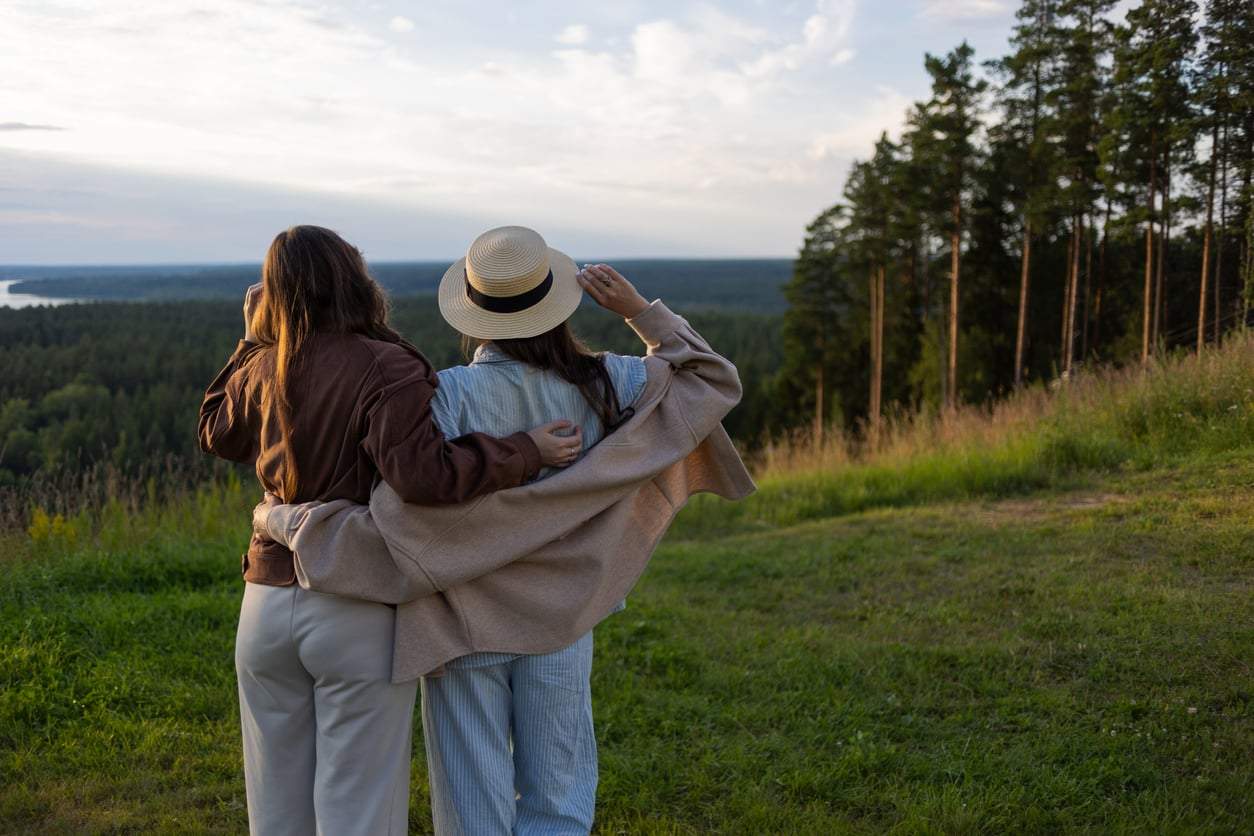
I've always dreamed of a friendship I could describe as truly lasting — the kind that holds for decades, or at least for many years, no matter what life throws at it. So far, that dream has never come true.
And more than once, I've caught myself wondering: maybe something is wrong with me.
I don't have that one friendship built on old inside jokes and half-smiles — the kind where you know exactly what the other person is thinking or feeling, or where a single situation instantly brings back a story from childhood.
There are plenty of people around me. Many want to connect with me. They tell me I have good energy, and I genuinely feel that I open up easily. I'm reliable, supportive, and selfless — I'll help people even when it costs me something. And yet, somehow, something is always missing.
Am I just not enough?
Of course I've had friends I truly believed I'd stay glued to for life, like two peas in a pod. But every single one of those relationships ended. Maybe I romanticized them. Maybe I saw more in the friendship — and in the people themselves — than was really there.
Self-reflection matters deeply to me. I like to revisit things, even years later, because the way I process events keeps shifting. Time puts old moments in a completely different light.
You only matter until...
But there's one pattern I couldn't ignore.
For most people, I'm "good" — I'm loved — only as long as I act according to their expectations and their idea of how I should be.
The moment I stop burying my negative feelings, stop trying to please, and dare to say what actually hurt me or didn't sit right, the entire dynamic changes.
I long for love and acceptance. But it isn't real acceptance if the price is wearing a mask, or constantly monitoring what the other person thinks is right and acceptable.
If you've ever felt like you have to shrink yourself to keep the peace, you might recognize how heavy that quiet self-editing can become.
Being honest
My most recent disappointment hit during an already difficult, uncertain chapter of my life. I opened up to a very close friend — someone I truly believed I could count on, anytime, for anything. I shared my feelings, my doubts, my questions.
Everything was fine until she sent a reply that landed badly. Over chat, all I could bring myself to say was "thank you for your honesty." I couldn't write anything else — it hurt that much. She asked me about it directly, and I found the courage to admit that no, it hadn't felt good. And that's exactly where the conversation ended.
A day or two later, I reached out. I told her I was sorry things had gone this way, and that I hoped it wouldn't damage our friendship.
Blocked
But the message never reached her. Not there, not on any other platform. That's when it clicked: I had been blocked. Everywhere. A fifty-year-old woman had chosen, as her way of handling a conflict, to simply block me.
She didn't ask for a little space. She didn't tell me my burdens felt too heavy, that I was "too much," that maybe I should hold back from sharing. She just erased me from her life. Right before Christmas — after having already invited me to a holiday lunch.
I made one more attempt. I called her, and of course, I'd been cut off there too. I even sent a name-day message through her daughter, and got nothing but silence. I understood the message; I'm not the kind of person who chases a train that won't stop for me. But understanding it and making peace with it are two different things. I feel things deeply, which is exactly why unfair rejection and abandonment cut so deep.
"We're not friends anymore"
There was another time, years ago, when a friend disappeared for a very different reason. After long back-and-forth conversations, I chose not to invest money in her husband's business — and I explained my reasons calmly and reasonably. She never asked questions or tried to understand my point of view. She simply drew a line. We stopped being connected on social media, and we've never spoken since.
Uncomfortable
I think I've always been a polarizing personality. Not because I'm dramatically different from everyone else — there's just something in me that people react to in extremes. Some people fully see, understand, and feel me. Others are irritated by something I can't even name myself.
This has been a "problem" since childhood. And no, I don't need everyone to like me — that's completely natural. What I still can't wrap my head around is how grown adults can end a close, years-long friendship simply by refusing to communicate. Even when talking things through is uncomfortable.
Still, despite every wound and every unanswered question, I hold on to hope. I believe there are — and will be — people around me with whom I can build something real: friendships grounded in acceptance, understanding, and mutual respect, where we can bridge the hard moments with maturity instead of silence.
Why do some people block instead of talking things out?
As this story shows, some people find honest conflict so uncomfortable that cutting off contact feels easier than communicating. It often reflects their own limits with difficult conversations rather than the other person's worth.
Is it wrong to tell a friend they hurt you?
No. Speaking up when something doesn't sit right is part of an honest relationship. As the article reflects, real acceptance shouldn't depend on you hiding your feelings or wearing a mask.
Why do friendships that feel unbreakable still end?
Sometimes we romanticize a bond and see more in it than is really there. And when one person stops meeting the other's expectations, the whole dynamic can shift — sometimes to a breaking point.
How do you cope with being cut out of someone's life?
It helps to accept that you can't chase someone who won't stop for you, while still allowing yourself to grieve the loss. Holding on to hope for healthier, more respectful connections makes the pain easier to carry.