You diligently apply sunscreen every morning, but there's one area you might be neglecting without even realizing it: the skin around your eyes. And it turns out, your regular SPF product may actually be doing more harm than good there.
Why the eye area is different from the rest of your face
The skin around the eyes is the thinnest and most sensitive on the entire face. Unlike the rest of your complexion, it has fewer oil glands, less collagen support, and almost no fat layer beneath it. That makes it far more prone to dryness, fine lines, and pigmentation — and UV damage shows up here faster than anywhere else.
On top of sun exposure, the eye area takes a daily beating from other stressors too: hours in front of screens, urban pollution, and insufficient hydration all quietly accelerate the signs of aging in this zone. It's one of the first places where time visibly shows — which is exactly why it deserves targeted care.
The problem with using regular sunscreen around your eyes
Standard facial sunscreens are formulated for tougher skin. Many contain chemical UV filters and other active ingredients that work well on the cheeks or forehead — but can irritate the delicate eye area, causing stinging, watering, or redness. That's the opposite of protection.
Eye-specific SPF products are a different story. They're designed with the sensitivity of this zone in mind — typically fragrance-free, hypoallergenic, and formulated with gentler or lower-concentration UV filters that are safe to use close to the eyes. The formula is lighter, less likely to migrate into the eye, and far less likely to cause a reaction.
The best eye area SPF products don't just protect — they also deliver ingredients like hyaluronic acid, antioxidants, and vitamins that actively support skin repair and help prevent premature wrinkles.
How to prevent sun-related wrinkles around the eyes
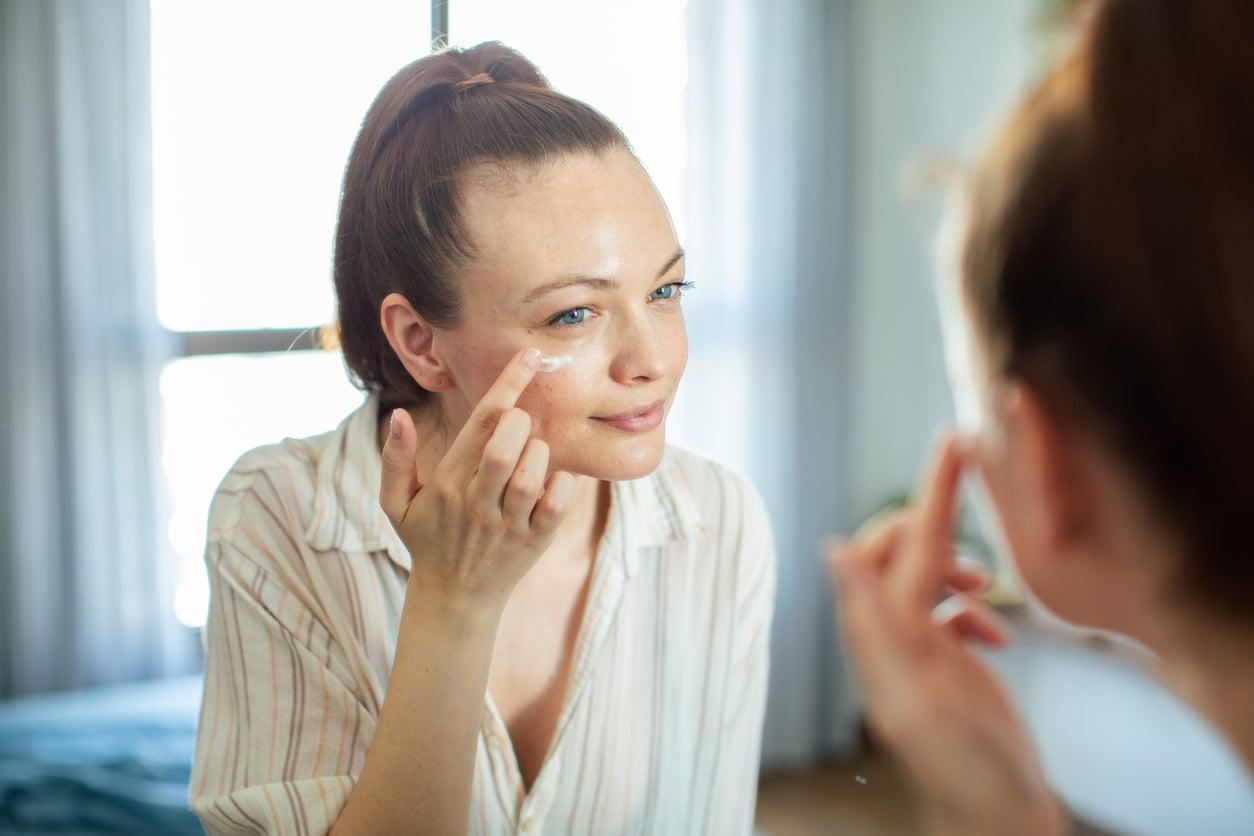
The most effective step you can take is to choose a dedicated eye cream or gel with built-in SPF protection. Apply it every morning as part of your skincare routine, gently patting it in with your ring finger — never rubbing or tugging the skin.
A few other habits make a real difference:
- Wear UV-protective sunglasses whenever you're outdoors. They shield both your eyes and the surrounding skin from direct sun exposure — and they reduce squinting, which is a major driver of crow's feet.
- Don't rub your eyes. It's a small habit with a big cumulative effect on skin elasticity over time.
- Stay consistent with hydration. A good eye cream used morning and night keeps the skin barrier strong and more resilient against environmental damage.
Extra tips for keeping the eye area healthy
Sleep is non-negotiable. While you rest, your skin goes into repair mode — and the eye area benefits more than anywhere else. Skimping on sleep shows up almost immediately as puffiness and dark circles.
A few times a week, consider adding a targeted treatment for dark circles or a depuffing eye mask to your routine. These can work alongside your SPF eye cream to address multiple concerns at once.
And don't underestimate the basics: drink enough water, eat a balanced diet rich in antioxidants, and build in moments of genuine rest during the day. Your skin reflects how you live — and the eye area is always the first to show it.