There was a time when staying in on a Friday night felt like failure. Now, for many people in their thirties, it feels like a reward. Something shifts — quietly, gradually — and suddenly the noise, the small talk, the packed social calendars start to feel less like living and more like performing.
These are real stories from real people who noticed that shift and chose to follow it somewhere quieter.
The party girl who stopped partying
At 32, it's strange to think back on it — but not that long ago, I was out every single weekend until dawn. Weekdays too. There was always something: friends, the gym, drinks after, dinner plans. Today, the thought of that schedule would break me. I genuinely don't know how I kept up with it.
Is this just getting older? Maybe. But what I know for sure is that when I occasionally get invited to a housewarming or a baby shower, I spend days trying to think of a polite excuse. The idea of performing friendliness for a room full of people exhausts me before I've even left the house.
When the office became unbearable
Every day at work was the same: gossip, negativity, drama, complaints. It was suffocating. I pushed and pushed until I finally got full-time remote work — and I can honestly say I have never felt more at peace. Removing myself from that daily noise wasn't antisocial. It was survival.
The fewer pointless conversations I have to participate in, the clearer my head feels. I used to be someone who couldn't stand being alone. Now, I'm most at home inside my own mind.
The YouTube rabbit hole that changed everything
I stumbled across a channel where an English woman had quit her corporate job, bought a small plot of land with a run-down cottage, and spent years renovating it room by room — mostly by herself. At first, she could barely hammer a nail straight. By the end, she was building her own kitchen cabinets.
I used to watch and think: what's the appeal of being completely alone out in the middle of nowhere? I couldn't imagine life without shopping centres, cinemas, concerts, friends.
Then I turned 38. And suddenly I understood every single thing she had done. All I wanted was a small house with a green view from the window — not concrete — and a little vegetable garden to potter around in instead of squeezing onto a packed tram every morning. The switch had flipped.
The nervous system needs quiet to heal
The less time I spend in social situations, the less I'm affected by other people's energy. And the less chaos surrounds me, the more my nervous system actually recovers. This isn't depression or anxiety — it's the opposite. It's finally listening to what my body has been trying to tell me for years.
There's a real difference between loneliness and chosen solitude. One drains you. The other restores you.
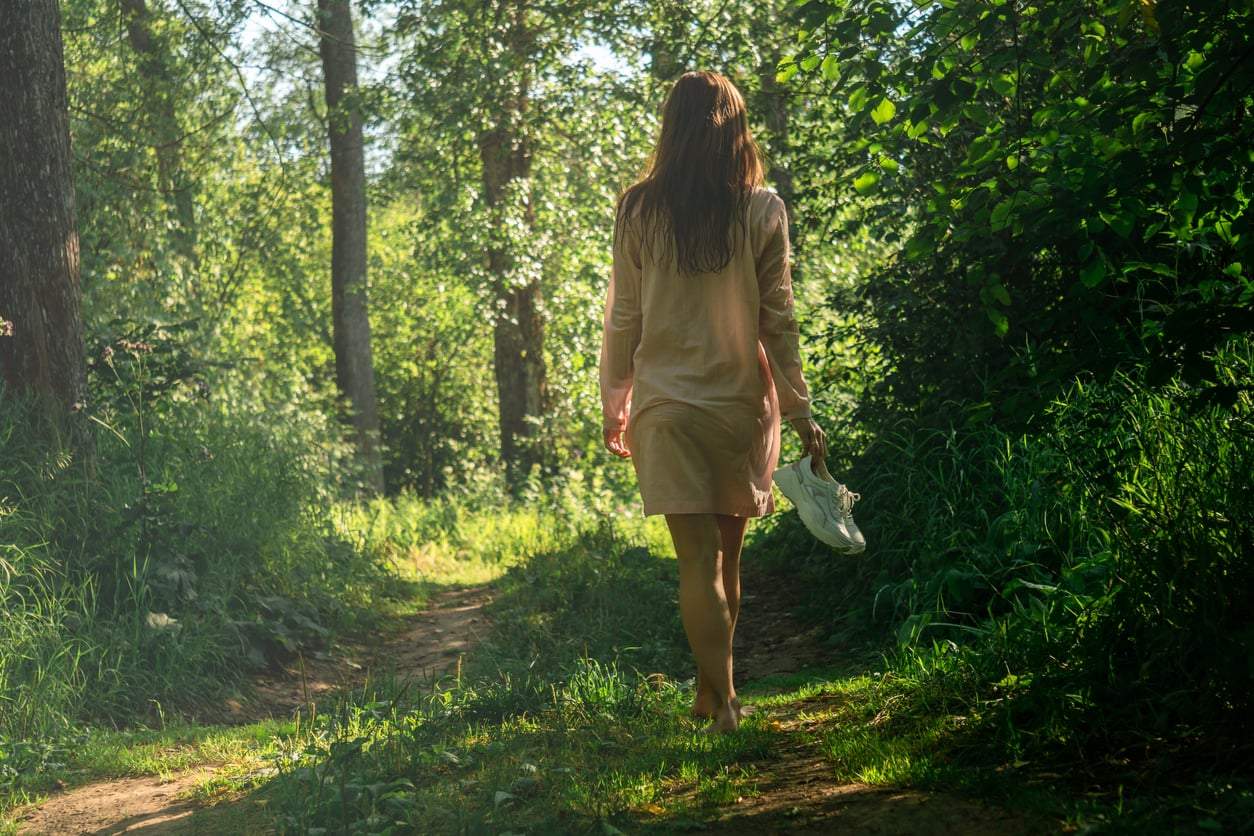
From the centre of the party to the edge of the forest
I was the one who organised every party, had a hundred friends, and couldn't sit still for a single day alone. Then, somewhere after my thirtieth birthday, something changed. The noise started to bother me. The meaningless conversations. The surface-level connections. I realised it had all become a performance — and I no longer wanted a role in it.
Now I rent a small house outside the city. I have two close friends. Every time we meet, it actually means something.
The weekend that rewired my brain
It started with an anniversary gift: a weekend in a cosy wooden cabin deep in the forest. I felt so good there that after three days I told my husband I didn't want to leave. Something clicked inside me — like a switch I didn't know existed. I wanted birdsong instead of traffic. Green instead of grey.
My husband grew up in the countryside and was surprised — I had always been a city girl through and through, someone who couldn't imagine life without urban energy. But that weekend, I became someone else. Someone quieter. Someone more myself.
Letting go of who you thought you had to be
In my twenties, I was still figuring out who I was — and I wanted to please everyone. Now, past 30, I know what actually makes me happy, and I'm done adjusting my soul to fit other people's expectations. I live by my own rules. That's not isolation. That's finally knowing yourself.
Burnout was the turning point
I didn't see it coming, but by 35 I was completely burned out — professionally, emotionally, socially. All of it at once. A kind of spiritual shift happened inside me, and the idea of a life where no one knocks on my door, no one calls, and my phone stays silent started to sound less like loneliness and more like freedom.
Right now, my father and I are building a small wooden cabin together — with our own hands — far from everything. It's the most meaningful project I've ever been part of.
It wasn't depression. It was a sign.
At first I thought something was wrong with me. Everything started to irritate me — forced smiles, traffic jams, honking cars, impatient people, long queues, the endless grind of bills and obligations and neighbours and mandatory social events. My partner sent me to a therapist.
Turns out there was nothing wrong with me. I had simply hit my limit — and I needed a complete 180. I didn't need medication. I needed a different life.
I have just as much work now as I did before. But instead of a hamster wheel and chronic stress, I chop firewood for my little stove, dig in my vegetable garden, and have conversations with my chickens. Honestly? It's the best trade I've ever made.