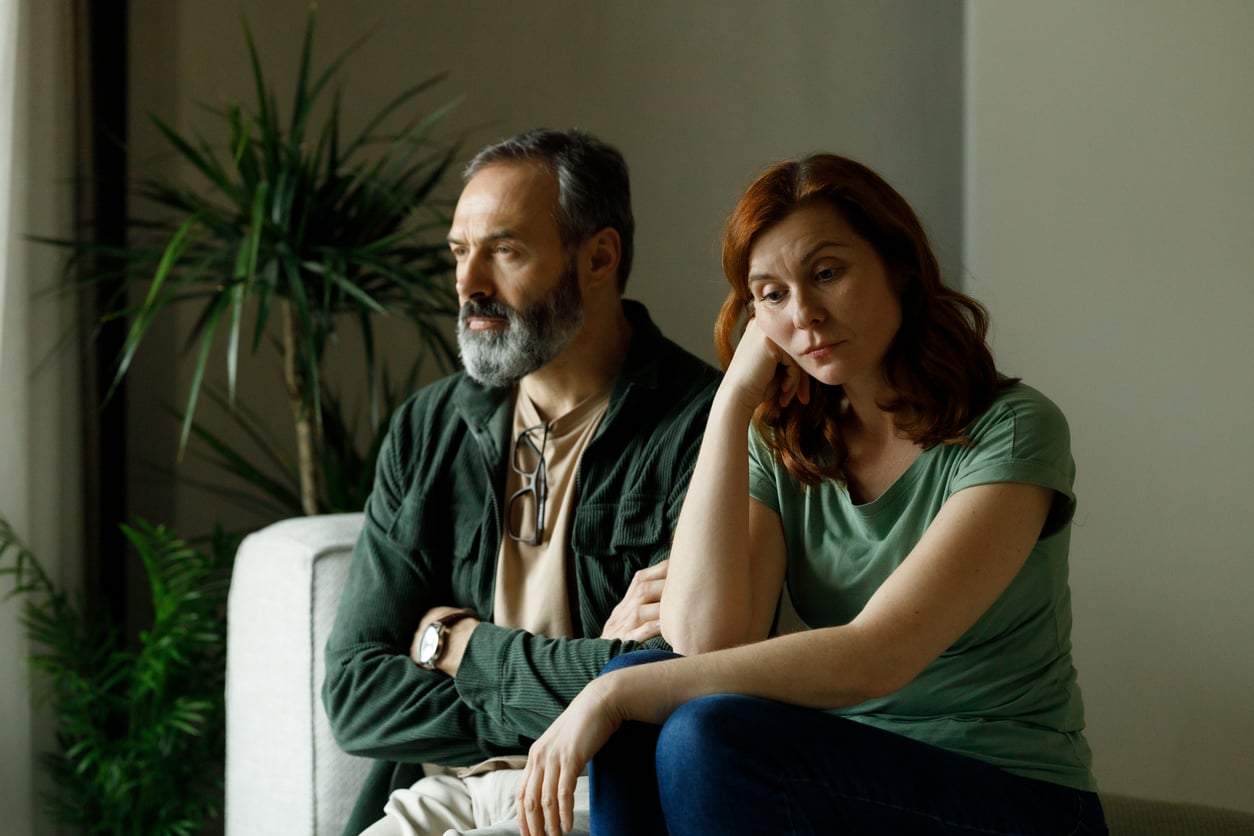
He drops onto the couch and stares at the TV, his phone, or a tablet. You ask how his day was — he barely grunts. You try to tell him something funny, he says "just one minute," and you wait. And wait. Then you walk away. He never comes after you. He never asks what you wanted to say.
On the edge of losing it
I've been home all day with my seven-month-old. Because I had a high-risk pregnancy and was on bed rest the final month, I haven't been anywhere in over eight months. Nowhere that could count as fun or a break of any kind.
My baby has colic, doesn't sleep — neither do I — and cries constantly. Every single day I'm trying to keep up with cooking and cleaning while running to the baby every few minutes. Meanwhile, my husband's life barely changed after our son was born. He still goes out drinking with his friends every couple of weeks, attends every work party, and even went to two concerts in the last six months because he bought those tickets "ages ago and couldn't miss them."
I'm breastfeeding, which means the baby can't be without me — so I get no real rest. I'm not even complaining about that; I chose this, I wanted to be a mother. But when this man walks through the door after his comfortable desk job, sits down on the couch, starts scrolling on his phone, and then pulls a face when I hand him the baby so I can finally wash my hair — I genuinely lose my mind.
He has the nerve to pull a face. Because he's "been working all day, bringing home the money, and I won't give him a single minute of rest." Some days I could absolutely scream.
Fit — or not
We don't have kids and never wanted any, but when we first got together, my husband had a flat stomach. Now he has a gut. Every month he swears he'll get back in shape. But every time I come home from the gym, there he is — sunken into the armchair watching TV, an empty chip bag beside him. It doesn't exactly do wonders for my libido.
What couples therapy revealed
Things got bad enough that we ended up in couples therapy. I explained how he never helps with anything — all the housework and childcare falls entirely on me. He explained how I never give him a moment's peace and start yelling the second he sits down.
"My wife is allergic to the sight of me sitting still."
When the therapist suggested he start asking me how he could help, he actually argued that the apartment always looks fine, so there's nothing to do. I smiled — through gritted teeth — and calmly told him that at any given moment he could:
- prep the kids' dinner or pack their snacks for the next day,
- load or unload the dishwasher,
- sort the laundry and put a load on,
- hang the washing or do the ironing (there's always an ironing pile),
- scrub the shower,
- take the kids to the park — because they're his children too, not just mine.
He genuinely thought all of this happened by itself. I had to spell out that I, the tireless little fairy godmother of the household, was doing every last bit of it while he relaxed on the couch.
The passive man problem
I did some reading on this, and there's actually an evolutionary argument: women are instinctively drawn to active men. Providers. Problem-solvers. Men who hunt, build, show up. That's a big part of why a passive, checked-out partner feels so viscerally repellent to so many women.
It's not just about who vacuums. It's about what passivity signals — and what it slowly does to attraction and trust inside a relationship.
The lesson that changed everything
My darling husband once told me — after I warned him to either turn off the PlayStation or expect divorce papers — that I had it easy because I "just hang out at home with the kids."
I said nothing. I could have killed him, but I stayed quiet. The following Saturday morning, I got up early, got dressed in silence, and slipped out the door while everyone was still asleep. I left a note on the counter: back tonight, you've got the kids — just "hang out" with them.
By midnight, when I got home, he looked ten years older. All he said was: "Okay. I get it." I've recommended this lesson to every mother I know ever since.
Frequently asked questions
Why does a husband lounging on the couch cause so much frustration?
It's rarely about the sitting itself — it's about what it represents. When one partner handles the endless mental and physical load of the household while the other checks out, resentment builds fast. The couch becomes a symbol of an unfair division of labor.
Is there an evolutionary reason women are bothered by passive partners?
According to the article, there is an evolutionary argument: women are instinctively drawn to active, engaged partners. A man who appears disengaged or passive can trigger a deep, almost instinctive sense of frustration that goes beyond the immediate situation.
What can couples do when one partner feels they carry all the household responsibility?
Couples therapy, as described in one of the stories, can be a turning point — but only if both partners are honest. Sometimes a direct, practical list of invisible tasks is the wake-up call one partner needs. And sometimes, as one woman discovered, the most powerful lesson is simply letting your partner experience your day firsthand.
Can this imbalance affect attraction between partners?
Yes — one woman in the article directly links her husband's passive, unhealthy habits to a drop in her libido. Emotional and physical attraction are closely connected to how respected and supported a person feels in their relationship.