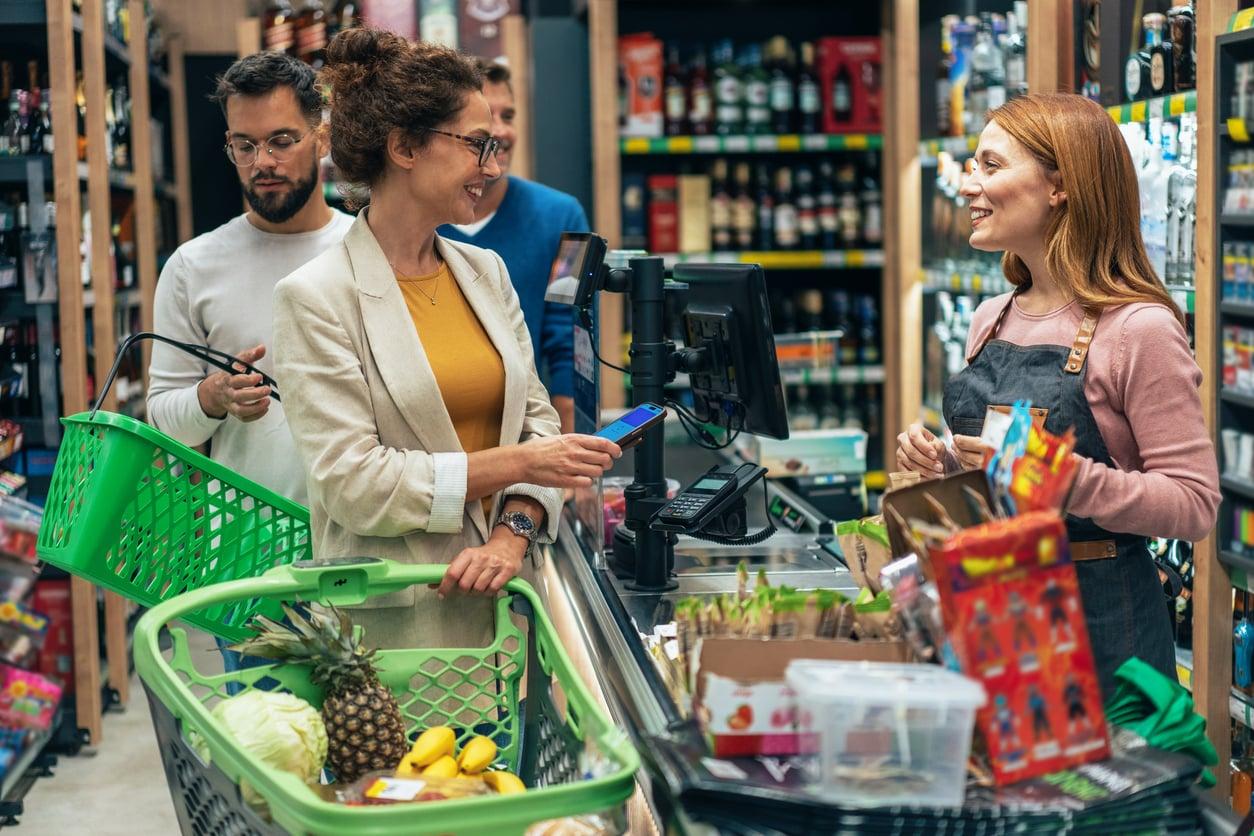
You're standing in the supermarket, basket full, and three self-checkout machines are completely free. Yet you join the queue behind four other people waiting for a human cashier. You know it'll take longer. You don't care.
Sound familiar? This small, everyday choice isn't a sign of inefficiency or technophobia. According to psychology, it reveals something far more meaningful about who you are — and what you actually need.
The quiet emotional refuel you didn't know you were taking
Research in behavioral psychology has found that avoiding self-checkout machines is rarely about fear of technology. It's about a subtle but powerful pull toward human presence. When you choose a cashier over a screen, you're not wasting time — you're feeding your emotional well-being.
Nicholas Epley, a behavioral psychologist at the University of Chicago, has shown that even brief, fleeting interactions with complete strangers can significantly lift our mood.
A moment of eye contact, a quick smile, a small exchange while your groceries are being scanned — these tiny sparks of connection deliver a genuine positive charge that carries you through the rest of your day more easily than you might expect.
Most of us underestimate how much these "surface-level" encounters actually matter. Loose social ties — the cashier who recognizes you, the stranger who lets you go first — form the invisible scaffolding of our everyday emotional balance. They broaden our perspective and remind us that we're part of something larger than our own to-do list.
When you strike up a brief conversation, or even just notice the small plant on the counter and smile at it, you step outside your own bubble for a moment. That kind of openness doesn't just feel nice — it reinforces a sense of belonging that's harder to find than ever in an increasingly automated world.
To exist is to be seen
One of the less-discussed costs of automation is that it quietly eliminates what researchers call "social friction" — those small, imperfect, wonderfully human moments of contact that make daily life feel real.
A machine will never notice that a color suits you. It won't give you a sympathetic nod when you mention you just missed your favorite sale. These moments — however small — validate your existence. They remind you that you matter.
In a day where you're pulled in a dozen directions and expected to perform in a dozen roles, a few seconds of genuine attention from another person — and giving it back — is a quiet but powerful reminder of your own worth.
Choosing the queue, then, can be a form of gentle resistance. A way of saying: I'm not in such a rush that I'll give up being human. It's a small act of arriving in the present moment, rather than just processing through it.
And let's be honest — self-checkout is often only faster on paper. In plenty of stores, the machines are more obstacle than shortcut. Between error messages, unexpected items in the bagging area, and waiting for an attendant anyway, the "quick" option frequently costs more time and stress than simply joining the line.
Stop feeling guilty for choosing the longer queue
Next time you find yourself at the back of a slower line, let go of any guilt about the "wasted" minutes. That brief exchange with the cashier — even just a "have a good day" — might be exactly the small emotional top-up that makes you a calmer, more patient version of yourself by the time you get home.
The people who avoid self-checkouts aren't behind the times. They're quietly prioritizing something that no algorithm can replicate: genuine human connection. And in a world that keeps automating that away, that's not a flaw. It's a feature.