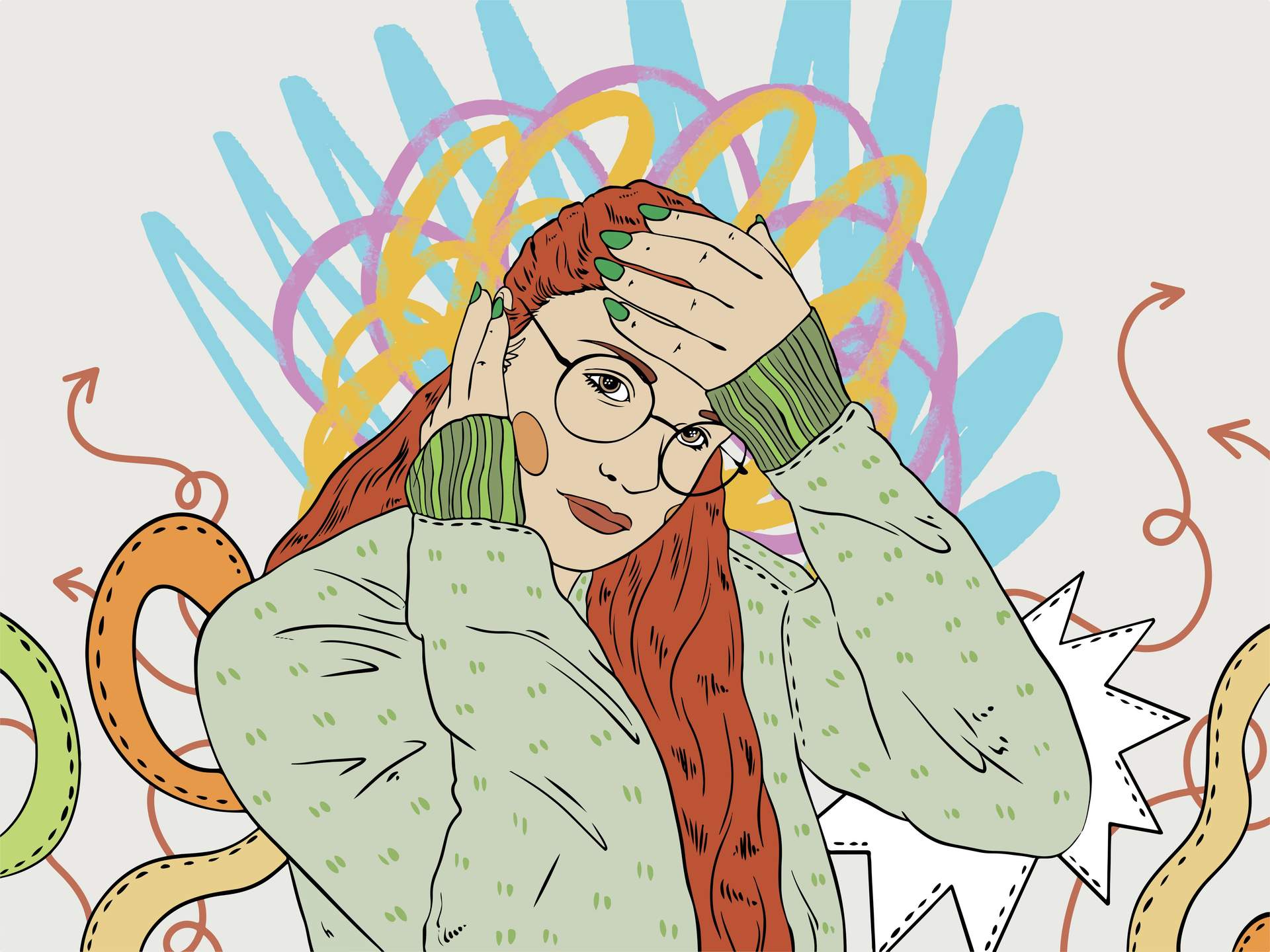
You spent an hour getting ready. You tried on three different outfits, second-guessed yourself, and finally landed on something that felt right. Then someone looks at you and says, "You look great today!" — and what do you do? You wave it off. "Oh, this old thing." Or you pivot entirely, turning the attention back to them before the moment can settle.
And yet, somewhere inside, you know you wanted to hear it. You hoped someone would notice. So why, when it finally happened, couldn't you just let it in?
This isn't really about modesty. When you can't accept a compliment, something deeper is going on — and it's worth paying attention to.
The deflection happens so fast it feels automatic. Someone says something kind, and before your brain has even fully processed the words, you've already dismissed them. That reflex isn't shyness. It's a signal that, on a deeper level, what you heard doesn't match what you believe about yourself.
Where does this come from?
Usually, it starts early. If praise was something you had to earn — only given when you performed well enough, behaved correctly, or met someone else's standard — your brain learned that positive feedback is conditional. Something to be cautious about, not embraced.
Or maybe compliments in your life always came with a "but." "That was good, but you could do better." "Nice job, but this part wasn't quite right." Over time, those experiences quietly shape the way you receive — or refuse to receive — positive feedback.
When praise was never unconditional, it becomes genuinely hard to believe it ever could be.
There's also another layer many people recognize: the fear of being found out. A quiet, persistent sense that you're not as capable or impressive as people think — and that the more compliments you accept, the closer you get to the moment when everyone realizes the truth. Accepting praise starts to feel dangerous, like raising the stakes on a secret you're terrified of keeping.
Deflecting is a defense mechanism — but it has a cost
When you say "oh, it was nothing," you're not just being humble. You're protecting yourself. If you're the first one to minimize what you did, no one can take it away from you later. No one can decide you didn't deserve it. It's a very human strategy — and a completely understandable one.
The problem is that it quietly reinforces the very belief you're trying to protect yourself from. Every time you push a compliment away, you're sending yourself the same message: this doesn't apply to me. And the more you do it, the deeper that message gets embedded.
If you've ever wondered why your self-confidence doesn't seem to grow even when things are going well, this pattern might be part of the answer. Positive experiences can't stick if you keep brushing them off before they have a chance to land.
It also affects the people around you
Here's something that's easy to overlook: when you deflect a compliment, there's another person on the other side of that moment. Someone who noticed something about you, felt moved to say it out loud, and offered it genuinely.
When you immediately dismiss what they said, they can walk away feeling like their words didn't matter — like their perception of you wasn't worth receiving. That's not an accusation. It's just a perspective that can help reframe things. Saying "thank you" isn't only good for you. It's a gift to the other person too.
How to start letting compliments in
The first step is surprisingly simple — and surprisingly hard. The next time someone compliments you, just say "thank you." Nothing else. Don't explain, don't minimize, don't redirect. Let the moment exist for a second without filling it with noise.
It will feel uncomfortable at first. That's normal. Discomfort is just the feeling of doing something unfamiliar.
But every time you receive a compliment instead of deflecting it, you gently rewrite a deeply held belief — the one that says you're not enough. It doesn't happen overnight. It's a slow process, built one small moment at a time.
And "thank you" turns out to be a surprisingly powerful place to start.