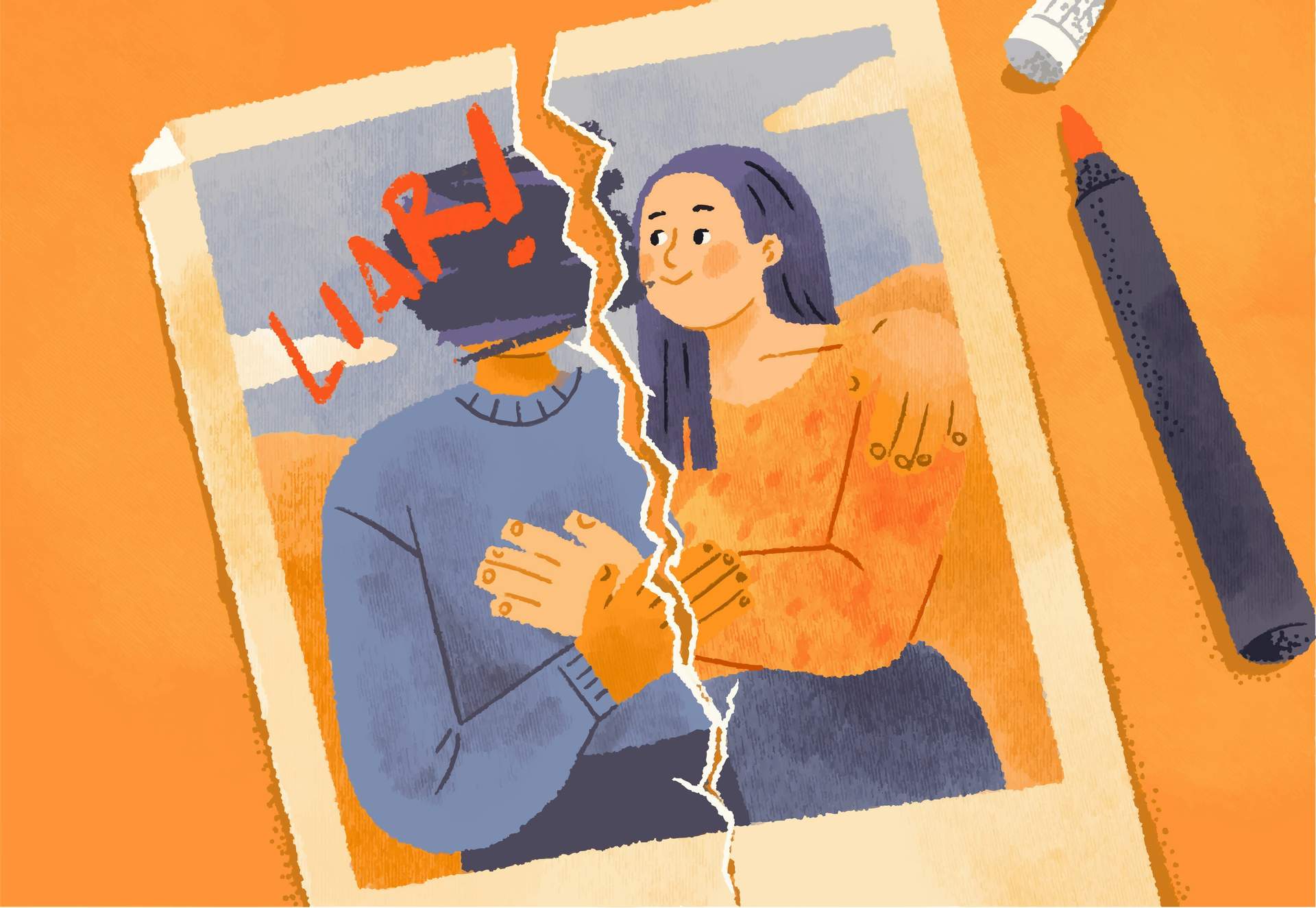
There is something irreplaceable about sitting across from your closest friends and finally saying the things you could never say to anyone else. No filters, no softening — just the truth, delivered with love.
I have always been grateful that my inner circle includes both women and men. That balance has shaped the way I see the world. With my female friends, I barely need words — they sense what I'm feeling before I've finished a sentence. But my male friendships have been just as formative. Their more rational, sometimes blunter perspective has helped me spot where communication breaks down — and where I was getting things wrong too. Whatever the statistics say about people confiding only in their own gender, I know that the feedback I've received from my male friends has genuinely corrected my course. They offer a viewpoint that women, myself included, can be too quick to dismiss.
There's something freeing about a woman telling them the uncomfortable truth
Martyrdom isn't attractive — it's a wall
I've lost count of how many times a male friend has described his current partner as the "ideal woman" — because she puts his comfort above everything else, and he sees that as perfectly natural. Each time, I took a breath and told him exactly what I thought.
I explained that she didn't become a martyr because she enjoyed it, or because it was her deepest calling. She did it because somewhere along the way she was convinced that she could only be enough if she met every expectation — no matter how unreasonable. Not every friend changed his mind on the spot, but most of them at least paused to consider that a woman erasing her own needs isn't a love story — it's a slow-acting poison. And that what they actually wanted wasn't a personal assistant, but an equal and genuinely happy partner.
Excessive self-sacrifice doesn't make a woman more valuable in someone's eyes — it makes her invisible. Over time, all that quiet, tireless effort stops registering as love and starts feeling like background noise. When we never draw a line, even our greatest gestures lose their meaning. What is given freely and without limit eventually stops being cherished at all.
It's time to take responsibility for your words — and your silences
These conversations also revealed another deeply ingrained pattern. My male friends almost instinctively expected emotional comfort from the people around them — and women, myself included, had quietly taken on the role of lightning rod. When I described how often we smooth over their conflicts, or apologize on their behalf while they're not even in the room, they looked genuinely puzzled at first.
Then I told them about the men in my own family — relatives who never noticed how hurtful or dismissive they'd been, while the women around them scrambled to do damage control, whispering to everyone else, "Don't be upset, he didn't mean it like that." Both sides need to be confronted with this pattern — them and us. It is not a woman's job to fill every awkward silence or fix someone else's bad mood. When we step back, they are forced to take ownership of the emotional atmosphere they create.
Imperfection is the doorway to real connection
My male friends also complained, often, that they couldn't find "the one" — while simultaneously waving around a checklist of expectations that no real, living woman could ever fully meet. That's when I got to the heart of it: those impossible standards are precisely what push women into performing a version of themselves — building armor, playing a role — and then the very men who demanded the performance wonder why they can't get close to us.
It goes both ways. The walls we build to protect ourselves from judgment and failure are the same walls that keep love out. Nobody can genuinely connect with a perfectly curated statue.
Real intimacy begins where the armor comes off — where we dare to show our vulnerability. Because love doesn't belong to the flawless. It belongs to the real.
I'm not under any illusion that I'm changing the world one dinner conversation at a time. That was never the point. But simply beginning to talk about these patterns — the roles we've been burned into playing, the expectations we've quietly accepted — is already a significant step. The walls and the social scripts won't disappear overnight. Yet every honest conversation brings us a little closer to a place where both women and men can breathe more freely, and connect more truly.