Opinion piece: Barbara Lee
Some conversations are surprisingly easy to sidestep. At least for a while. A quick joke, a half-answer, a deliberate change of subject — and suddenly the moment has passed. And the strange thing is, it can actually feel like the right call. Like you're keeping the peace, protecting the mood, choosing not to open a door you're not sure you can close again.
In the short term, this often works. On an exhausting evening, in the middle of a stressful stretch, or when things already feel fragile — diving headfirst into a difficult conversation isn't always the wisest move. Sometimes silence isn't suppression. It's self-preservation. Sometimes the most caring thing you can do for a relationship is to not say everything the moment you feel it.
But the question remains: how long can you keep doing this?
Because the things left unsaid don't simply vanish. They transform. They become small tensions, misread signals, and quiet resentments — until one day you can't quite trace where it all started. You just feel that something is off.
Sweeping things under the rug feels like a clean solution. Fast, efficient, and apparently consequence-free. But it's really more like slow accumulation. Unspoken sentences stack up, swallowed reactions pile on, and grievances you thought you'd let go of linger just beneath the surface like splinters.
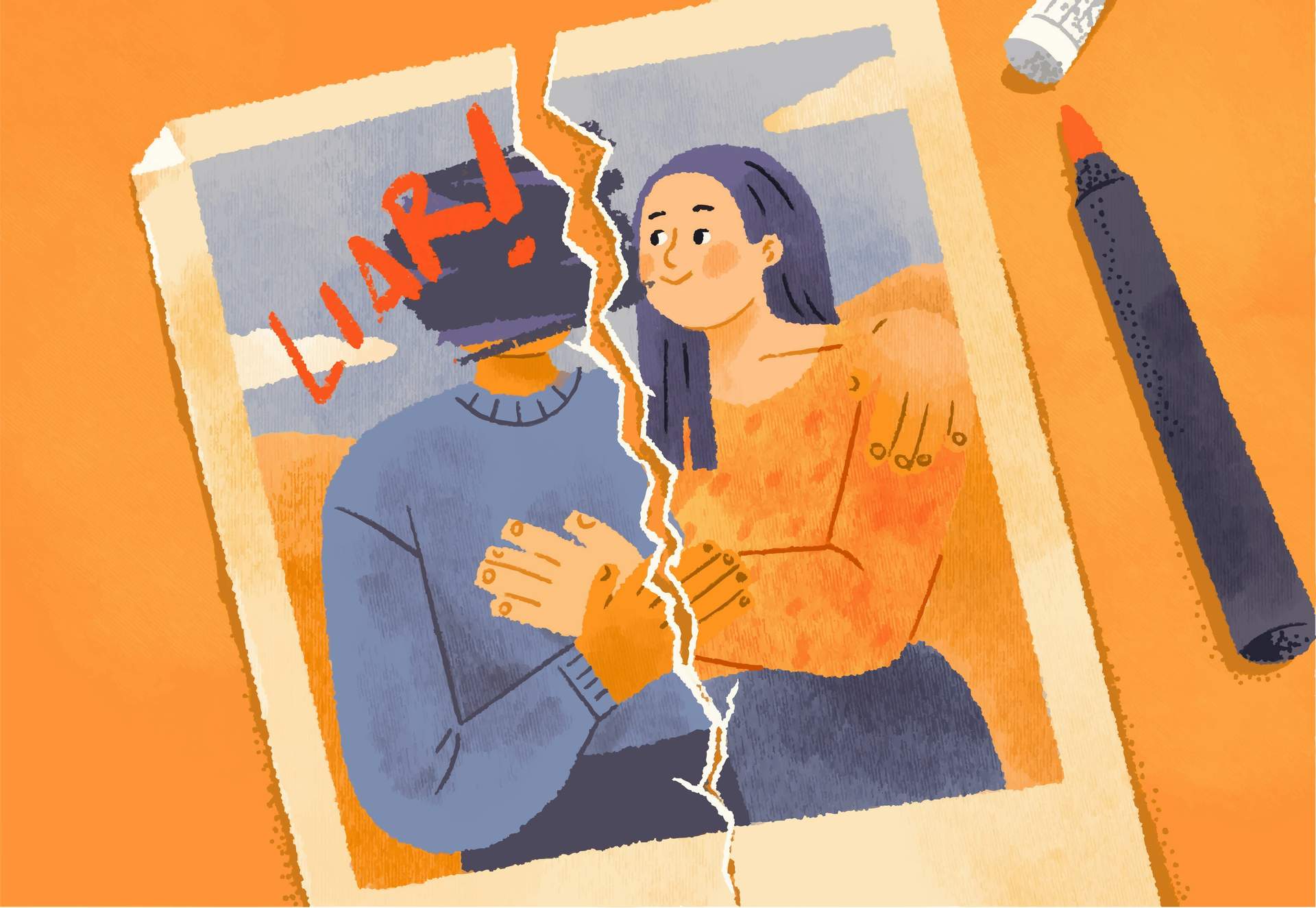
And eventually, they demand space. Often in the last place you'd expect. A seemingly trivial argument suddenly carries the weight of everything that was never said — old wounds surfacing in the middle of a fight about something completely different.
What makes these moments so disorienting is that the other person's reaction seems wildly out of proportion. And if neither of you knows what you're actually fighting about, there's no real chance of resolving it.
One of the most important distinctions here is that postponing is not the same as avoiding. Not saying something immediately isn't automatically a problem. In fact, it's often the smarter choice. When emotions are running too high, or when you haven't yet figured out what you actually feel, forcing a conversation can do more harm than good.
Sometimes waiting is exactly right. Waiting until you've both calmed down. Until the other person is in a place where they can really hear you. Until you're not trying to untangle something complicated in the middle of a crisis. A move, a job change, a family emergency — these are rarely the right backdrop for finally addressing a long-standing issue.
But waiting only helps if you don't forget there's something worth saying
The trap is convincing yourself that "now isn't a good time" — and then slowly settling into a version of the relationship where it's never a good time.
Learning to recognize the point where staying quiet becomes more costly than speaking up is one of the harder skills in any relationship. And sometimes you can't get there alone. A mediator or a couples therapist can offer exactly what's hardest to find on your own: a space where you're talking to each other, not at each other. Where the conversation is built from honest feelings and real needs — not accusations.
Because ultimately, it's not the difficult conversation itself that damages a relationship. It's the absence of space for one. It's never being able to say the uncomfortable thing. Never having the chance to recalibrate what's happening between you.
You can wait. You can choose your moment. You can ask for help. But pretending certain questions aren't hanging in the air between you — that never ends well.