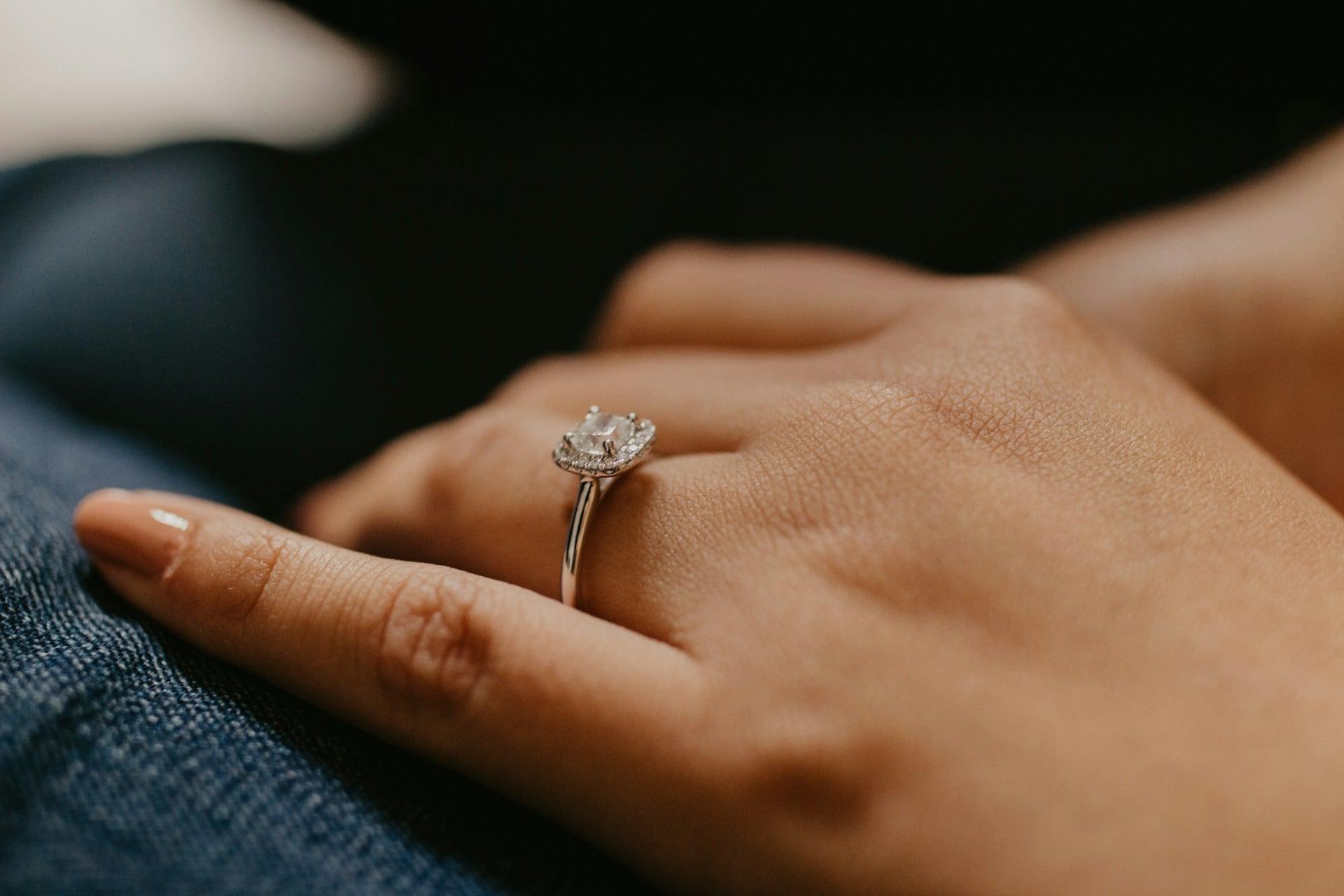
Your engagement ring isn't just jewelry — it's a keepsake tied to one of the most meaningful moments of your life. And that's exactly why wearing it 24/7 isn't always the best idea.
There are a handful of everyday situations where leaving it on can quietly damage the metal, dull the stone, or even put your ring at risk of slipping away for good. The good news? Avoiding them takes just a few seconds.
Why protecting your ring actually matters
An engagement ring is more than a beautiful piece of jewelry — it's a reminder of a very special moment you'll want to keep looking as radiant as the day you received it.
Rings, especially those set with precious stones, need the same care as any other valuable jewelry. Everyday life exposes them to more wear and tear than you might expect. That's why it helps to know when it's worth taking your ring off — and how to keep that first-day sparkle intact.
When you're gardening
If you love spending time in the garden, keep this in mind: take your ring off before you start digging into the soil. Dirt, sand and other garden debris can easily work their way into the tiny gaps around the setting, dulling the stone and even damaging the metal.
On top of that, all that physical pressure can bend the band out of shape or scratch away its shine.
During any kind of workout
Whether it's a relaxed yoga session or an intense gym day, your engagement ring is better off left at home. Exercise means constant knocks, friction and pressure — none of which do your ring any favors over time.
Sweat is another culprit. It can react with the metal and gradually reduce its shine, leaving your ring looking duller than it should.
If you're curious about the little habits that quietly wear down fine jewelry, it's worth learning how everyday products affect delicate materials.
While cleaning or using chemicals
Household cleaning products like bleach and ammonia can chemically damage most precious metals and gemstones. These substances don't just harm the band — they can also dim the sparkle of the stone itself.
So before you reach for the rubber gloves, tuck your ring away somewhere safe until the job is done.
When bathing or swimming
Water might seem harmless, but showering or swimming — especially in chlorinated or salt water — can take a toll on your ring. Chlorine can react with precious metals and slowly leave the surface looking cloudy.
There's also a very practical risk: slippery, soapy water makes it far easier for a ring to slide right off your finger. So never wear it while you're splashing around.
While you sleep
Sleeping in your ring may feel harmless at first, but overnight it can quickly become uncomfortable. Shifting positions, the pull of your bedding, or a raised stone can all get in the way of a good night's rest.
Slipping your ring off before bed lets you sleep more comfortably — and keeps the ring safe until morning.
Stick to these simple precautions, and you'll be able to enjoy your ring's beauty for many years to come.
Should I take my engagement ring off every single night?
It's a smart habit. Wearing it overnight can be uncomfortable and expose it to pressure from your bedding or shifting positions, so removing it before bed helps keep it safe and lets you rest better.
Can chlorine really damage my ring?
Yes. Chlorine can react with precious metals and, over time, leave the surface looking cloudy or dull. It's best to leave your ring off before swimming.
Why should I remove my ring before cleaning?
Household products like bleach and ammonia can chemically damage most precious metals and gemstones, dimming both the band and the sparkle of the stone. Set your ring aside until you're finished.
Is it bad to wear my ring at the gym?
Working out exposes your ring to constant knocks and friction, while sweat can react with the metal and reduce its shine. Leaving it at home protects it from both.