I was sitting in the hairdresser's chair, my hair half pinned up, when my phone rang. It was the registry office calling to clarify some paperwork — there was, the woman said, "a discrepancy in the name." I assumed a typo. A missing letter, maybe. Nothing serious. Then she read out the name on his birth certificate — and it wasn't the one I knew. In place of the name I'd called him for four years, there was an entirely different first name. One I had never once heard from him.
We had been together for four years. I knew he had been adopted as a child. I knew his grandparents' names, the name of his childhood dog, the story behind the small scar on his left knee. I thought I knew everything about him that mattered. It had never once crossed my mind that his own first name — the one he'd given me — wasn't the real one.
He had been hiding his past behind a different name
As it turned out, his birth name had been chosen by his grandmother. It was an old-fashioned, rural-sounding name, and he had stopped using it since his early teens after being teased about it at school. He quietly adopted a name he liked better — something that felt more like him — and his entire adult life was built around it. His colleagues knew him by it. His friends knew him by it. I knew him by it. Only his official documents still carried the original, because he'd never gotten around to changing it legally. He'd always assumed there'd be time.
I sat there in the salon, hairpins still in, trying to absorb the fact that the man I was about to marry in a few hours had been going by a name that didn't appear on a single document he owned. I knew he wasn't a dishonest person. But that missing sentence — "by the way, that's not what my paperwork says" — suddenly felt enormous.
What shook me wasn't that I'd known him by a different name. It was that in four years, he had never once thought it was worth mentioning.
The truth came out on the morning of the wedding
I called him. The line crackled — he was already at the venue, his best man helping him with his tie. When I told him what the registry office had said, there was a long silence. Then he said, quietly: "I'm sorry. I thought it didn't matter anymore." That's the sentence that has stayed with me more than anything else. Not the secret itself — but the fact that he had filed it away as an insignificant detail, while I suddenly found myself mentally re-reading four years of shared history.
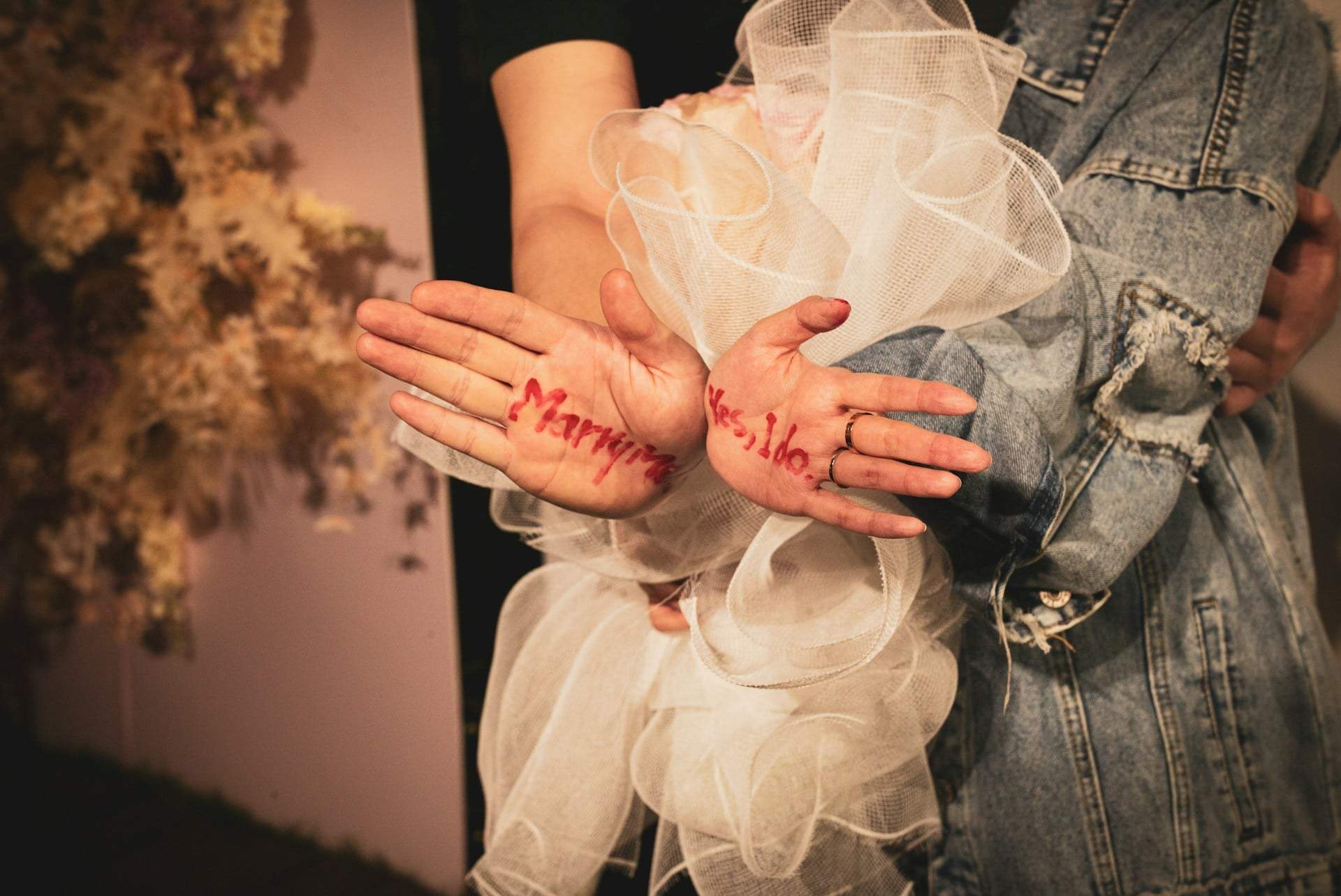
We didn't cancel the wedding. We pushed it back by an hour, slipping into a side room to talk it through before the ceremony. Our mothers stood together in the corridor, sensing something was wrong but not daring to ask. When the officiant read his legal name aloud during the vows, it was the first time I had ever heard it spoken. It felt strange — as if I were marrying a stranger, even as he looked at me exactly the way he had every single day for four years.
Even now, one question stays with me
I still call him by the name I've always known, because to him, that is his name — it isn't a disguise or an alias. But sometimes, when a package arrives and his official name is printed on the label, I'm back in that salon chair for a moment, hair half done, asking myself the same quiet question: how much do you ever really know about the person you've chosen to spend your life with?
Is it really a lie if someone uses a different name?
Not necessarily — but the issue here wasn't the name itself. It was the four years of silence around it. Omitting something so personal, even unconsciously, can still leave a partner feeling like a piece of the puzzle was missing.
How should you handle a secret like this in a relationship?
Ideally, with honesty and without drama. A calm, private conversation — long before the wedding day — gives both people the chance to process it together. The longer something like this goes unsaid, the heavier it tends to feel when it finally comes out.
Can a relationship recover from a revelation like this?
Yes — and in this case it did. What matters most is how both partners respond: whether there's genuine accountability, empathy, and a shared willingness to move forward. The wedding went ahead, and the couple did work through it together.
Why do people hide things they don't think are a big deal?
Often because they've made peace with it themselves and assume their partner will feel the same. What's long-resolved for one person can still feel jarring to the other — especially when it surfaces at the worst possible moment.