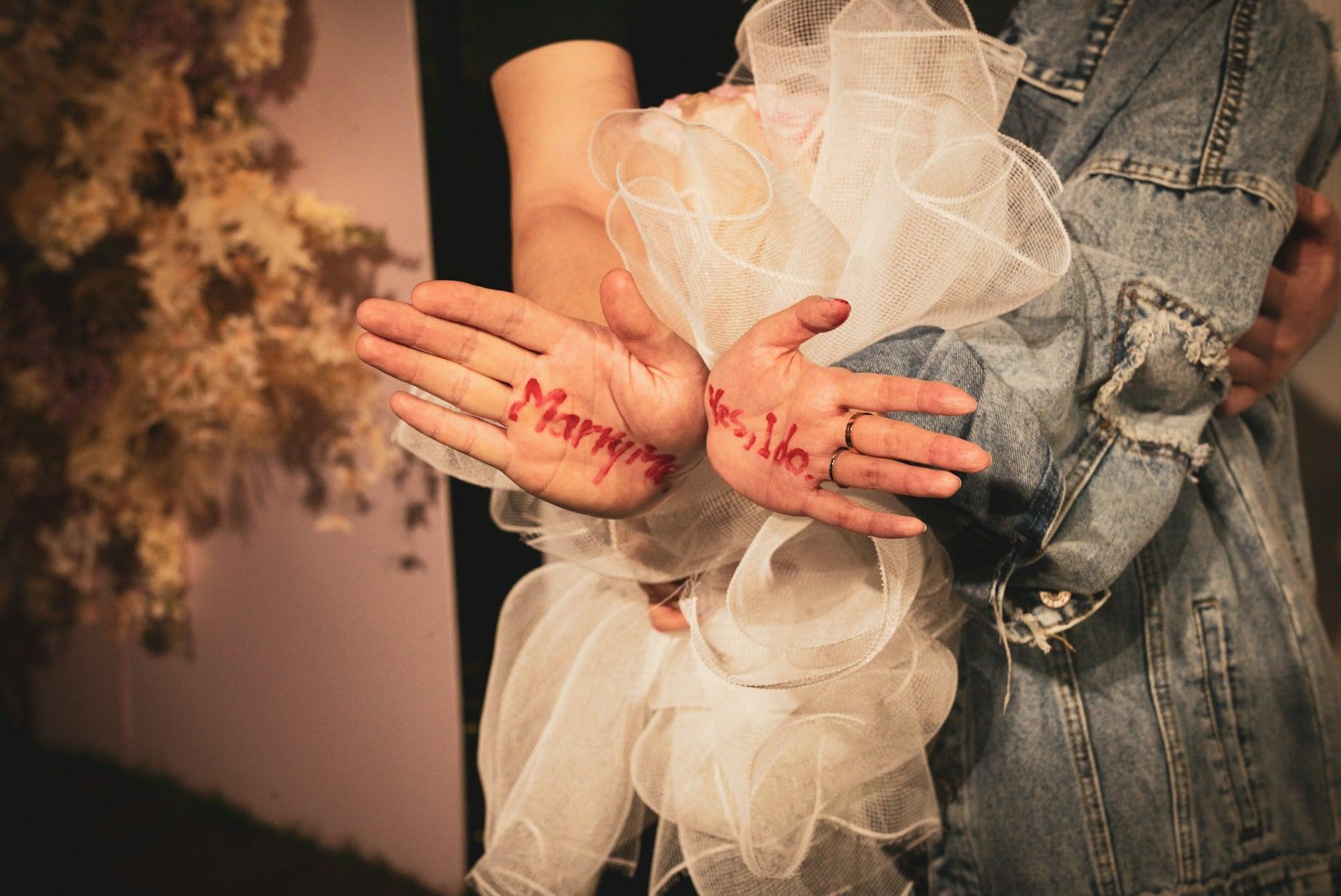
Opinion piece by Borka Schuster
Ever since my partner proposed, roughly every other conversation I have follows the exact same script: When's the wedding? How many people are you inviting? Will there be a church ceremony? What kind of dress do you want? Have you booked the venue yet? The decorations? The band? The photographer?
And I'm finding it harder and harder to explain to people that, honestly and from the bottom of my heart, I could not care less about any of it. In fact, I'd rather run a mile.
Neither of us has the slightest interest in planning a wedding, so we landed on a rather radical idea: we're simply not going to have one. Yes, I know, shocking, two grown adults deciding not to do something that isn't mandatory and that they have no desire to do. But that's just how rebellious we are.
I think a lot of people automatically assume that the moment you get engaged, some internal wedding-planner switch flips on. Suddenly you're building Pinterest boards, browsing bridal gowns, dreaming about floral arrangements, and excitedly counting down the sleeps until the big day.
Somehow that switch was never installed in me
The bridal bouquet does nothing for me. Seating cards leave me cold. I don't want to agonize over the paper quality of invitations, and I certainly won't be any happier spending months worrying about who might be offended by which table they're seated at.
Luckily, my fiancé feels exactly the same way.
We'll probably have a small civil ceremony, where we officially get married. And then that's it.
No reception. No party lasting until dawn. No bridal dance, no first dance, no cake cutting. Not because we're trying to save money, but simply because neither of us wants any of it.
And for some reason, that makes people uncomfortable. As if a wedding must, by definition, include a hundred guests, meticulously planned decor, and an all-day itinerary. As if a marriage only counts as serious if you spent months stressing over it first.
Don't get me wrong: I have absolutely nothing against people who want exactly that. Quite the opposite. I happily go to the weddings I'm invited to. I love seeing other people's joy, and I love watching two people celebrate joining their lives together. If someone has dreamed of a big wedding since childhood, I sincerely hope they get exactly the day they imagined.
I just don't understand why it's so hard to accept that, for someone else, none of this matters at all.
For me, even the thought is exhausting, coordinating with different vendors, requesting quotes, drawing up a guest list, making compromises, and all the while wondering who will take offense at not being invited, or at where we sat them.
It's hard for me to imagine planning a wedding without, at some point, starting to fulfill everyone else's expectations, and the last thing I want is to spend months stressed and a fortune spent on something built around other people's needs.
I don't want to stress for months over an event that adds no real value to my life. I don't want to spend a fortune on a single day just because tradition or social expectation demands it. And to be completely honest: I don't want to pour money and energy into a party where I'm supposed to feel totally carefree while my grandmother watches my every move.
Not having a big reception won't make us love each other any less the next morning.
Just because there won't be professional photos of a smoke-bomb entrance or perfectly coordinated decorations, we'll still be husband and wife.
And honestly, I'm far more excited by the idea of taking the money we'd blow on one day and going on a trip together instead. Somewhere with no seating chart, no schedule, no pressure to please anyone. Just the two of us. Exactly the way we like to be.
Is it normal not to want a wedding after getting engaged?
Absolutely. Not everyone feels the pull toward a big celebration, and choosing a simple civil ceremony instead is a perfectly valid decision that says nothing about how serious your commitment is.
Does skipping the reception make a marriage less meaningful?
Not at all. As the article puts it, you're just as married the next day, with or without the party. The ceremony makes it official; the celebration is optional.
How do you respond to people who don't understand the choice?
You don't owe anyone a detailed justification. The key is remembering that a wedding isn't mandatory, and doing what feels right for you and your partner matters more than meeting other people's expectations.
What can you do with the money instead of a big wedding?
Many couples prefer to spend it on experiences that feel more personal, like a trip together with no schedule and no pressure to please anyone.