Sometimes it feels like being a "good parent" today means nonstop scheduling and managing every minute of the calendar. Have I fallen behind? Or is it normal not to want to be everywhere at once?
Why is it considered old-fashioned if a parent doesn’t want to control everything? I’ve thought about this a lot and realized many people try to make up for what was missing in their own childhood. Most of our parents belonged to the boomer generation: living at a different pace, with different values, often less emotional presence. Not because they didn’t love us, but because that was just how things were back then. We came home on our own, solved conflicts among ourselves, and our after-school activities didn’t fill every hour of the week. If they did, we had to figure out how to get there and then manage the homework ourselves.
Today, many parents want to give the exact opposite: more attention, more presence, more support—sometimes without realizing they’re crossing their own boundaries.
For example, I don’t do homework for my daughter
I help my daughter study—I sit with her, explain things again if she’s stuck. But I never do the homework for her, even when I see her frustration and know we could finish it in half a minute. Sure, the temptation is there because it would be quicker and less stressful—but that’s not the goal.
I don’t remember my parents ever doing my homework. If we didn’t finish, there were consequences. We copied from each other, worked together, or accepted the bad grade.
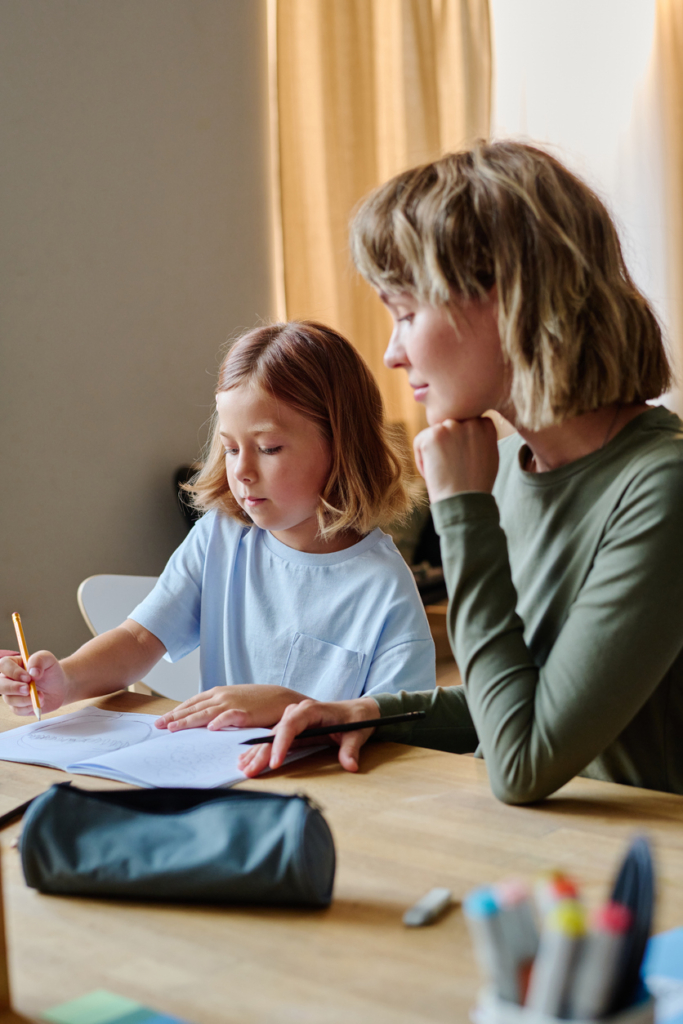
Sure, there were always parents like this, but in recent years I’ve seen many adults repeatedly cross the line. They dictate essays, rewrite fixed projects on their own terms, or handle their kids’ affairs well beyond homework. I try to stop where I’m still supporting but not playing the rescuer. If that makes me old-fashioned, so be it: I believe my daughter benefits most when she experiences small setbacks and learns she can overcome them.
I Don’t Want to Overload Her Calendar
In September, I asked her to choose a sport for the school year. I didn’t care what, as long as she moved and found something she enjoyed. But I didn’t want every afternoon to be a rush from one activity to another, nor did I want our weekends spent in competition halls.
Sometimes I feel uncertain when I hear about how many clubs kids attend or which talent programs they’re in. Many parents I know schedule activities every single day: handball, swimming, solfège, violin... Sometimes because it’s "mandatory," or "dad did it," or "at least the kid should play one or two instruments." I don’t question the value of clubs, but I see clearly how doing nothing, being bored, or just having time together during the week does her good.

We’re reaching the point where she can go to practice, visit friends, and attend events on her own. Her calendar is becoming her responsibility. And I’m less and less eager to organize her life because I believe independence doesn’t start at eighteen, but with small decisions much earlier.
I Don’t Want to Control Everything
I’m not against talking to teachers during the school year, especially when there’s a serious reason. For example, when I had surgery and had to rest for weeks, stepping away from daily life, I made sure the homeroom teacher knew that if my daughter’s behavior or grades changed, it was because of what was happening at home.
But I don’t message teachers over every small conflict or bad grade. I don’t ask if she ate well, who she sits with, or recount her home performances. I trust that teachers do their job, and I want my daughter to learn to handle her own situations.
I see how natural instant messaging has become: parents use Messenger with teachers and other parents as if managing every move of their child is the most normal thing.
I try to step back—not out of indifference or because I grew up as a "latchkey kid," but out of trust. I believe my daughter feels safe not because I monitor every moment, but because she knows: if there’s real trouble, I’ll be there.

I Don’t Take on Extra School Duties Anymore
I didn’t volunteer for the parent-teacher association, but since I did, I try to do it properly. Still, I’m careful not to overcommit. I don’t want extra points with teachers or to become a role model for burnout.
I have a life outside school, other priorities, and I need balance to avoid burning out. Sometimes I say no to organizing or extra tasks, and I feel zero guilt about it.
I believe I’m not a good example because I bake all the treats for class parties or because my name is behind every event.
My daughter will see me as a strong role model when she sees it’s okay to set boundaries, weigh options, and help others while taking care of yourself.
Partly, I’m driven to move away from what I got from my boomer parents. They grew up in a different world, and we often instinctively move in the opposite direction. Still, I can’t say I want to leave behind everything from their example. The emphasis on independence, accepting consequences, and the trust of "you’ll figure it out"—regardless of their motivation.
Maybe my parenting is less flashy, but for me, it’s about finding balance and believing my child can grow even (maybe especially) when I’m not always one step ahead—or behind.