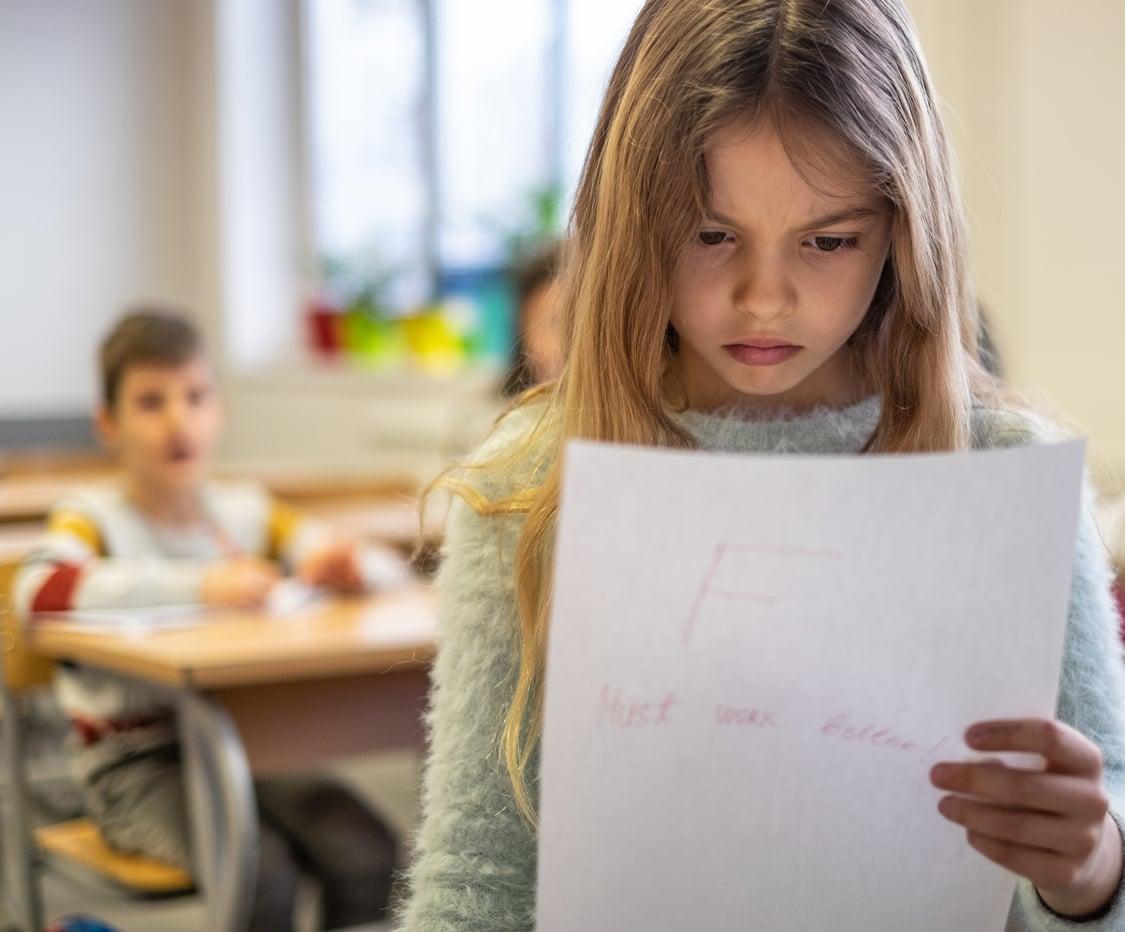
The school year is over, the report cards are in — and in many homes, that's when the real tension begins. If your child brought home grades that didn't match the bright, curious kid you know, you're not alone in wondering what went wrong.
Plenty of parents replay the same questions all summer: Why isn't my child doing better when nothing seems obviously wrong? Why is homework such a battle? And why does studying so often end in tears, stress, or a shouting match?
According to some experts, the answer usually isn't simple laziness or a lack of motivation. Very often, something quieter is at work — hidden patterns in attention, memory, or the way a child learns that can stay invisible for years.
When "won't do it" actually means "can't do it this way"
Many parents who reach out for help aren't looking for a diagnosis — they're looking for an explanation.
They can see there's more in their child than the grades reveal. And it's precisely that gap — between real ability and weak performance — that breeds frustration, and eventually spills over into tension across the whole family.
Attention and learning difficulties are often the real cause
A lot of children are quietly wrestling with complex challenges that directly affect how they perform at school.
That can include ADHD, dyslexia, dysgraphia, or dyscalculia — conditions that often reinforce one another and make learning even harder. And early, unchecked screen use can make the whole picture worse.
Short, rapidly changing online content trains the brain to crave constant new stimulation. The result? Children find it harder and harder to focus for long stretches on a single task, a page of text, or an explanation.
Why does studying turn into tears and conflict?
Learning difficulties don't just show up on a report card — they show up in everyday life. When a child is constantly struggling to keep up, tension, anxiety, or outright resistance can quickly take root.
Learning stops being a natural part of growing up and becomes a source of stress. And that stress often lands right in the middle of family life: the parent expects more, while the child grows more insecure and shuts down.
Summer break: rest, or falling behind?
Many families treat summer as pure downtime — a season to let go of anything school-related completely. But research points to a lesser-known phenomenon: summer learning loss.
In plain terms, a long break can quietly erode core skills — reading habits, mathematical thinking, the ability to concentrate.
This is especially visible in children who already struggled during the school year. For them, the slide backward can be even steeper if the rhythm of learning stops entirely.
Summer as an opportunity: growth without the pressure
But summer isn't only a risk — it can also be a rare opportunity. With no grades on the line, children can strengthen the very skills that later underpin success at school, all in a calmer, lower-stress setting.
That means sharpening attention, strengthening memory, supporting logical thinking — and rebuilding confidence. Even short, focused stretches of practice can bring noticeable change within a few weeks, while still leaving plenty of room for rest, play, and holidays.
A report card is a signal, not a verdict
The most important message is a simple one: don't read a report card as a final destination. Read it as a signal.
Weaker grades often reflect not a lack of knowledge, but a different way of learning. Modern assessment methods — including attention-based and eye-movement tests — can now map far more precisely how a child processes information, how much they can focus, and what their overall learning profile looks like.
And the goal isn't only better marks. It's helping a child rebuild their confidence and find their own way of learning.
It's not the grade that counts — it's the starting point
One of the most valuable things summer can offer today isn't just rest, but a chance to prepare — calmly and deliberately — for the year ahead.
The aim isn't for a child to study nonstop. It's to make sure that come September, they aren't walking straight back into the same struggles. Even a few weeks of targeted, playful practice can give a real head start.
How do I know if my child has a real learning difficulty or just needs more effort?
A telling sign is a gap between clear ability and weak results, paired with ongoing stress around studying. Difficulties like ADHD, dyslexia or anxiety often overlap and stay hidden, which is why an explanation — not just more pressure — usually helps most.
Can screen time really affect my child's ability to concentrate?
Yes. Short, fast-changing online content trains the brain to seek constant new stimulation, which can make it harder for children to focus for longer periods on a single task, text or explanation.
Is it bad to let my child fully switch off from learning over the summer?
A long break can weaken core skills like reading, mathematical thinking and concentration — an effect known as summer learning loss. The slide can be steeper for children who already struggled during the year, so keeping some gentle rhythm helps.
How much summer practice does a child actually need?
Not constant studying. Even a few weeks of short, focused and playful practice can bring noticeable improvement while still leaving plenty of time for rest, play and holidays.