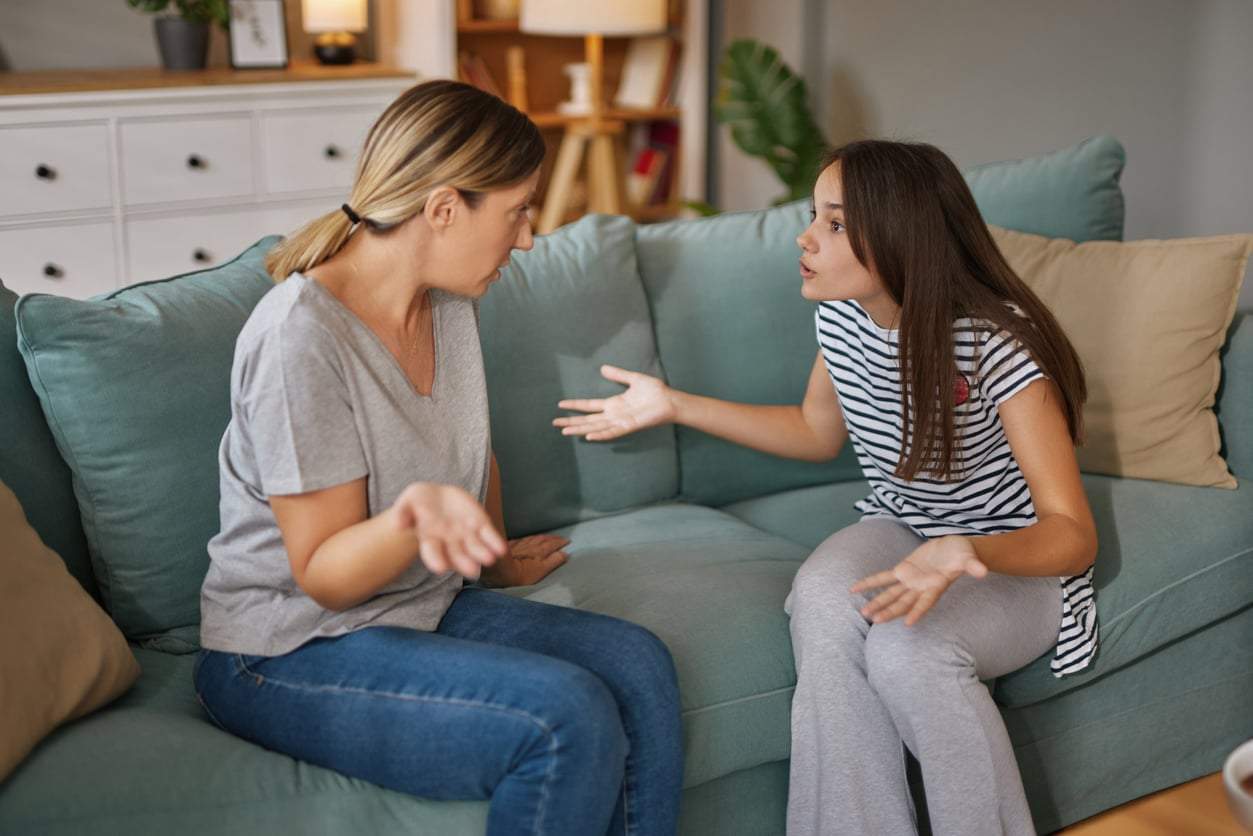
You flip through old photos and feel nothing but warmth. Then your child looks at the same picture — and flinches. How is it possible to live through the same years and come away with such different memories? These are real stories from parents who found out, sometimes decades later, that their children's childhoods looked nothing like what they remembered.
The sea
I found a stack of old photos while clearing out my desk. My daughter and I sat down to look through them together, and there they were — pictures from a trip to Croatia when she was eight. I smiled and pointed to one.
"Remember how much fun you had? That was the first time you ever saw the sea."
She gave me a look, flipped quickly through the photos, and put them back in the box.
"Mom, I didn't have fun at all. I don't even want to think about that trip."
My jaw dropped. She told me that her father and I had argued the entire time, and she'd been left to play alone on the beach. She was lonely the whole holiday and couldn't wait to go home.
I won't deny that her father and I had our tensions. But in my memory, that trip was a happy one — she looked so sweet splashing around in the waves. I had no idea she'd been silently suffering the whole time.
Perspective
My adult daughter blames me for the fact that her relationships keep failing.
"If I hadn't spent my entire childhood surrounded by constant fighting, maybe I'd know what a healthy relationship looks like! Why did you only leave my father when I was already in college? You should have done it years earlier — I never had a chance at a normal childhood!"
And there I sit, thinking about how many times I had wanted to leave — but didn't, because she adored her father as a little girl and I couldn't bear to take that from her. I sacrificed half my life staying with a man who made me miserable, and now the child I did it for throws it back at me like a sin. And somehow it's also my fault she can't find a partner.
Cold water
My daughter Johanna died at 28. She had struggled with addiction, and we did everything we could for her, but the third overdose took her. After the funeral, I became a shell of a person — barely functioning, barely present.
My son looked after me for a few weeks. Then one day he said something that cut right through the fog. He told me he needed me to pull myself together — because I "owed him that." I stared at him, confused. He continued:
"I was ten when my sister started using, and that's when you stopped being my mother, because she became your whole world. I understand why. But you still weren't there when I needed you. I had to handle everything alone, face every hard thing by myself. Now that Johanna is gone, it's time for you to show up for me — not the other way around."
I had no idea he felt that way. He had always been quiet and independent — a boy who never seemed to need anything. I thought he was fine in his own quiet world. In reality, he had been in survival mode the entire time, because Johanna's crisis left no room for him.
The guilt hit me like a wave. I cried for days. Then — as he asked — I pulled myself together. Because he was right. I did owe him that.
Forgiveness
My son was an outstanding student and a competitive athlete — until an injury ended that. My daughter was always average: nothing exceptional, except for getting into trouble. My wife and I were careful, or so we believed, to make sure she never felt lesser because of the comparison. I even said as much to someone at my son's wedding.
My daughter overheard it. She let out a sharp, bitter laugh — then burst into tears and ran out to her car and drove away. The whole scene felt surreal. The next day, my wife and I went to her apartment to talk. She wouldn't let us in. She didn't speak to us for two full years.
We saw her again at her grandmother's funeral. After the other guests had gone, we finally sat down and talked. She told us that she had spent her entire childhood invisible, living in her brother's shadow, and that the only time we ever noticed her was when she was acting out — because at least then we were looking at her.
Her words stung. My wife got defensive — she thought it was just jealousy talking. But I quietly accepted what my daughter was telling me. I told her we had made mistakes, and that I was truly sorry she had felt overlooked. It was never our intention.
"That's all I've needed to hear for so long — that you acknowledge my pain, and that you accept it wasn't easy for me either."
She hugged me and said those words. To this day, she and I have a close relationship. She and her mother still don't speak.
Understanding
My son and I fought about this for years. An only child, born when I was young, raised by me alone — and as an adult he regularly confronted me with every mistake I had made as his mother, everything I had done "to him."
I always fired back that he was ungrateful, that he'd always had everything he needed, that I had poured my whole self into raising him.
"You were the first kid in your class to have a laptop!" I snapped once. He shot back: "Yeah, Mom — and I got teased because you wore miniskirts and brought home a different guy every week. You were never around. You were either exhausted or out dating."
"Because I wanted you to have a father figure," I told him. "And I was working three shifts to keep us afloat."
One day I was so exhausted by the back-and-forth that I simply apologized — for all of it, for his whole childhood. I told him it wasn't an excuse, but I had been barely more than a kid myself back then. I didn't know what I was doing. Everything I did, I did because I thought it was best for him. He was always the most important thing in my life.
I hadn't managed to give him a perfect childhood. I was sorry for every way I had fallen short. But he needed to know that in every moment, I had done what I believed was right — and that he had always come first for me.
He was quiet for a moment. Then he said:
"Thank you. And I'm sorry for being so hard on you."
That was years ago. We have never argued about the past again.
Why the same childhood can feel so different
These stories aren't about who is right. They're about something more uncomfortable: two people can live through the exact same years and carry completely different wounds — or no wounds at all. A parent who remembers a fun beach holiday may not have seen the child sitting alone on the sand. A mother consumed by one child's crisis may not have noticed the other quietly disappearing.
What these stories have in common is not blame. It's the moment when someone finally said: I hear you. What you felt was real. In almost every case, that was enough to begin to heal something.
Listening doesn't mean agreeing. It doesn't mean accepting guilt for things you didn't know or couldn't have done differently. It simply means making room for your child's experience — even when it sits uncomfortably beside your own memories.
Frequently asked questions
Why do parents and children remember childhood so differently?
Because they experienced it from entirely different vantage points. A parent may remember the effort and love they gave; a child remembers how it felt to be on the receiving end — which is sometimes lonelier, more confusing, or more painful than the parent ever realized.
What should I do if my adult child tells me they weren't happy growing up?
Listen without immediately defending yourself. Acknowledging their experience doesn't mean agreeing with every detail or accepting blame — it means recognizing that their feelings were real. As several of these stories show, that simple act of acknowledgment can be the beginning of real repair.
Is it too late to repair the relationship if years have passed?
Not necessarily. Some of the parents in these stories reconnected after years of silence or conflict. What made the difference was a willingness to listen, to admit mistakes honestly, and to stop competing over whose memory of the past was "correct."
What if I feel my child is being unfair or ungrateful?
That feeling is understandable, especially when you sacrificed a great deal. But responding with defensiveness often deepens the distance. As one mother in these stories found, apologizing — not for bad intentions, but for the real impact of your choices — was what finally broke years of conflict.