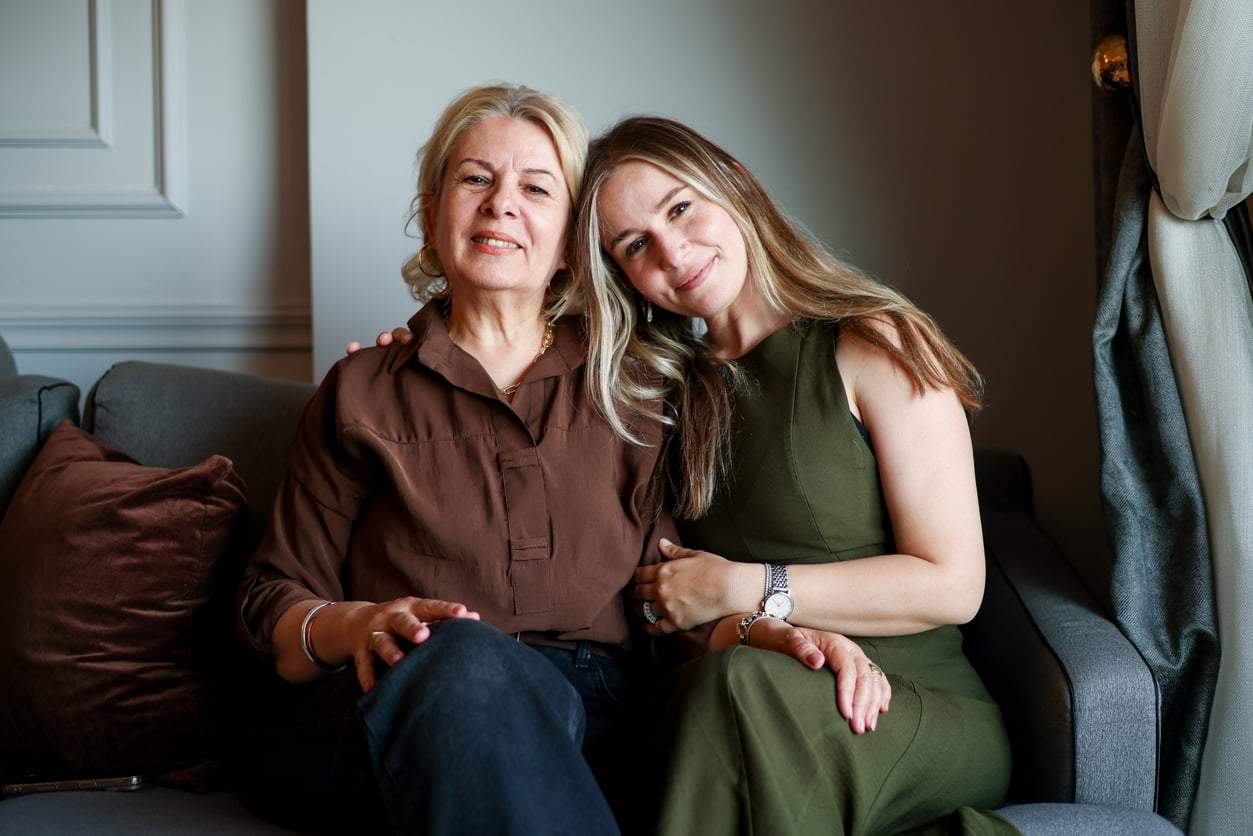
Until I turned forty, I genuinely believed it was normal. That some families just don't do hugs, don't say "I love you," and that's fine — at least nobody's screaming. I was sitting at my mother's kitchen table on a Saturday afternoon, turning a coffee cup in my hands, when it hit me: I had spent decades carrying something I never once allowed myself to say out loud.
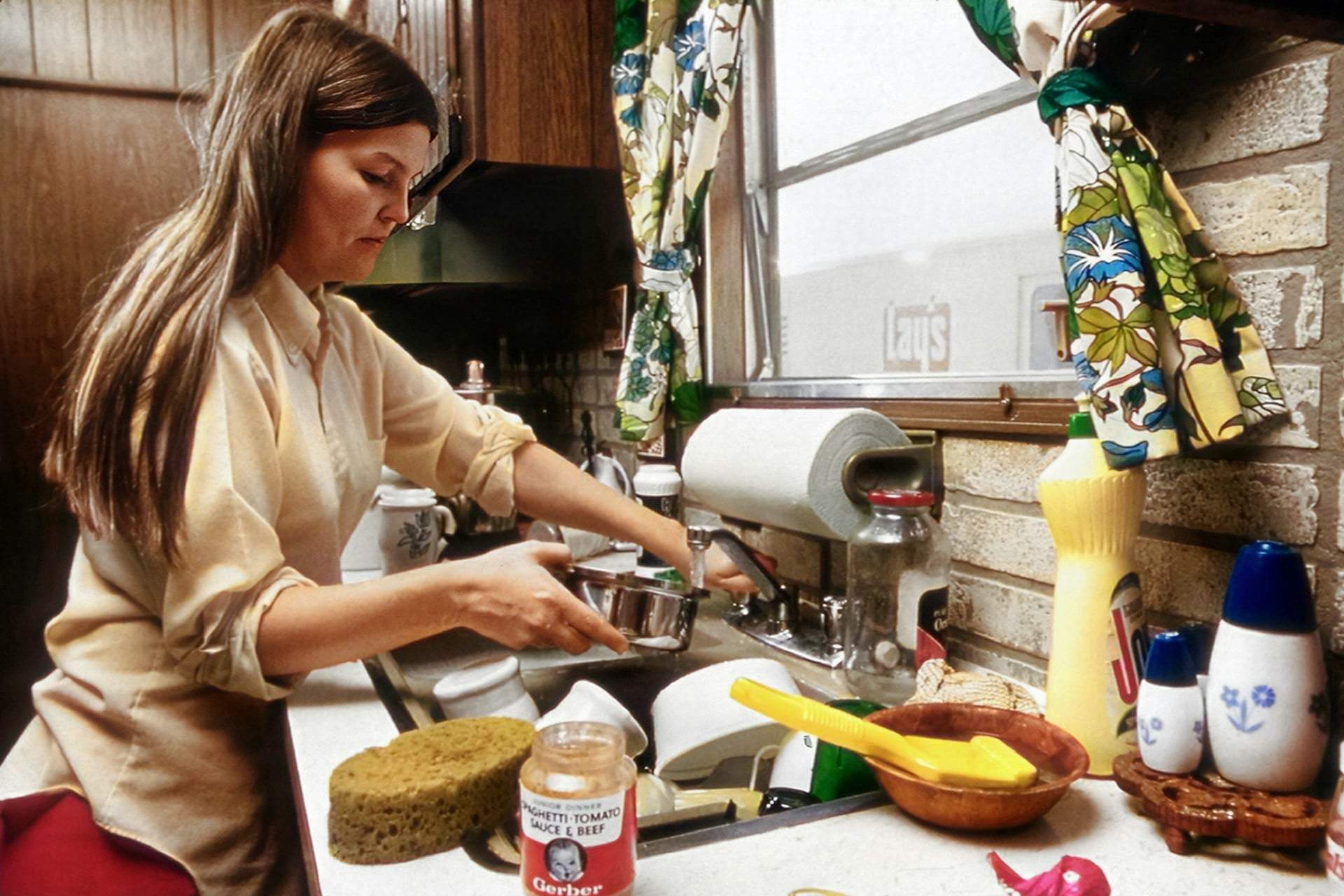
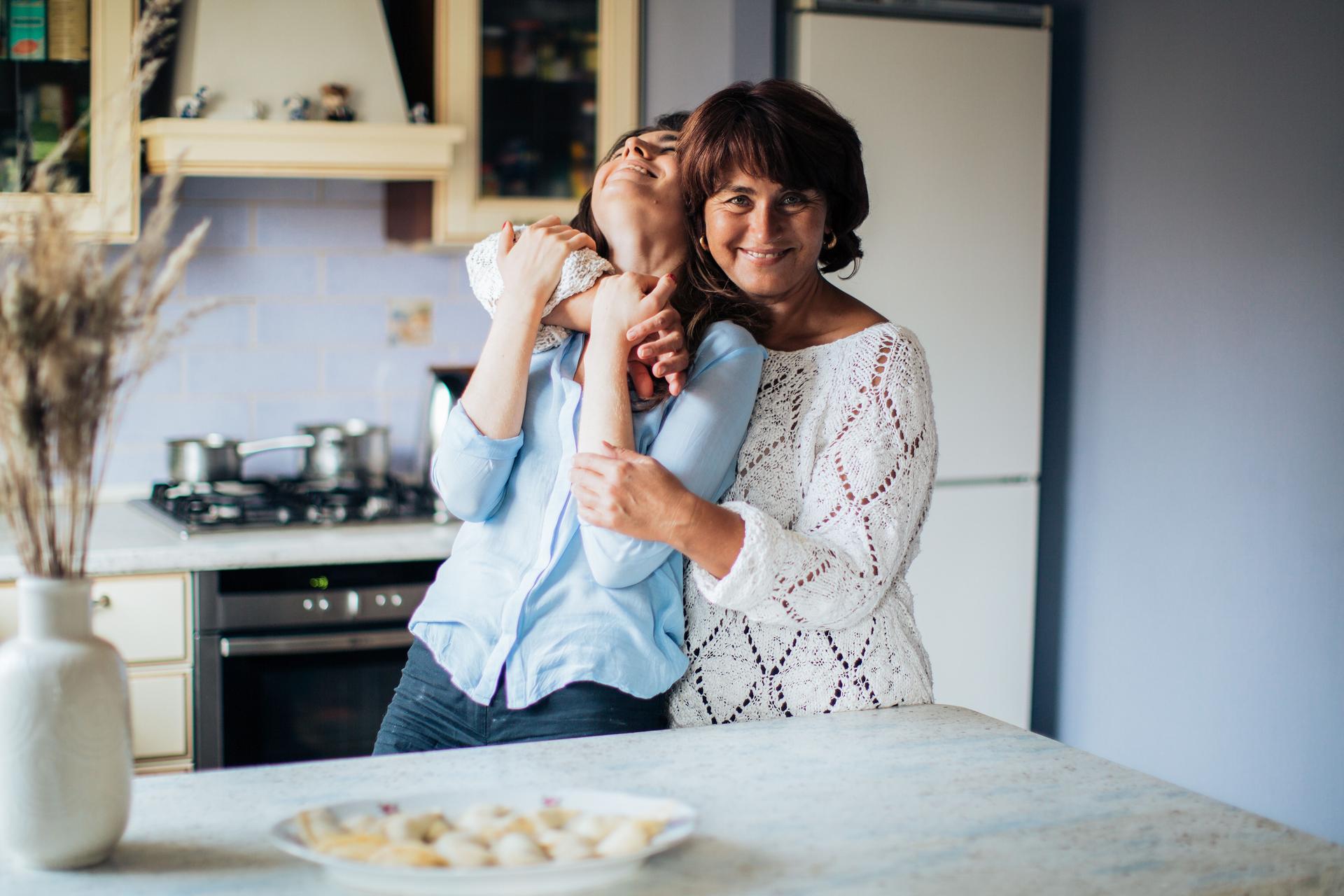
The kitchen table was the same one from my childhood. The oilcloth had been replaced a few times, but everything else felt frozen. My mother stood at the sink with her back to me, the way she always did when something important hovered in the air between us. I watched the familiar slight curve of her shoulders and felt my hands tremble around the cup. I hadn't planned any of this. It just slipped out — the moment my six-year-old daughter came running in from the living room and threw her arms around me for no reason at all.
The sentence I couldn't say for forty years
That's when I spoke. I heard myself say it before I'd decided to:
"Mom, you never hugged me when I was a child."
It didn't come out as an accusation. More like a fact I finally needed to hear myself say. My mother turned around, dish cloth still in her hand, and looked at me for a long moment. The faucet was still running. Somehow that sound felt louder than my own heartbeat.
She told me that no one had ever hugged her either. That my grandmother was a hard woman who worked from dawn until dark and had no room left for tenderness. That my mother had believed — truly believed — that cooking meals, ironing school shirts, and showing up to every parent-teacher conference was love. Just love expressed differently.
I realized I had spent my whole life waiting for her to give me something she had never been given herself — and therefore never learned to pass on.
I wasn't angry. But nothing was magically fixed, either.
Strangely, I didn't feel rage. Or rather, the low-burning anger I had carried for years seemed to dissolve in that moment — not because I instantly forgave her, but because this wasn't a movie where everyone cries and embraces at the end. My mother didn't hug me then. She just stood there, twisting the dish cloth in her hands, and said quietly: "I didn't know it mattered that much to you."
That sentence hurt more than anything else. Not the decades of missed hugs — but the fact that for forty years, she hadn't noticed how much their absence had shaped me. Growing up without physical affection became a kind of silence I absorbed into myself, one I later carried into my own marriage — where I had to learn, slowly and with effort, what it feels like when someone holds you for no reason at all.
If you've ever wondered how the emotional patterns of one generation quietly wound the next, that afternoon gave me a painful, clarifying answer.
For my daughter, showing love is simply second nature
I hug my daughter every single day now — sometimes probably too often, as if I'm trying to make up for something that can't actually be undone. My mother and I still see each other every week. We drink coffee at the same table. And sometimes, when I leave, she reaches out and holds my arm for just a second. It's not a hug. But it's something that wasn't there before.
I don't know what I expected from that afternoon. Maybe some part of me believed that one honest sentence could undo forty years of silence. It didn't work like that. But now we both know the gap is there — and we no longer have to pretend it isn't.
Why is it so hard to talk about not feeling loved as a child?
Because for many people, the experience was never labeled as harmful — it simply felt like "how things were." Without a clear wound to point to, it can take decades before someone finds the words, or the courage, to name what was missing.
What does it mean when a parent expresses love through actions rather than affection?
As the article describes, some parents show care through practical acts — cooking, providing, showing up — without ever offering physical warmth or verbal reassurance. This can be genuine love, but it often leaves children feeling unseen in ways they can't fully articulate until adulthood.
Can one honest conversation actually change a long-standing family dynamic?
Not instantly, and probably not completely. But as this story shows, naming the truth out loud can shift something — it breaks the unspoken agreement to pretend everything was fine, and creates the possibility of something new, even if it's small.
Is it too late to address emotional wounds from childhood once you're an adult?
It's never too late to speak your truth, even if the outcome is imperfect. The conversation described here didn't rewrite the past, but it did change the present — and that's often where healing quietly begins.