Until I was thirty-two, I genuinely believed that being a good mother, a good wife, and a good daughter meant one thing: always saying yes. No complaints, no questions, no pushing back. If that meant waking up at five in the morning so the coffee was hot and the clothes were ironed before anyone else stirred — fine. Nobody explicitly asked me to do it. But nobody ever asked me to stop, either.
I said yes because I thought that's what good women do
The household, the kids' school schedules, my husband's work dinners, Sunday lunches for his parents — which we hosted on the first Sunday of every month for ten years because their kitchen was too small, and because I never once suggested otherwise. For a while, I was effectively working three jobs at once: my official position, part-time bookkeeping from home, and the family — which never took a day off.
I didn't see it as sacrifice at the time. I saw it as just… being responsible. Being the person everyone could count on. I wore that role like a second skin, so long I couldn't tell where it ended and I began.
The sentence that changed everything
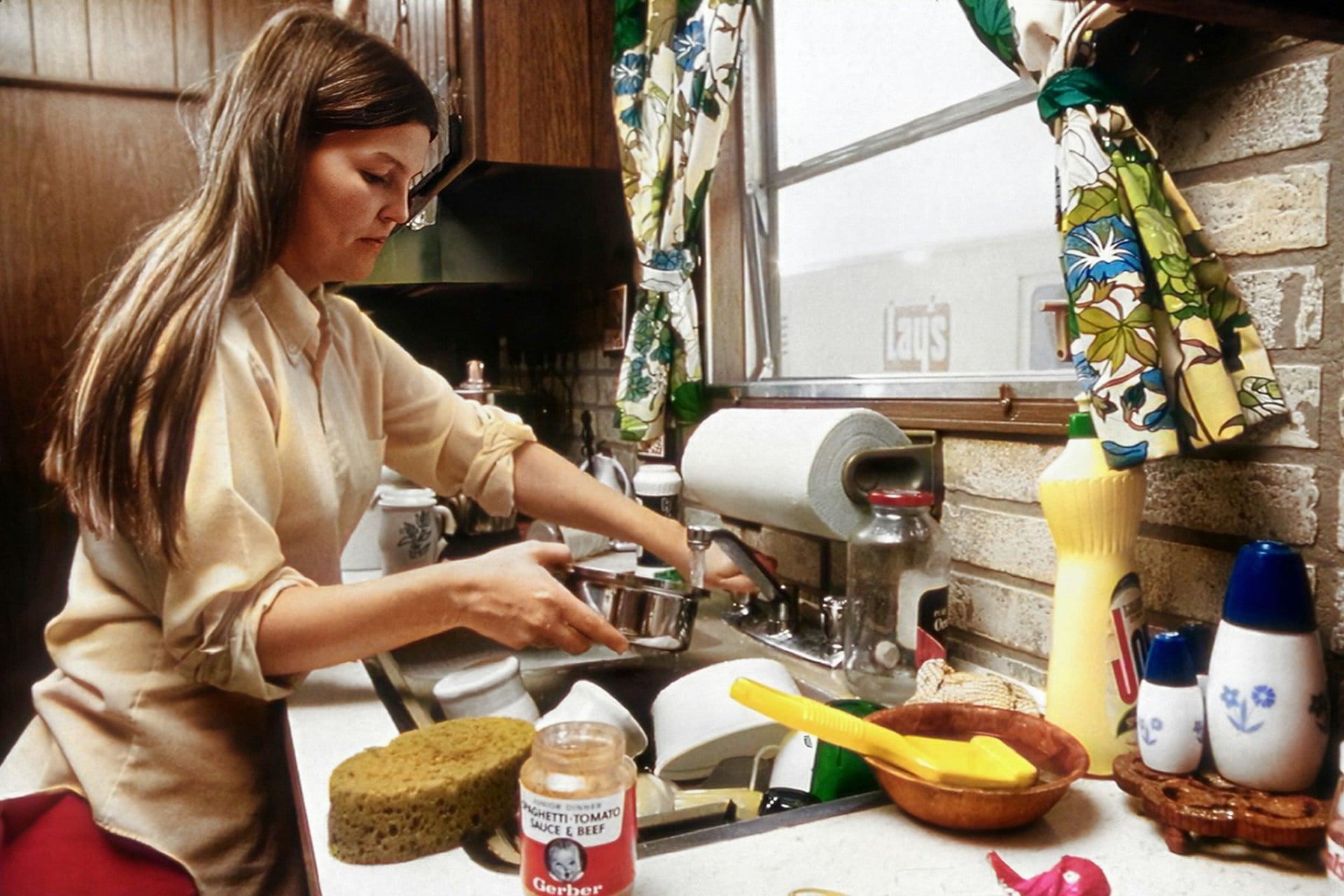
I remember the exact evening. It was like every other evening — completely unremarkable. I was at the kitchen sink, the tap running, my hands red from the hot water. My back ached because I'd spent the afternoon clearing out the garage so my in-laws could come the next day to look at a wardrobe we were giving them. My twelve-year-old daughter was sitting at the table doing her homework, and at some point she looked up and watched me. I don't know how long she'd been watching before she finally spoke.
"Mom, you never say no. I never want to be that kind of grown-up."
I froze. The sponge was still in my hand, the water still running. She had already turned back to her notebook, casual as anything — just an offhand observation from a kid telling the truth the way only kids can. But for me, something in my chest cracked open right there at the kitchen counter.
When I finally let myself think about me
I didn't say a word that night. I took something for my back, lay down next to my husband who was already asleep, and stared at the ceiling. I started mentally scrolling through the last ten years — how many times I'd said yes to things I didn't want to do. How many extra projects I'd taken on because saying no felt too uncomfortable. How many times I'd cooked Christmas dinner for thirty people while no one had ever thought to ask what I might like to eat that day.
The strangest part? I wasn't angry. Not at my husband, not at my mother-in-law, not even really at myself. I just lay there feeling something quietly crack inside me — like a glass that breaks so gently you don't notice until the next morning, when you pour something hot in and it finally splits.
The first "no" felt terrifyingly light
I didn't wake up the next morning as a different person. There was no big speech at the dinner table, no dramatic confrontation. But when my neighbor asked if I could drive her son to practice that afternoon because she had an errand, I heard myself say, for the first time, "I can't make that work today." My voice trembled as I said it. And for the rest of the day, I felt strangely weightless — like I'd set down a bag of groceries I'd been carrying for years without ever noticing how heavy it had gotten.
I'm not perfect at this, even now. Sometimes the old habits win and I say yes to things I don't want, because the reflex is stronger than I expect. My daughter still calls me out when she sees me piling everything onto my own plate — and when she does, sometimes I laugh, and sometimes my throat tightens. But I know this: that moment at the sink, hands wet, tap running, I will never forget it. Not because it changed everything overnight, but because from that point on, I at least knew to keep one eye on myself — something I hadn't done in a very long time.
Is it really selfish to say no?
Women who always say yes are often praised as selfless, generous, dependable. But there's a fine line between generosity and self-erasure. Setting boundaries isn't selfish — it's a form of honesty, both with yourself and the people around you. A person who is constantly depleted has very little left to genuinely give.
My daughter didn't teach me that with a lecture. She taught me with one unfiltered sentence, the way twelve-year-olds do. And I think about it every time I feel the word "yes" forming before I've even had a chance to think.
Frequently asked questions
Why is it so hard to say no, even when you want to?
Years of conditioning — from childhood, from family expectations, from cultural ideas about what a "good" woman or mother looks like — can make refusal feel genuinely dangerous, even when it isn't. The habit of saying yes becomes automatic, and breaking it takes conscious effort every single time.
What if saying no makes the people around me upset?
Some discomfort is likely at first, especially for people who are used to your unconditional availability. As the article shows, the first "no" can feel terrifying — but the people who truly care about you will adjust. And the ones who don't may be worth reconsidering.
Can children be affected by watching a parent never set limits?
Yes — as this story makes clear, children notice more than we think. A parent who never says no can unintentionally model self-abandonment as the norm, teaching their children that constant self-sacrifice is what adulthood looks like.
How do you start saying no after years of always saying yes?
Small steps matter. As described here, the first "no" doesn't have to be dramatic — it can be as simple as saying "I can't make that work today" to a neighbor. The key is starting somewhere, even if your voice shakes.