Every family has a handful of stories that get told at the table until everyone can recite them: the wedding where the cake collapsed, the uncle who missed the ferry, the grandmother who walked to work in shoes two sizes too small. And every family has a much larger set of stories that nobody has said out loud in fifteen years. Those are the ones that disappear. Not dramatically, not all at once — they just stop being repeated, and then the only person who knew them is gone.
A widely shared piece of film news this week — an animated sequel centred on remembering the people who came before us — set off a lot of sentimental conversation online. It is a lovely prompt, but a prompt is all it is. The actual work of keeping a family's stories is unglamorous, cheap, and entirely doable in ordinary weeks.
Start with voices, not documents
Photographs survive. Voices almost never do, and voices are what children remember. If you have an older relative who is still with you, the single highest-value thing you can do this month is record them talking for twenty minutes on your phone.
Do not announce it as a legacy project; that makes everybody stiff. Sit with them over tea, put the phone face down on the table, and ask small questions rather than grand ones. What did the kitchen smell like on a Sunday? Who was the loudest person in your street? What did you actually think when you first met Dad? Specific, sensory questions get real answers. "Tell me about your life" gets a shrug.
Save the file somewhere with a real name attached — the relative's name and the year — and send a copy to one other family member. Storage that lives on one phone is not storage.
Name the faces while someone still can
The saddest box in most homes is the one full of photographs of people nobody can identify. Twenty minutes with a soft pencil and the back of each print solves a problem your grandchildren cannot solve at any price. If the photos are digital, use the album description or a simple text file listing who is in each shot.
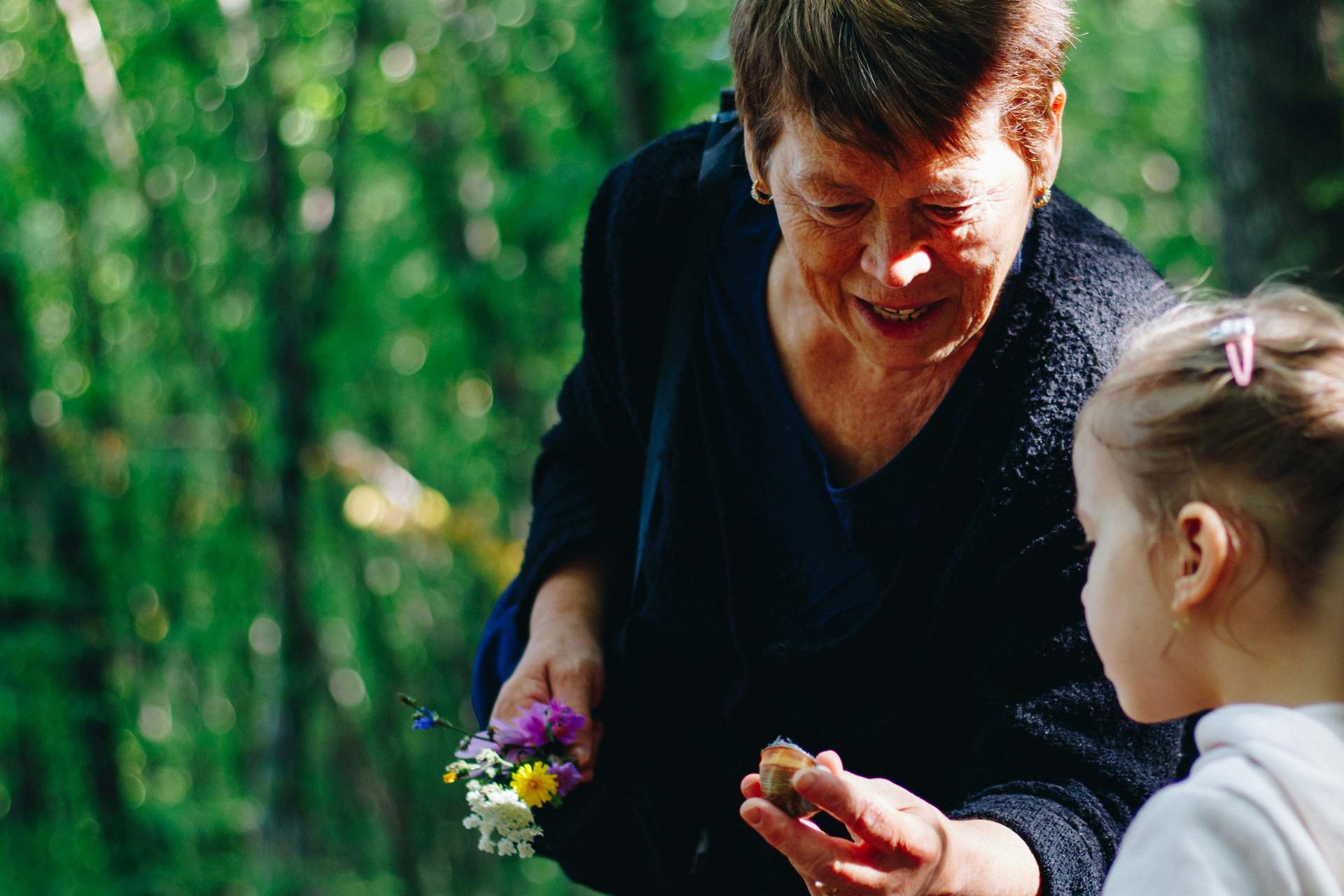
Do this with a child in the room if you can. Children are surprisingly good at it — they ask the blunt questions adults are too polite to ask, and they remember odd details for decades. My own memory of a great-aunt is entirely built from one afternoon of sorting photographs and being told she once refused to speak to her brother for a year over a dog.
Anchor a story to something you do, not something you store
Memory needs a hook in ordinary life or it becomes an archive nobody opens. Pick one repeatable thing: a dish cooked on a particular date, a walk to a particular bench, a song played on a birthday. When you do it, say the name of the person out loud and tell one story. One. Short. It does not need to be a ceremony.
Children absorb this without effort. They learn that people who have died can still be spoken about warmly and casually, which is a far kinder inheritance than the household where a name makes everyone go quiet.
Let the stories be honest
There is a temptation to sand everyone into a saint. Resist it, in an age-appropriate way. "He was funny and he was difficult, and both are true" is a sentence children can hold from about eight or nine, and it teaches something valuable: that love does not require a person to have been perfect. Sanitised family history tends to collapse in adolescence, when someone finally hears the unedited version and feels lied to.
What if my child asks a question about death I cannot answer?
Say so, plainly and without panic: "I don't know, and nobody really does — what do you think?" Children are usually less frightened by uncertainty than by an adult who suddenly changes tone or leaves the room. Keep answers short and concrete, let them come back to the subject in their own time, and if grief in your household feels stuck or frightening rather than sad, a family counsellor or bereavement service is a sensible place to take it.
How do I start recording an older relative without it feeling like an interview?
Attach it to something you were doing anyway — peeling vegetables, sorting a drawer, driving somewhere together — so their hands are busy and the conversation has somewhere to wander. Ask about objects rather than eras: a ring, a photograph, a recipe card, the chair nobody is allowed to sit in. If they say no, leave it, mention it again in a few months, and in the meantime write down what they tell you from memory that same evening.