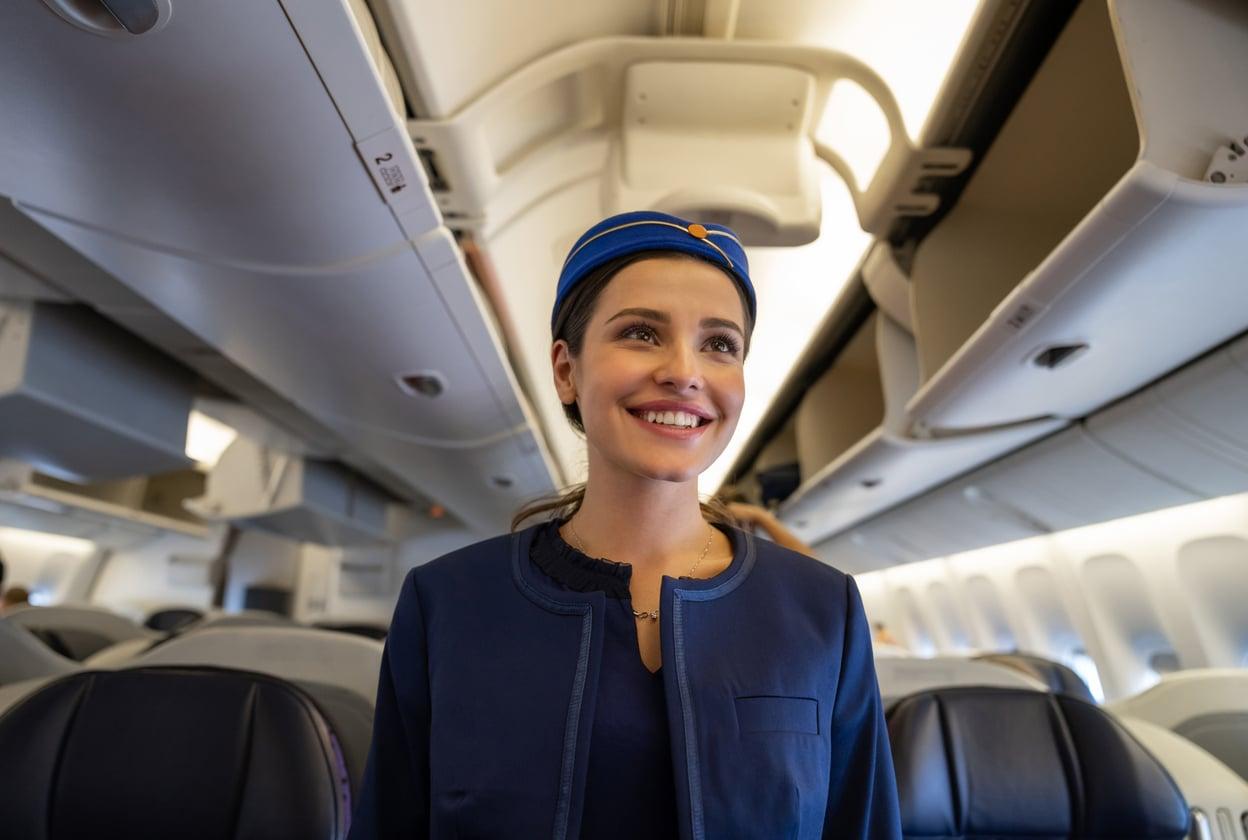
We love to envy flight attendants: all those beautiful destinations, all those unforgettable experiences. But their glamorous job comes with a hidden cost, and it shows up on their skin.
Hours spent in dry, pressurized cabin air can leave anyone looking tired and drawn. So how do the people who fly for a living keep their complexions fresh? Their secrets are surprisingly simple, and every one of them works on the ground too.
Why skincare matters so much on a plane
A flight puts your skin under real stress. Low humidity, cabin pressure and constant airflow all pull moisture out of your skin, leaving it dry and dull.
That dehydration does more than speed up the appearance of fine lines. It can also disrupt the way your skin functions and protects itself.
On top of that, recycled cabin air isn't always as clean as we'd like, which can trigger irritation and that heavy, worn-out feeling by the time you land. That's exactly why a solid skincare routine makes such a difference in the air.
A flight attendant's secret weapon: hydration
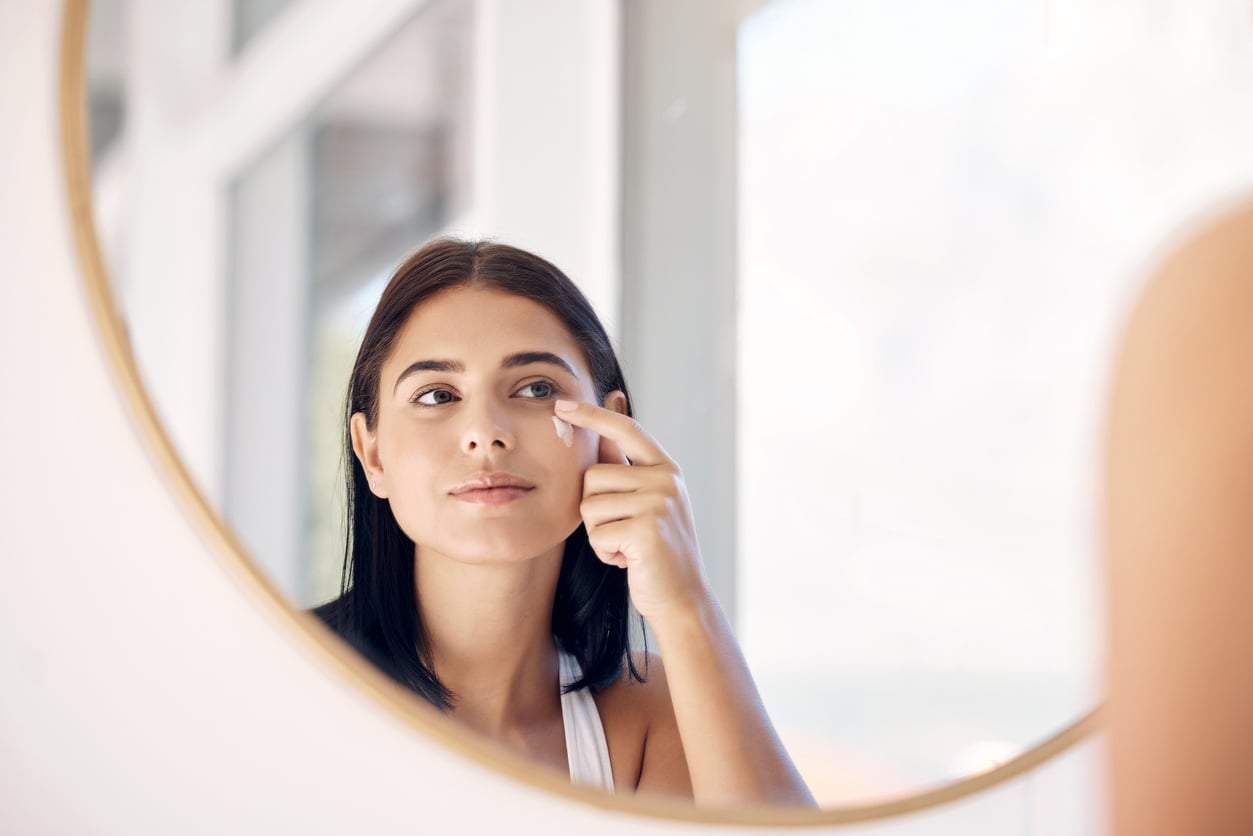
For most cabin crew, the foundation of the whole routine is one thing: constant, generous hydration. That usually means facial mists and sheet masks, applied liberally on longer flights.
The beauty of a hydrating mist is that it works in seconds and slips easily into any carry-on.
Whenever they can, flight attendants reach for liquid moisturizers rich in nourishing essences and minerals. These help lock moisture into the skin and keep dehydration at bay, even after hours in the air.
If you want to go deeper on this, our guide to staying hydrated while flying breaks down exactly what to pack.
Smart sun protection at altitude
Here's something most travelers never consider: you're still exposed to the sun's harmful rays on a plane, especially in a window seat. UV exposure actually intensifies the higher you climb.
That's why sunscreen isn't just for beach holidays. Applying it in the air matters just as much, and many crew members treat it as non-negotiable.
On dermatologists' advice, plenty of flight attendants use lightweight sunscreens that sit comfortably on the skin without feeling heavy, yet still shield it effectively from UV damage.
Beauty starts on the plate
Great skin isn't only about the right creams and treatments. For cabin crew, a healthy, balanced diet is just as important, because it feeds the skin's natural glow from the inside out. Plenty of fresh vegetables, fruit and enough water are the baseline.
A diet rich in vitamins and antioxidants supports that healthy radiance, helps keep skin firm, and makes it more resilient against everything the environment throws at it.
Wherever you are, these tips aren't just for flight attendants. They're for anyone who wants to keep their skin looking fresh and youthful, even at 30,000 feet.
How does flying dry out your skin?
Cabin air has very low humidity, and combined with cabin pressure and constant airflow, it pulls moisture out of your skin. That leaves it dry, dull and more prone to fine lines.
What is the most important step for skin during a flight?
Hydration. Facial mists and sheet masks, along with moisturizers rich in essences and minerals, help lock in moisture and prevent the skin from drying out mid-flight.
Do you really need sunscreen on a plane?
Yes. You're still exposed to UV rays in the air, especially by a window, and that exposure intensifies at altitude. A lightweight sunscreen offers effective protection without feeling heavy on the skin.
Can what I eat affect my skin at altitude?
Absolutely. A balanced diet full of fresh vegetables, fruit, vitamins and antioxidants, plus enough water, supports your skin's natural glow and helps it stay firm and resilient.