Your cleanser might be the most underrated step in your skincare routine. Most people grab whatever looks good on the shelf — but the texture of your cleanser matters far more than the brand on the label. Get it wrong, and you could be triggering breakouts, stripping your skin barrier, or leaving your face feeling tight and irritated every single day.
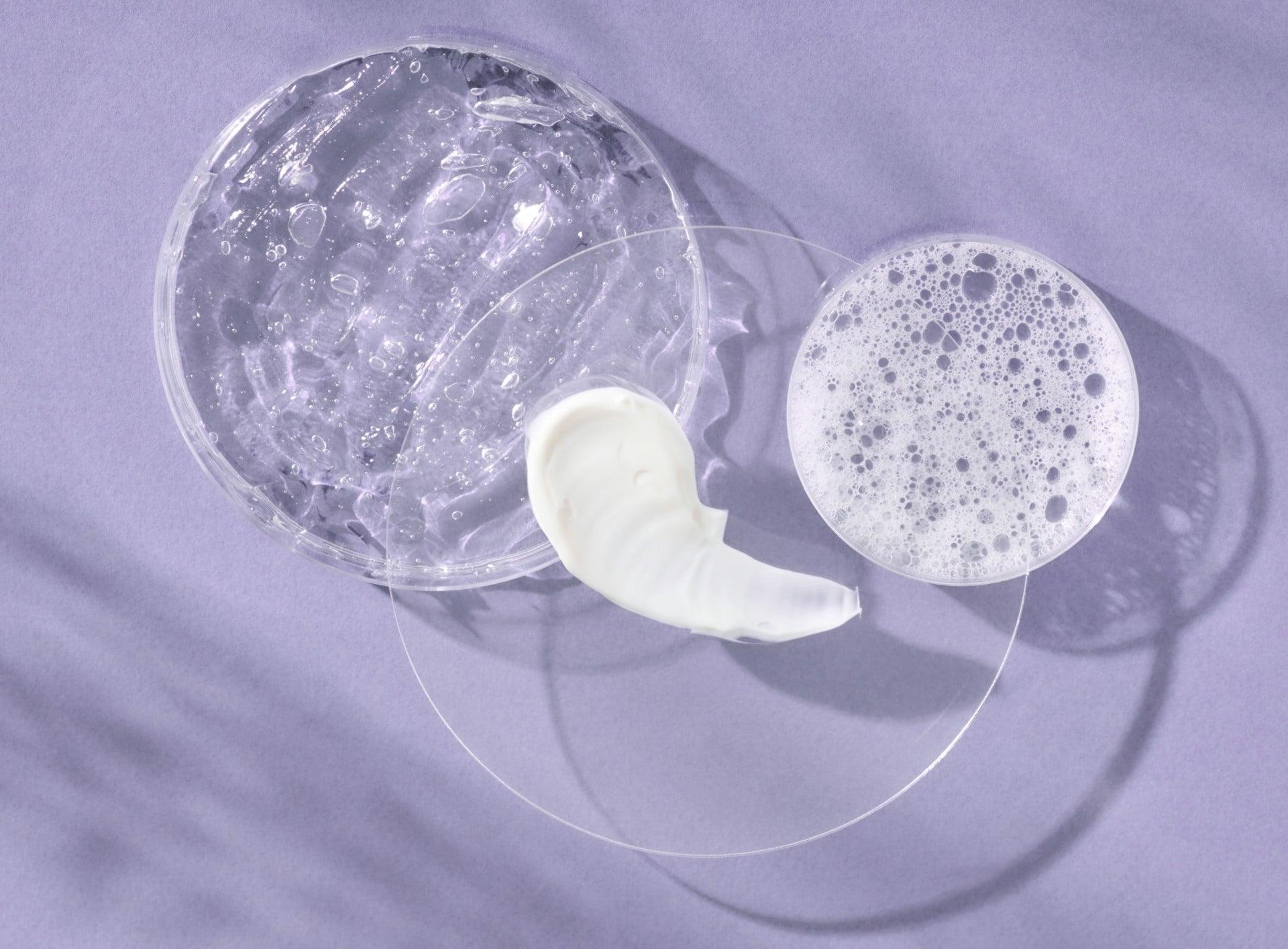
Gel, cream, milk, and oil-based cleansers each work differently — and each one suits a different skin type. Here's how to figure out which formula is actually working for you, not against you.
Gel cleansers: best for oily and acne-prone skin
Gel cleansers are lightweight, water-based formulas that use mild surfactants to cut through excess oil and surface impurities. When mixed with water, the gel texture lathers up and delivers a deep, thorough cleanse.
They're ideal when your skin feels sweaty, congested, or prone to breakouts — they rinse off cleanly and don't leave any moisturising residue behind.
Expert tip: Steer clear of gel cleansers loaded with sulfates. Combined with hot water, they can seriously damage your skin barrier — and paradoxically trigger even more oil production. If your skin feels squeaky-clean after washing, that's not a good sign. Look for gentler gels that contain glycerin, aloe vera, or hyaluronic acid to cleanse without over-stripping.
Cream cleansers: best for dry and sensitive skin
Cream cleansers have a rich, velvety texture designed to remove impurities without stripping your skin's natural oils. They're deeply nourishing and particularly well-suited to dry, sensitive, or dehydrated skin — as well as anyone using strong actives like retinoids or exfoliating acids that can compromise the skin barrier.
In the morning: They offer a gentle cleanse that won't leave your skin feeling tight or dry before the day begins.
In the evening: They're great for lifting daily grime and pollution — just follow with a micellar water first if you're wearing heavy makeup.
What to look for on the label: ceramides, glycerin, hyaluronic acid, and squalane.
Milk cleansers: best for mature and sensitive skin
Milk cleansers are lightweight, non-foaming formulas that cleanse without any risk of drying the skin out. Their fluid texture makes them ideal for dry, sensitive, and mature skin types.
They're especially worth considering during hormonal transitions — such as perimenopause and menopause — when declining oestrogen levels cause the skin to lose moisture and sebum production more rapidly.
One thing to keep in mind: milk cleansers aren't strong enough to tackle stubborn or waterproof makeup on their own. On days when you're wearing a full face, use them as the second step in a double-cleanse routine, after an oil or balm has already broken down the makeup.
Oil cleansers: best for removing makeup and sunscreen
Oil cleansers work on a simple principle: like dissolves like. Because they're hydrophobic, they're remarkably effective at breaking down stubborn makeup, SPF, and oil-based impurities that water-based cleansers simply can't reach. You apply them to dry skin, massage gently, then add water — which turns the oil milky and emulsifies everything away.
Myth busted: Many people assume oil cleansers will clog their pores and make oily or acne-prone skin worse. This is simply not true. A non-comedogenic oil cleanser, used correctly, will not cause breakouts. Oily skin doesn't need to be stripped — it needs to be cleansed properly.
How to choose the right one for you
The right cleanser comes down to what your skin is doing right now — how much sebum it produces, how reactive it tends to be, and how well it holds onto moisture. As a general rule, creamier textures suit drier skin, while lighter gel formulas work better for oilier types.
But don't forget to factor in hormonal shifts too. Teenage skin and menopausal skin have very different needs — and the cleanser that worked perfectly at 25 might not be the right choice at 45.
Can you use more than one cleanser? The double-cleanse method
Double cleansing isn't just a trend — it's basic chemistry. If you wear makeup or a physical sunscreen daily, a single water-based cleanser often isn't enough to remove everything properly.
Step one: An oil or cleansing balm dissolves sunscreen and makeup down to the last trace.
Step two: A gel or cream cleanser then clears the skin's surface completely.
When should you skip it? If you wear minimal products, or if your skin is dry or menopausal, double cleansing is usually unnecessary. Over-cleansing is a real clinical problem — if your skin feels persistently tight, more sensitive than usual, or is actually breaking out more despite frequent washing, that's your skin telling you to simplify. Listen to it.