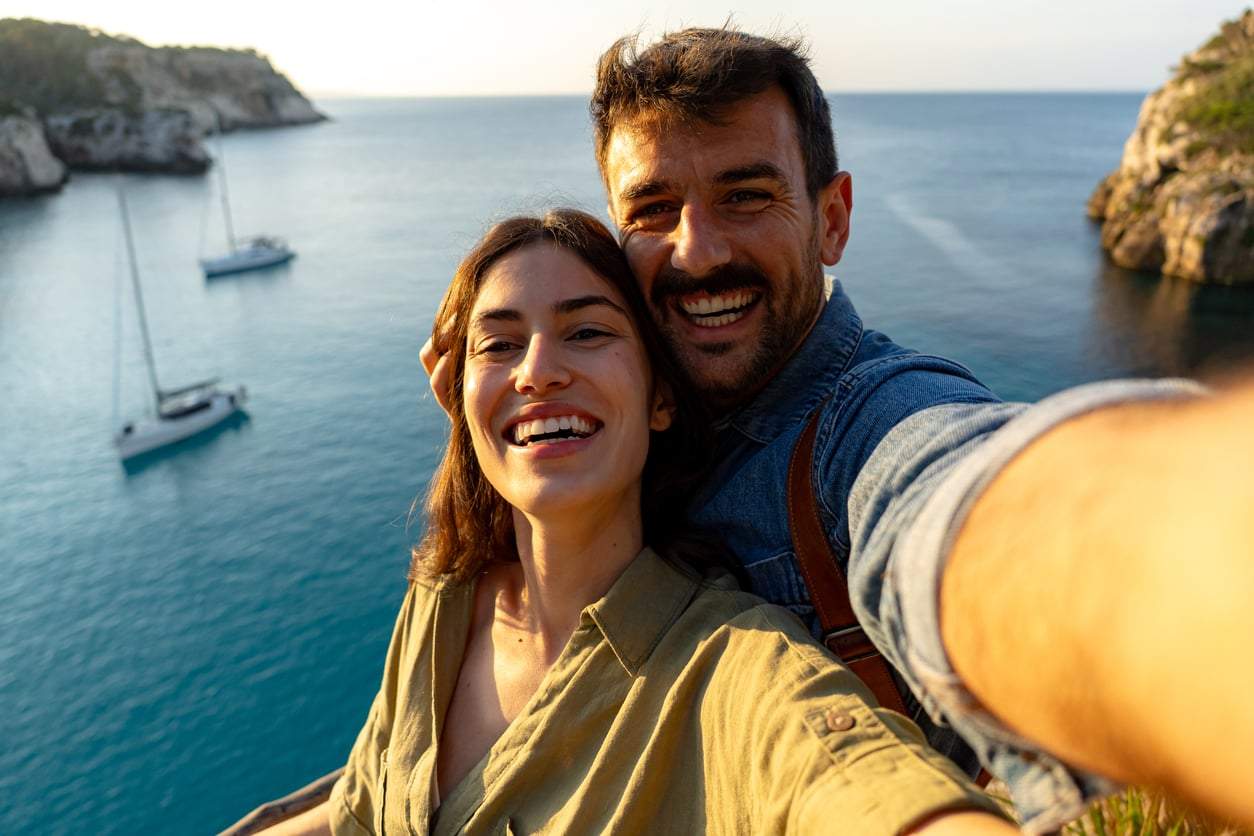
We were sitting on Zlatni Rat beach in Bol, on the island of Brač — that famous pebbly shore where the water is so impossibly turquoise it looks painted. Tom was fidgeting with his ice cream wrapper, I was dragging my toes through the stones, and I remember thinking: finally. Finally, just the two of us. No work, no deadlines, no obligations pulling us in different directions.
We'd been together eight years at that point. You'd think that after eight years, there's nothing left unsaid. But that's not how it works. I had been carrying certain things for years, and I had a quiet sense that Tom was carrying things too. You just don't bring them up on holiday, do you? The sun is warm, the sea is cool — why pull at a thread that might, if left alone, eventually disappear?
The sentence that changed everything
Then Tom put his ice cream wrapper down on the pebbles and said he thought we needed to talk — because he wasn't happy. He didn't say it with anger. He didn't even sound particularly sad. He sounded tired — like someone who had been turning a sentence over in his head for months, and now that it was finally out, he felt both relieved and terrified at the same time.
My first instinct was that he was joking. I waited for him to laugh, to add that it was just the heat talking. He didn't. He just looked at me, and then we both stared at the sea, as if the answer might come floating in with the tide.
That sentence didn't explode. It just quietly closed a door I had always assumed would stay open forever.
I asked him how long he'd been feeling this way. He said a long time — but he hadn't wanted to ruin the things we were building together. The apartment we'd bought. Our friends' wedding. The everyday life that always had something else demanding to be dealt with first. He'd been protecting me from it. Or protecting us. Or protecting himself. I sat there on those Zlatni Rat pebbles and, for the first time I can remember, I had nothing to say.
When we both realized we'd been keeping secrets
Silence weighs differently when two people are carrying it at the same time. I had felt something similar for months, but I hadn't let myself put it into words. I think I believed that as long as neither of us said it out loud, it wasn't completely real — and as long as it wasn't real, we could keep pretending everything was fine.
That evening, we didn't go out for dinner. We went back to our little apartment and sat on the balcony watching the lights on the water. And slowly, carefully, the sentences we'd swallowed for years began to surface. It wasn't a movie moment where everything resolves neatly in two hours. It felt more like finally exhaling after holding your breath for far too long.
What became painfully clear to me was just how fragile trust can be — not because of one big betrayal, but because of all the small silences. Tom had been carrying his for months. I had been carrying mine. And all that time, we had both been performing a version of normal that neither of us fully believed in anymore. It's strange that it took a holiday — the one place where you're supposed to leave everything behind — for what daily routine had so carefully concealed to finally come to the surface.
What happened when we came home
The drive back changed things, but not in the way breakup stories usually go. There was no slammed door, no dramatic scene. Instead, there were long conversations — some that stretched past midnight, some that were just quiet walks where neither of us said much at all, but we stayed close.
Even now, I'm not sure whether what happened on that beach was an ending or a beginning. Maybe it was both at once. What I do know is that I look at photos of that coastline differently now — and I pay closer attention whenever someone starts to say something and then stops just before the end of the sentence.
Because sometimes, that's the most important part of what they're trying to tell you.
How do you know if your relationship needs an honest conversation?
Ask yourself whether there are things you've been actively avoiding saying — not because the moment hasn't come, but because you're afraid of what happens if you do. If the answer is yes, the conversation is probably overdue.
Is it normal to feel unhappy in a long-term relationship without knowing why?
Yes, and it's more common than most people admit. After years together, feelings can shift gradually and quietly. That doesn't automatically mean the relationship is over — but it does mean something needs to change, and it usually starts with honesty.
Can a relationship survive one partner admitting they're unhappy?
It can — and often, naming the problem out loud is the first step toward actually addressing it. What tends to cause more lasting damage is the silence that allows unhappiness to grow unchecked for years.
Why do we find it so hard to be honest with the people closest to us?
Precisely because they matter so much. The closer someone is, the more we fear that honesty might hurt them — or cost us something we're not ready to lose. That fear of loss can keep us silent far longer than is good for either person.