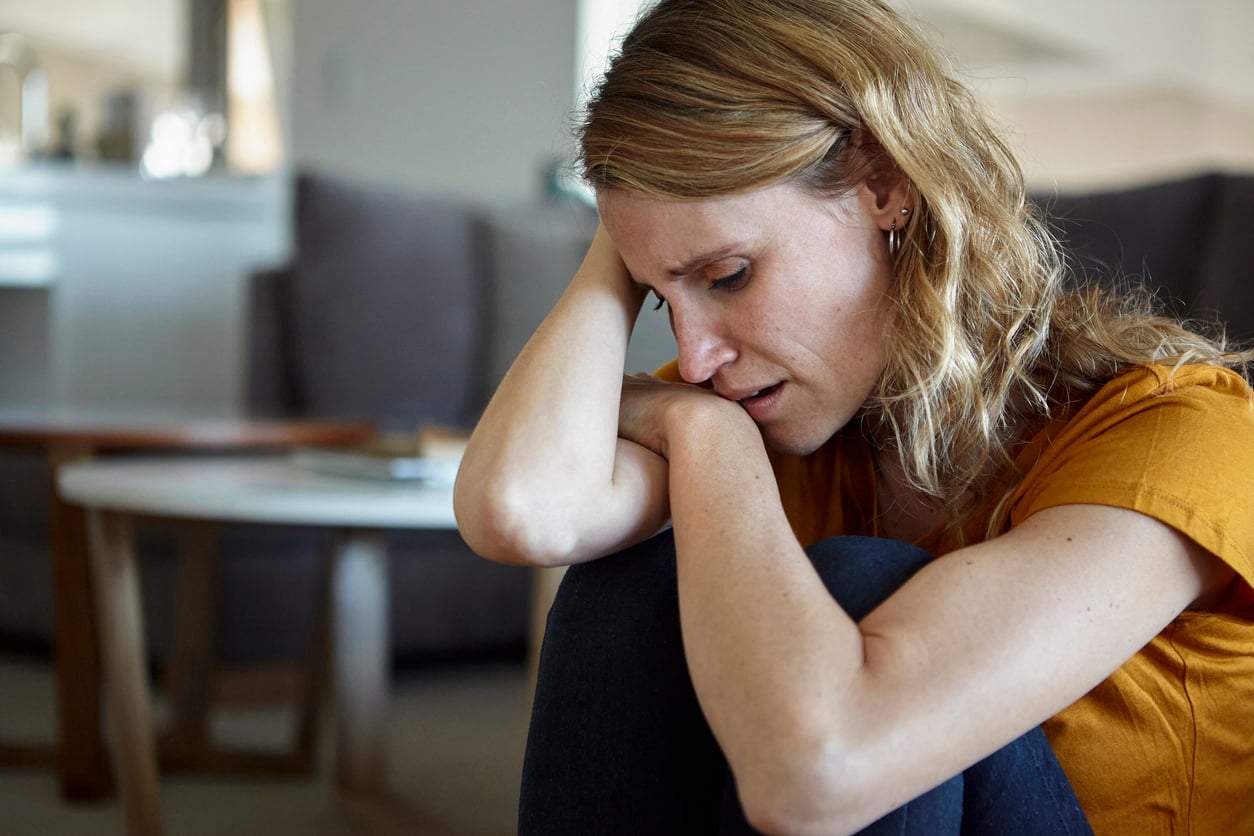
The champagne was already making its second round when my grandmother leaned across the table and asked when we were finally going to announce a baby. I laughed it off the way I always did, because for four years that question had been the signature move at every family gathering. That particular evening, we were celebrating my grandparents' fortieth wedding anniversary at a rented terrace restaurant — fairy lights overhead, everyone I'd ever known seated around those tables.
Marci and I had been together for five years by then. We had a shared apartment, two cats, and an unspoken plan I'd never examined too closely. Early on, I'd asked him once whether he wanted kids. He said of course — just not yet. That answer traveled with us for five years, and I never pushed further, because I was afraid the real answer might be something I didn't want to hear.
The sentence that split everything in two
After my grandmother's question, my uncle stood up to make a toast. Somehow his speech wound its way to the hope that a little one would be joining the family soon — and he looked at me, then at Marci. The table laughed and clinked glasses, and I smiled along, because that's what you do. Then Marci set down his glass and said, loudly enough for the neighboring table to go quiet: "I have never wanted children. I think we should be clear about that now."
For five years I thought we were building the same future. That night I realized I had been decorating a room that only existed in my own head.
He didn't say it in anger or with any drama. His voice was tired and final, like someone placing a long-carried weight down on the table beside the cutlery. My grandmother's face froze. Someone laughed, assuming it was a joke — then realized it wasn't.
What actually hurt the most
I sat there staring at the napkin in my lap, unable to look up at anyone. Something strange happened to my body — like the volume of the room dropped out entirely, and all I could hear was my own heartbeat. I didn't cry at that table. It was the only thing I managed to hold onto for myself.
On the drive home, Marci was silent for a long time. Somewhere near the edge of the city, he finally spoke. He said he hadn't planned it that way, hadn't meant for it to come out there — but after my uncle's toast, something in him just gave way. He'd been carrying that silence for years, he said, and he was exhausted by it. He told me he hadn't consciously lied to me. He'd just kept postponing the truth because he was afraid of losing me if he said it out loud.
Strangely, what hurt most wasn't that he didn't want children. What truly broke something in me was realizing that for five years I had let an unspoken sentence shape everything — what apartment we rented, what job offers I turned down, how far ahead I let myself plan. That night we made no decisions. We just sat in the dark car and watched the streetlights blur past.
When a shared future slowly disappears
My grandmother called the next morning to apologize, as though the toast had somehow been her fault. I told her it wasn't — that something we should have said to each other quietly, at home, on an ordinary evening, had instead been said out loud at a table full of people.
Marci and I lived in the same apartment for weeks after that, carefully avoiding each other's eyes in the kitchen, as if the old silence might still work — except now we both knew exactly what it was hiding. I can't point to the exact moment we decided to go our separate ways, because there wasn't one. It was more of a slow leak, our shared future draining away drop by drop until there was nothing left to hold.
Now, when I think back to those fairy lights strung above the terrace, I don't remember my uncle's toast. I remember the moment I understood that for five years I had been waiting on a conversation I should never have let go unspoken. Not for a day, let alone half a decade.
Why do couples avoid these conversations?
It's almost always fear — fear of conflict, fear of loss, fear of discovering that the person you love wants a different life than you do. But postponing that conversation doesn't make the difference disappear. It just gives it more time to grow.
Is it possible to stay together when one partner doesn't want children and the other does?
It's one of the few relationship differences that rarely has a compromise. Unlike most disagreements, this one tends to be fundamental. Some couples do navigate it, but only through deep, honest, and ongoing conversation — not silence.
How do you move forward after a breakup like this?
Slowly, and with a lot of self-compassion. The grief isn't just about the relationship ending — it's about mourning the future you had imagined. Letting yourself feel that loss fully is often the first real step forward.