Stainless steel is the most forgiving pan in the kitchen and the one people are most frightened of. Nothing you do to it is permanent: there is no coating to ruin, no seasoning to strip, no sulking. A pan that looks catastrophic after a batch of caramelised onions can be back to mirror finish in fifteen minutes, most of which is waiting. The only genuine mistakes are cold water into a screaming-hot pan, and leaving things to harden for three days.
The two minutes that save you twenty
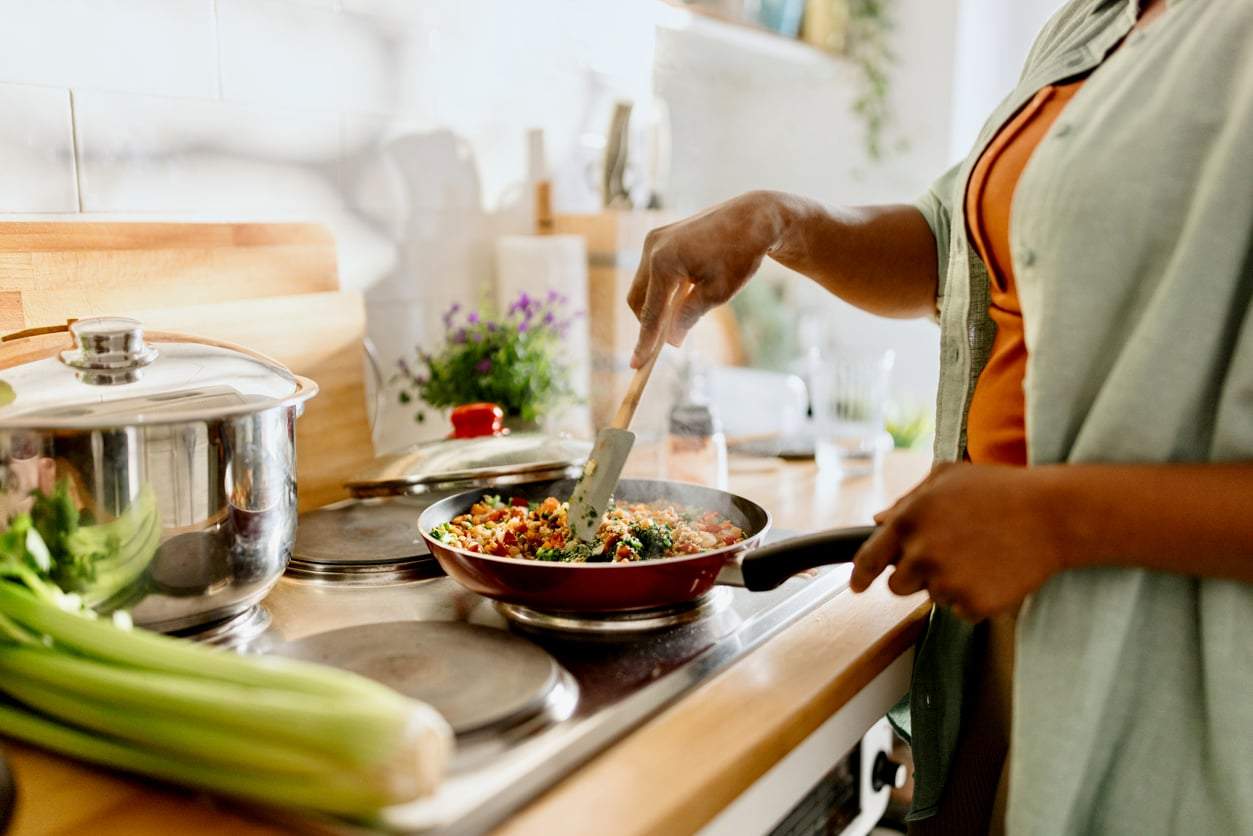
The easiest clean happens while the pan is still warm. Once you've plated up, put the pan back on low heat, splash in a little water or stock and scrape the base with a wooden spoon. The browned bits lift almost instantly — that's deglazing, and if you do it with wine or stock it's also the beginning of a sauce. Pour the liquid off, wipe with a cloth, done.
If dinner has already moved on without you, fill the pan with hot water and a squirt of washing-up liquid and leave it on the hob while you eat. Soaking does most of the work that scrubbing otherwise demands.
Burnt-on and black: the simmer method
For a base that is genuinely burnt, don't attack it dry. Cover the burnt area with water, add a generous tablespoon of bicarbonate of soda, and bring it to a gentle simmer for ten to fifteen minutes. Keep topping up the water if it reduces. The combination of heat, water and mild alkali loosens carbonised food from the metal, and most of it will slide off with a wooden spatula or the scraping edge of a spoon.
Tip the slurry out, then go over the remaining shadow with a paste of bicarbonate of soda and a few drops of water on a damp cloth, working in small circles. For anything truly stubborn, a powdered kitchen cleanser and a non-scratch pad will finish the job. Rinse thoroughly — bicarb left behind dries to a white film.