Every January, my friends and I have a tradition of making vision boards together, where we map out our plans and dreams for the year ahead. I always believed that creating a shared vision board was not only a way to visualize our goals but also a bonding experience. According to art therapists, it’s even more powerful—it can serve as a therapeutic practice through visualization.
What Exactly Is a Vision Board?
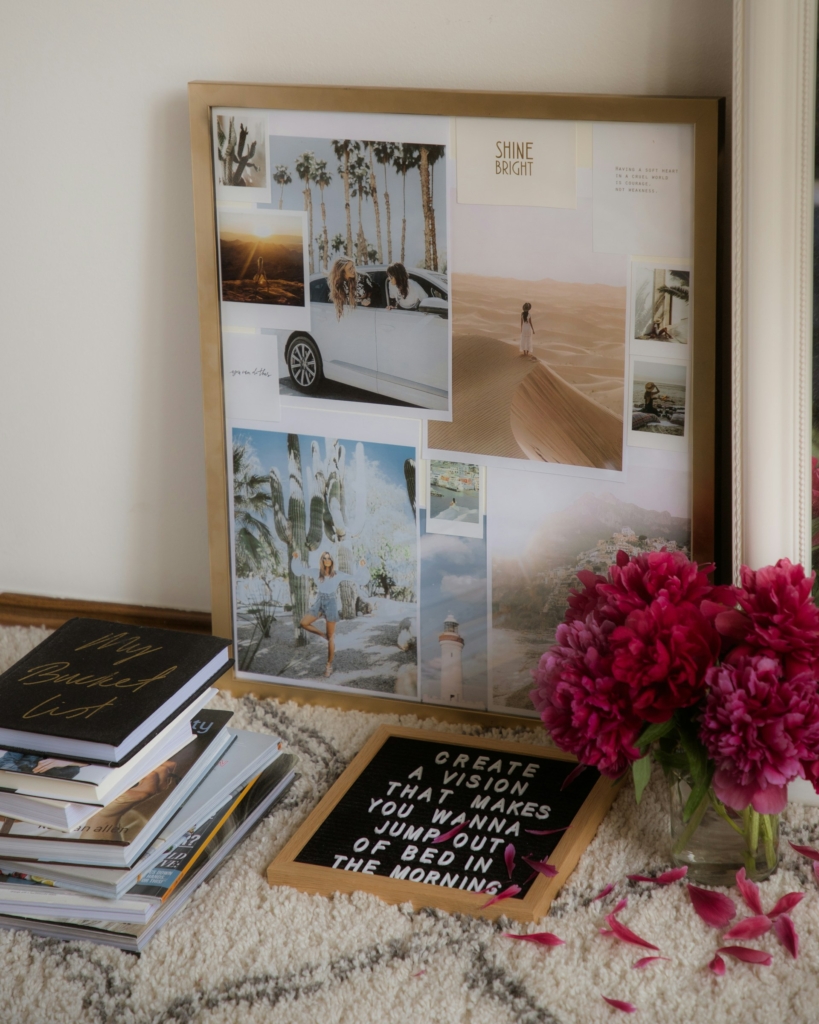
We often think of a vision board as a collage of inspiring images and words that motivates us to reach our goals. But from an art therapist’s perspective, it’s much more: a visual story that connects your inner feelings with your actions in the world. It shows not only what you want to achieve but also how you want to feel and live along the way.
This means a vision board isn’t just a “dream collage”—it’s a narrative you create about who you are now and who you want to be in 2026.
How to Make a Vision Board
Start with the Question: “What Story Do I Want to Tell?”
Before cutting or choosing anything, art therapists suggest beginning with an inner question: “What story do I want to consciously tell about my future?” This isn’t about listing goals. It’s about how you want to feel, what values you want to guide you, and what inner transformation you hope to experience.
This question helps your vision board carry emotional roots—not just desires—like safety, creativity, connection, or peace.
Choose Images and Words That Truly Resonate
Now comes the creative part: gather images and words. These can be photos clipped from magazines, pictures found online, your own drawings, quotes, or even creative words. The art therapist emphasizes choosing not just visually appealing images but those that resonate with you, evoke emotions, or represent states you want to invite into your life.
For example, an image symbolizing calm or creative energy, a word that sparks connection, or pictures representing support and action—like community activities, rest, or learning new skills.
Place Elements Thoughtfully
As you start assembling your board, don’t just stick images randomly—think about how they relate to each other. What connections do they share? What feelings arise when you see them together? What story do they tell side by side? This process is a creative narrative where each element aligns your inner world with your outer actions.
This approach differs from traditional goal-setting—it’s not just about what you want to achieve but how your goals fit emotionally and holistically into your life.
Include Action Steps in Your Plan
An art therapist’s vision board isn’t just a collection of inspiring images—it can include concrete actions that help ground your dreams and feelings. These might be small steps like daily meditation, adopting new habits, joining community activities, or creative exercises.
This blend of visualizing your inner world and linking it to everyday actions makes your vision board an active, dynamic support for change—beyond just pretty decoration.
Make the Creation a Ritual
According to the art therapist, a vision board isn’t a one-time project: it can be a ritual that marks the start of your year and supports your mental and emotional journey in the months ahead. Once finished, place it somewhere you’ll see often, and revisit it regularly—reflect on how you feel now, what’s changed, and what new elements you want to add.
This ongoing connection between you and your board helps you not just dream about your 2026 goals but connect with them more deeply, meaningfully, and integratively.