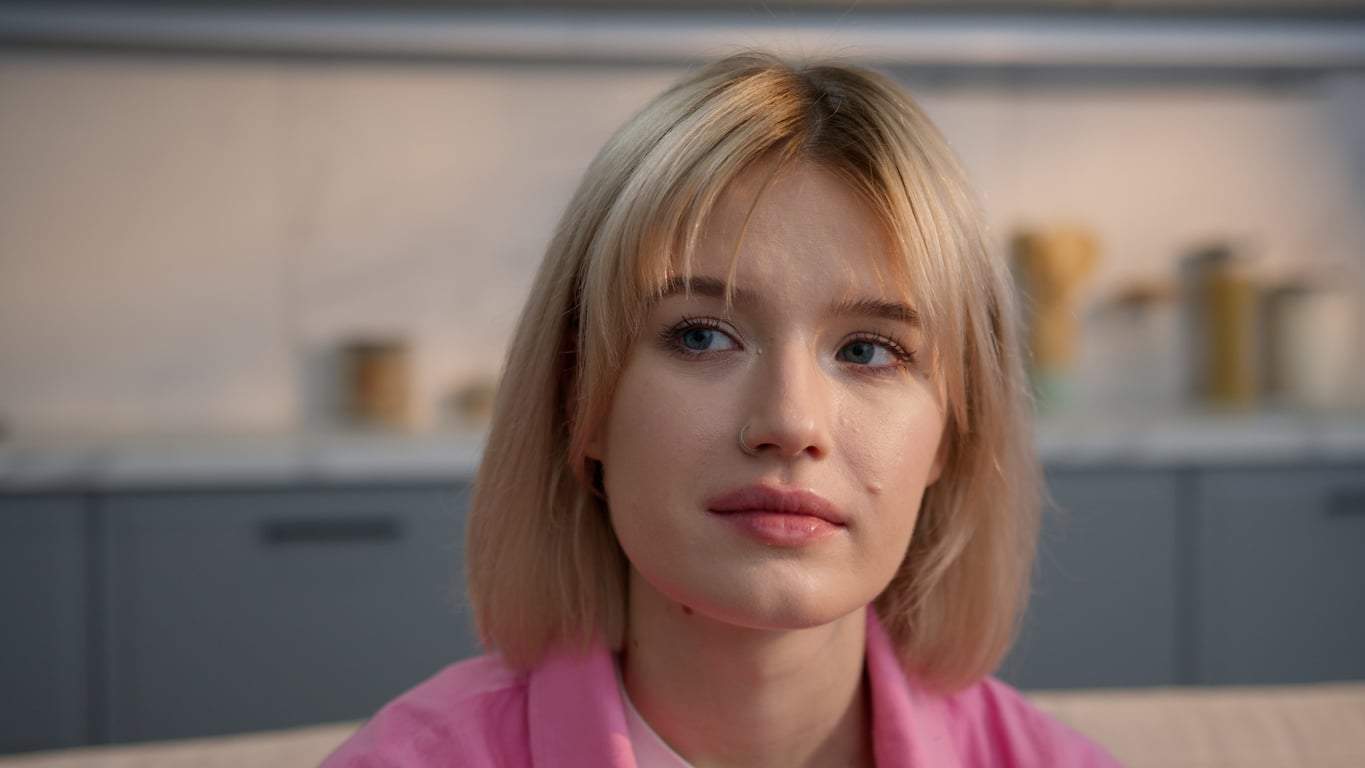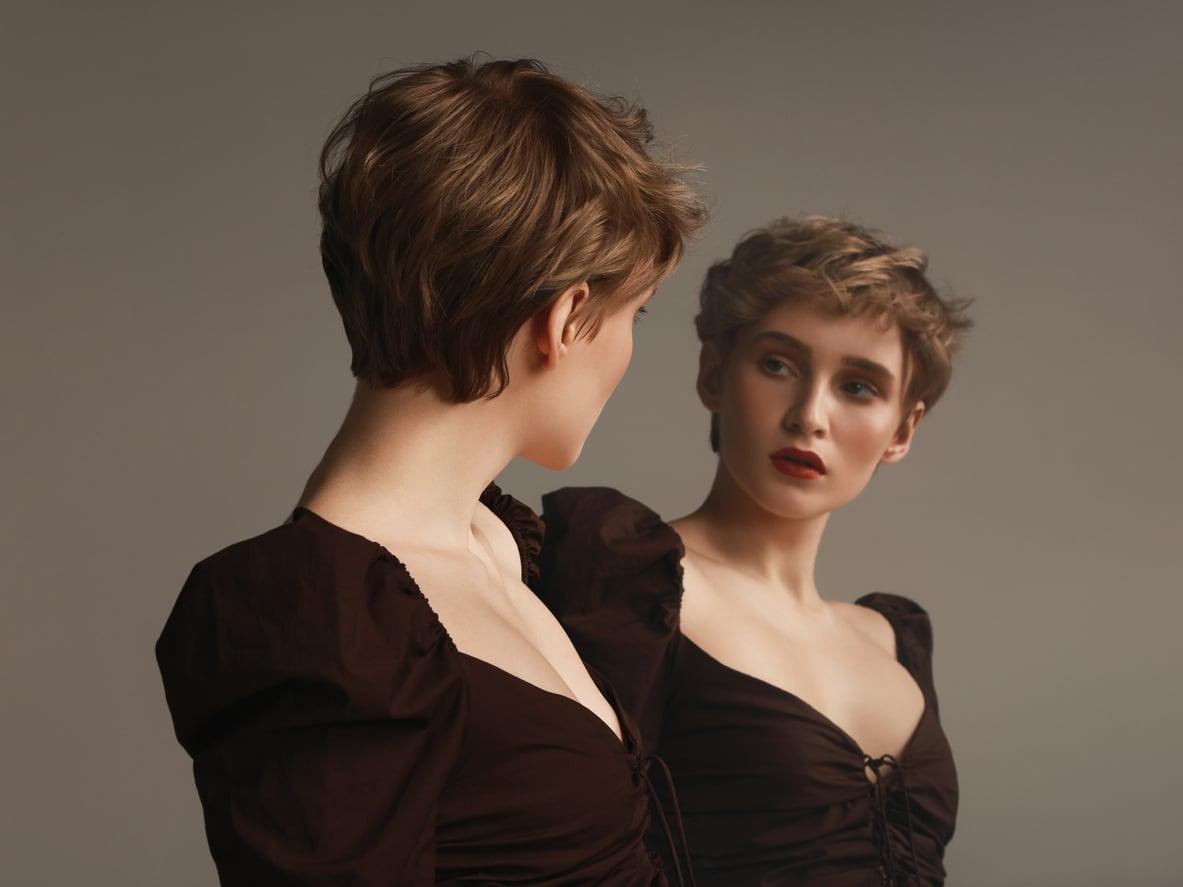
I always told myself it was just hair. Then I stood up from the salon chair, looked in the mirror, and realized I had it completely wrong.
People warned me about everything except the thing that actually happened. They said my neck would feel bare. That I'd regret it one day. That long hair was prettier. Nobody told me I'd look at my reflection and not quite know who was looking back.
Why I finally did it
I'd been planning this for a long time. Not weeks — years. It was the kind of plan that lived quietly in the back of my mind but never went anywhere, because there was always a reason to wait. It's summer now. There's a wedding coming up. It looks nice enough as it is.
People hold you back from things like this without even realizing it. One half-finished sentence, one "but it's so pretty long" is enough to make you brush the whole idea aside and do nothing.
Then one day, I'd had enough. I sat down in my hairdresser's chair, showed her the photo, and said: this is what I want. She asked if I was sure. I said yes.
In the chair
I watched in the mirror as my hair got shorter and shorter. The long strands fell to the floor, one by one. I'd expected this moment to feel dramatic. It didn't. It was more like a strange, floating sensation, as if I wasn't entirely present for what was happening.
The hairdresser chatted, I nodded, and all the while I watched the face in the mirror slowly take on a different shape. Not an unfamiliar face. Just a different one. When she was done, she spun me around to show me the back. I said it looked lovely. That part was true. What I didn't say out loud was the thought sitting right next to it: I don't know who this person in the mirror is.
The hair I never thought of as identity
On the drive home, I kept glancing at myself in the rearview mirror. Over and over, almost instinctively, as if I needed to confirm that what I thought had happened had really happened. It had. My neck was exposed, my ears showed, and my face had proportions I hadn't seen in twenty years.
At home, I went into the bathroom and stood in front of the mirror for a long time. Not because I looked bad, but because something was missing — and it wasn't the hair. It was something else. Something I used to call me.
That evening, I couldn't explain to anyone why I was in such a strange mood. What was I supposed to say? That I cut my hair and now I don't know who I am? It sounds ridiculous. I know. And yet that's exactly what it was.
I never thought I'd tied my identity to my hair. But looking back, in every photo that mattered it was the same: long, dark, usually tucked back or braided. That was me — in the pictures, in other people's minds, in my own mind too. If someone asked me to show a photo of myself, that's what I pictured. If I described myself to someone I'd just met, it was part of the description.
"The girl with the long hair" — it's a quick, simple label, and it never occurred to me that it might mean something much deeper.
Once it was gone, I realized that "long-haired girl" had come to mean a kind of safety, too. A frame I lived inside, where I knew exactly who I was. The face looking back at me had always felt familiar — not because it was beautiful, but because it was mine. Now that face was different. Same person, different frame.
If you've ever felt like your reflection was quietly shaping your mood, you might recognize a lot of yourself in how we talk to ourselves in the mirror.
What everyone else said
Everyone told me it suited me. Genuinely, unanimously, with surprising agreement — they thought it was pretty, that it made me look younger, edgier, cooler. All of that sounds great. But they were only seeing the outside. Inside, I felt something completely different.
There's something strange about getting nothing but positive feedback while still feeling off — because it makes you assume you must be the one who's wrong, that it's just a matter of getting used to it, that you'll feel better tomorrow. That's partly true. But it's also true that change, even good change, takes time. It's not enough for it to look nice. You have to get used to the idea that this is you now.
When I started to accept myself
There was no single turning point. It happened gradually. One morning the face in the mirror felt a little less like a stranger; another morning it looked back at me like someone I recognized. It took a few weeks.
Somewhere in there, I understood something I'd never really thought through: identity isn't in your hair. But hair still carries something — a familiar image of ourselves. And when that image changes, we lose the thread for a moment. That's not a bad thing. In fact, it's useful.
Because it reveals how much more of ourselves we attach to our appearance than we'd ever admit. That morning glance in the mirror isn't just vanity — it's a quiet, constant act of recognition: yes, this is me, this is where I start from. When that shifts, it throws you off balance. Not a catastrophe. Just a wobble.
These days, I love it. Not just tolerate it — genuinely love it. It's lighter, freer, and there's something in it I never felt with long hair: a decision I made for myself. Not because someone told me to, but because I wanted to. This is me too — just a newer version.
Why did cutting my hair feel like losing my identity?
Because hair carries a familiar image of ourselves. When that image suddenly changes, we lose the thread for a moment and have to re-recognize the person in the mirror — even though we're the same person underneath.
Is it normal to feel off even when everyone says the cut suits you?
Yes. Positive feedback only reflects the outside, while inside you may still be adjusting. Change, even good change, takes time — you have to get used to the idea that this new look is really you.
How long does it take to feel like yourself again after a big haircut?
For me it happened gradually over a few weeks. There was no single turning point — one morning the reflection simply felt less like a stranger and more like someone I recognized.
Should I let other people's opinions stop me from cutting my hair?
Often people hold us back with a single well-meaning comment. In the end, the decision that felt most meaningful was the one I made because I wanted it — not because someone else approved.