As I near forty, I often hear words that both touch and unsettle me. Younger colleagues—and sometimes peers—say they look up to me for this or that reason. That what I do is inspiring. That I’m such a “strong woman”. When they list their reasons, it’s always the same: I’m raising my daughter with Asperger’s alone, I manage a home for the two of us, I moved alone from a small village to the capital and made a life here. I did it.
And honestly: it feels good. It’s nice when someone sees the work, the journey, the effort. But there’s a stubborn, uncomfortable thought that lingers: I’m not a “strong woman.” I just did what I had to. Because I didn’t really have a choice.
For a long time, I thought these two things were the same. That if someone pushes through, survives tough situations, solves what others might not or won’t, that’s automatically strength. Today, I’m less sure. Strength assumes some freedom of choice. That you pick from multiple paths and choose the harder one. In my story, there often wasn’t more than one path. There was one that was possible—and everything else was unimaginable.
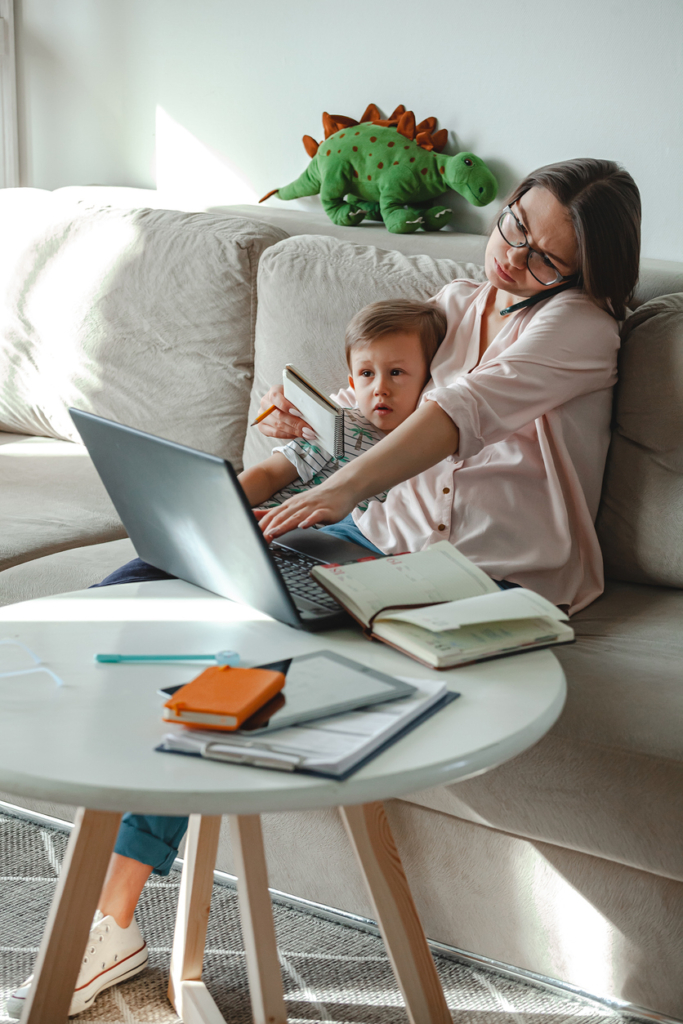
When you’re left alone with a child who needs special attention, you don’t waste time wondering if you’re capable. It’s not a question whether you can handle it. What else could you do?
When you don’t have financial safety nets, a partner, or family support, you don’t keep your life going out of heroism—you do it because you have to.
I didn’t move to the capital because I was brave, but because that’s where I had a chance to find work. I didn’t work through those years because I was ambitious, but because not doing so wasn’t an option.
Is Strength Just Doing What I Have to?
I think this is where the “strong woman” story starts to feel a bit off. Because while it lifts you up, it also hides something. That many women don’t choose the path they’re on—they’re swept into it. That we’re not exceptions, but the norm. That “doing it alone” isn’t necessarily a special skill, but often a result of systemic gaps.
The same goes for our grandmothers, whom we love to celebrate as heroes. They worked day and night, managed households, children, land, animals, and often provided emotional support for everyone. It’s easy to call them strong women. But what if they weren’t so exceptional because they were extraordinary, but because they had no choice? Because the world offered no alternative.
Hero worship is comfortable. It spares us from asking: why did they have to be so alone? Why was it natural for them to carry everything? And why do we still expect the same today, just with modern trappings?
I don’t want the effort to go unnoticed. But I also don’t want recognition to come at the cost of normalizing compulsion. To say: this is okay, this is how it has to be. Because it shouldn’t be. And maybe one day, we won’t need “strong women,” but a world where strength isn’t just about survival.