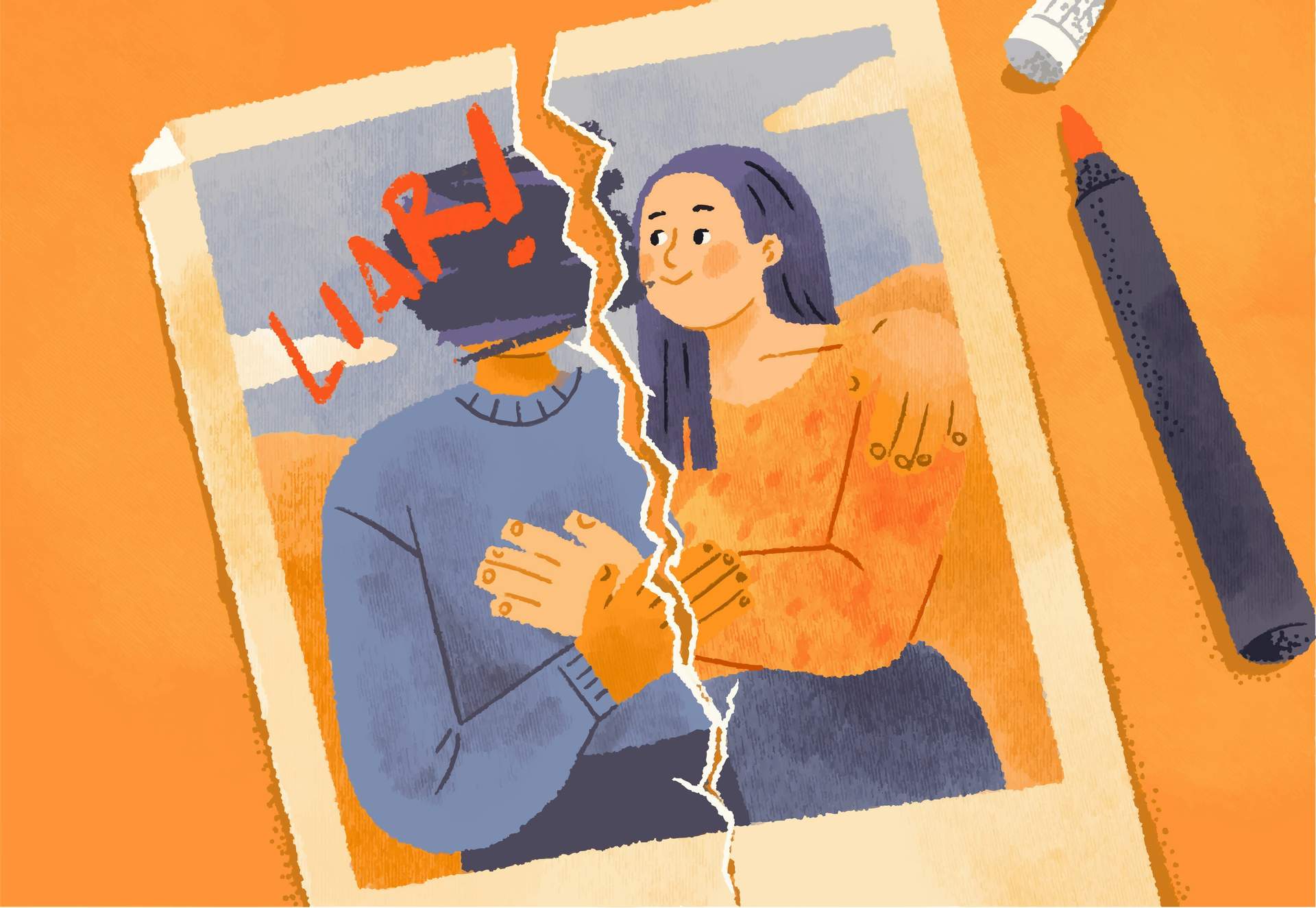
I'm probably not the only woman who grew up believing this: to be a good partner, you need to make yourself as easy as possible. Adapt. Anticipate. Keep the peace. Don't ask for too much. Make sure that being with you always feels lighter than being without you.
And honestly, parts of that I'm still proud of. I notice when someone's tired. I remember how people take their coffee. I show up, quietly and consistently, in the small ways that matter. For me, love has always been something you do, not just something you say. It lives in the details, in attentiveness, in being present. That's my love language — and there's nothing wrong with it.
The problem was that I had completely disappeared from the equation
Growing up, I learned early that safety meant adapting. Reading the room. Sensing the mood before it shifted. Making sure I wasn't the one who added tension to an already fragile atmosphere.
As a child, you don't frame it that way — it just quietly becomes part of you: stay small, don't ask for much, don't be a problem, and maybe nothing bad will happen.
I carried that pattern straight into my adult relationships. I was the one who always made the schedule work. Who swallowed her own bad moods to avoid conflict. Who took care of everyone around her while somehow never thinking she was allowed to have needs of her own. Asking for help was especially hard. Deep down, I genuinely believed that having needs meant burdening the other person.
As if the price of being lovable was taking up as little space as possible
For a long time, I didn't even see how one-sided this was. From the outside, it might have looked healthy — I was caring, patient, attentive. But on the inside, I was exhausted from always being the one managing the emotional balance. While I worked hard to make everyone else feel safe, I was living in a constant state of low-level alertness.
The turning point wasn't one big revelation. It was the result of many small conversations and slow, patient self-reflection. My therapist helped more than anyone — she was the first person to say something out loud that had never once occurred to me: a relationship doesn't become harmonious because one person has no needs.
It sounds so simple. And yet it hit me like a wave. I realized that the peace I'd been maintaining for years wasn't real peace — it was just conflict avoidance. And that a relationship which only runs smoothly when I keep erasing myself isn't actually a safe relationship at all.
The hardest part wasn't understanding this — it was learning to act differently
Because asking for help felt so much more vulnerable than giving it. Saying out loud: I'm having a bad day. I need more attention right now. I'm tired. I don't want to be the strong one today.
At first, it was almost disorienting. I was so used to being the one who noticed others — not the one who got noticed. The idea that someone didn't just accept my needs but actually wanted me to lean on them? That was genuinely new territory.
But that's what a healthy relationship is really about — not who can endure more alone, but whether both people can truly be present for each other.
I know now that receiving is also an act of trust. Letting someone take care of you isn't weakness. Having feelings and needs doesn't make you "too much." And love doesn't run deeper just because one person gives endlessly while the other only takes.
It was a long road to learn this. It took self-awareness, difficult realizations, a supportive partner, and a lot of practice. But these days, I feel less and less like I have to earn love by handling everything on my own. And I think that might be one of the most freeing things I've ever figured out.