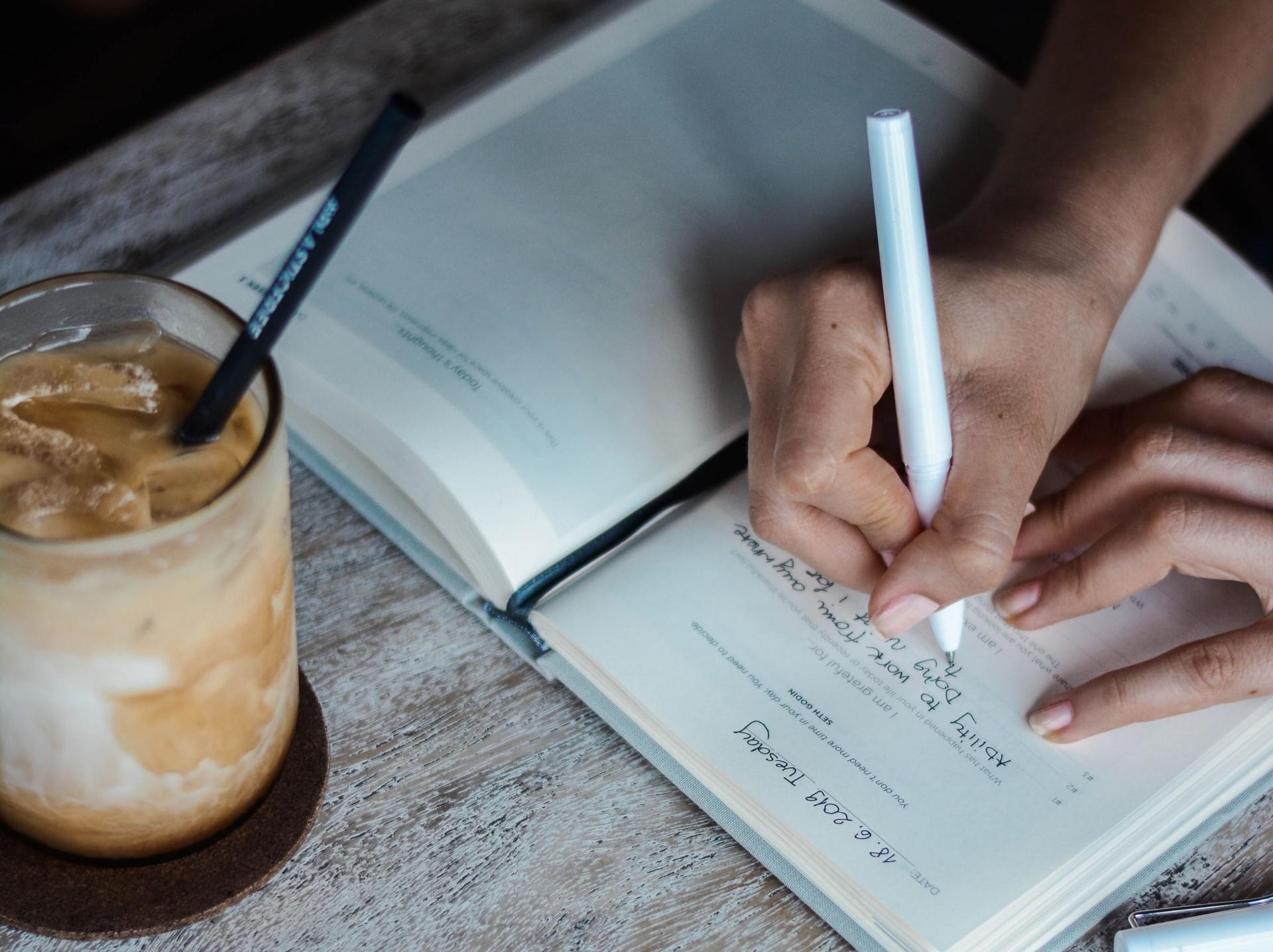
Handwriting isn’t just about jotting down notes. It’s a powerful brain booster because it’s such a complex process. Writing by hand sharpens your memory—what you write manually sticks better than what you type. Studies show that people who write often are more creative, speak more eloquently, and can even reach meditative states more easily.
But that’s just the beginning. There’s even handwriting therapy, proving that writing doesn’t just reflect us—it shapes us. Changing your handwriting style can help you process trauma faster and even shift your personality. That might come in handy if you spot these signs in your writing!

These Signs Point to a Strongly Pessimistic Outlook
The basic idea is that straight handwriting means balance and stability. But in reality, very few people write perfectly straight, especially without lined paper. Your current mood and mindset show clearly in the slant of your writing. Optimists tend to write with an upward slant, while pessimists or those feeling down write with a downward slant. This doesn’t just reveal your current mood—it also hints at how positively or negatively you view the future.
If your handwriting sometimes slopes down and sometimes up, consider your persistence. This pattern suggests you dive into challenges with enthusiasm but might give up easily when things get tough, letting pessimism take over.
The style of your writing reveals even more. If your handwriting is mostly straight but the ends of words slope downward and letters are crossed with downward strokes, it’s a sign of pessimism.
More Interesting Insights
While not a direct sign of pessimism, small, tightly spaced letters often relate to it. Writing that lacks round shapes and instead features more oval forms suggests someone who struggles to open up to others. This person may be anxious, reserved, and lacking self-confidence—traits often linked to being pessimistic.
Similarly, handwriting that’s overly rigid, precise, and almost angular often signals distrust.
This suggests the person struggles to rely on others and thinks within strict boundaries. They’re not open to change and fear their decisions might backfire.
Lastly, where your writing sits on the page says a lot. Writing on the left side or bottom left often points to low self-confidence and little hope. If this is paired with slow, measured writing, it’s likely the person needs encouragement and motivation to move forward—and even then, progress might be slow.