Three outfits to steal this week
One: black loafers, opaque tights, a knee-length knitted dress, and a long wool coat left open. It takes four minutes and works for a school run or an office day.
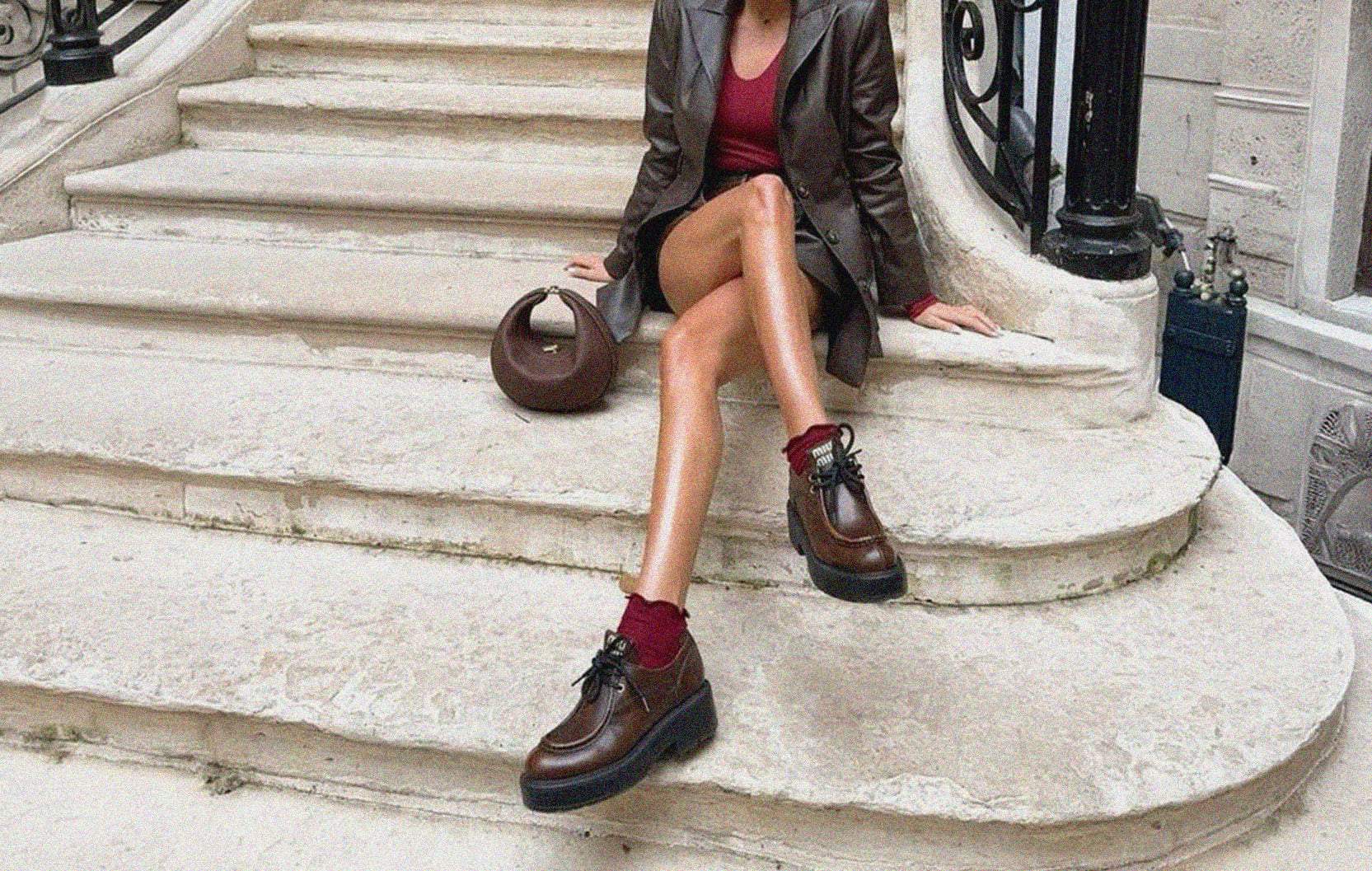
Two: burgundy or brown loafers, cream ribbed socks, straight grey trousers, a navy jumper. This is the colour pairing I keep returning to, because grey and brown together look expensive in a way black-and-brown does not.
Three: chunky-soled loafers, dark cropped jeans, a white shirt under a heavy cardigan, and a scarf doing the heavy lifting at the neck. The thick sole lifts you off cold pavement and adds the weight needed to balance a bulky top half.
Can I really wear loafers in the rain?
Some of them, yes — but choose and prepare carefully. A leather loafer with a rubber or lugged sole copes with wet pavements perfectly well if you treat it with a protector spray before the first wear and again every few weeks through the season. Suede loafers are a fair-weather-forecast shoe; keep them for dry days and brush them out with a suede brush afterwards, and if your route involves deep kerbside puddles, keep a boot by the door and change at your destination.
What if loafers make my feet look wide or clumpy?
Look at the shape of the toe before you look at anything else. A slightly elongated almond or squared-off toe lengthens the foot, while a very round, short toe box can broaden it. Keeping shoe, sock and hem in one tonal family also stretches the line of the leg downward, so the eye reads length rather than bulk — and a lower-cut vamp, meaning less leather over the top of the foot, shows a sliver of instep that makes the whole shoe look lighter.