I don't believe in reflexology. And that's precisely because I'm convinced it works.
We only need faith for the things we can't touch, can't personally know, or can't fully grasp because they're too abstract. Reflexology is different. It's hands-on, easy to understand, and simple enough to learn that almost anyone can use it to help themselves or their family.
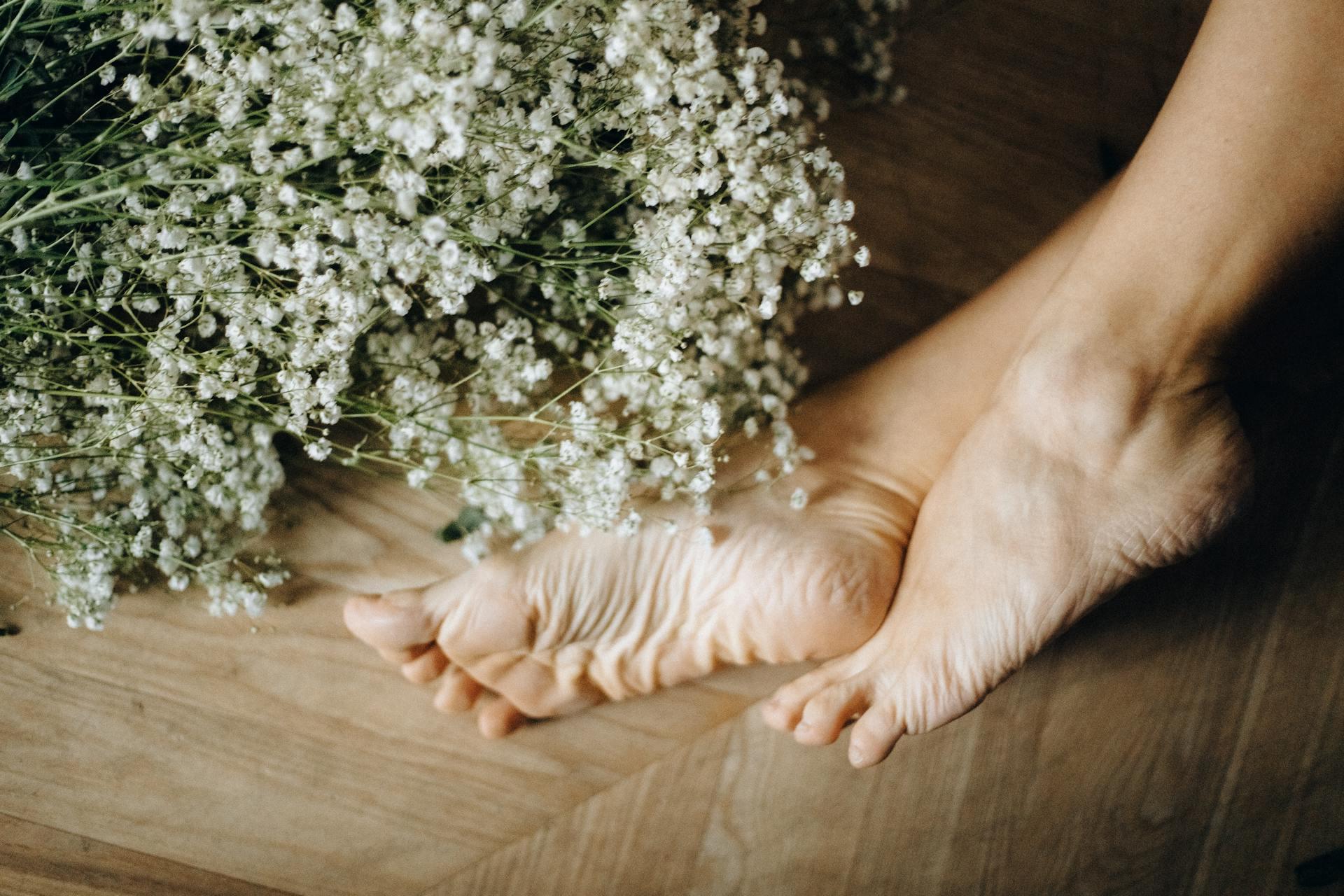
The idea is beautifully straightforward: your feet hold a kind of map of your entire body. Press the right spot, and you send a signal to the organ or area it corresponds to. Below, we'll walk through the zones one by one, so you know exactly where to press and why.
Where to start: the spine zone
Always begin your session here. Working the spine zone has a calming, harmonizing effect that ripples through the whole body and prepares it for everything that follows.
You'll find this reflex line along the inner edge of both feet. It starts at the base of the big toe and runs along that bony ridge that passes beneath the ankle and finishes at the heel. Slide along it back and forth a few times to loosen everything up.
The head zone: for headaches, colds and tired eyes
The key points for your head are all mapped onto your toes.
The forehead and sinuses sit at the tips of the second through fourth toes, while the pituitary gland can be stimulated on the pad of the big toe. The eyes correspond to the second and third toes, the ears to the fourth and fifth. The mouth, nose and throat are massaged on the upper part of the big toe, just beneath the nail.
When you're fighting a cold, hoarseness or a sore throat, this area is well worth working on. Massaging the eye zones may help with short- and far-sightedness, while activating the pituitary point is used to address hormonal imbalances. And for any kind of headache, gently work through all the points in this zone.
The shoulder and nape zone: for tension and stiffness
The shoulder girdle follows the line where your toes join the foot, across both the sole and the top of the foot. Start from the little toe and move along this line toward the big toe, alternating between the sole and the upper side.
You'll reach the nape on the outer side of the big toe, at that base joint, by moving toward the second toe. If you carry your stress in your neck and shoulders — and many of us do — working these areas can bring real relief and even ease tension headaches.
If this kind of tension is a constant companion, you might also enjoy our simple self-massage techniques for stress relief.
The zones for your arms and knees
The shoulder joint sits at the base of the little toe. From there, the upper arm follows the outer edge of the foot, and at the cuboid bone you'll find the elbow joint. Moving inward toward the meeting point of the second and third metatarsals, you reach the forearm zone.
Just past that distinctive bony bump on the outer edge of the foot lies the knee zone. Massaging it can help with knee pain or limited mobility.
The upper lymphatic zone: give your immune system a boost
Massaging the little folds of skin between your toes helps flush waste from the upper lymphatic pathways and can wake up your immune system.
These are very sensitive spots. Form a gentle pincer with your thumb and index finger and softly roll the skin between them.
The respiratory zones: work them very gently
On the top of the foot, between the first and second metatarsals, lies the reflex zone for the windpipe, while the three grooves beside it correspond to the bronchi. Just below the shoulder line, in line with the third and fourth toes, you'll find the lung zone.
These areas are delicate, so use only very light pressure here.
The heart zone
On the left foot, just below the lung reflex point and in line with the middle toe, gently massage the heart zone.
For a harmonizing effect on your circulation, use a pincer grip to lightly work the grooves between the metatarsals, starting from the top of the foot and moving toward the toes.
The diaphragm and solar plexus zone: your calm button
The diaphragm sits just beneath the arch that runs across the sole. Around the center, in line with the second and third toes, you'll find the solar plexus.
A specific, gentle massage of these points has a wonderfully calming effect when you're stressed or restless — a small ritual worth remembering on your hardest days.
The digestive zones: for a happier gut
The stomach zone lies on the inner side of the foot, at the base of the first metatarsal. Activate it if you struggle with excess stomach acid — but if you have an ulcer, never use an activating massage here, and during gastritis it's better to soothe rather than stimulate.
On the right foot, on the outer side over the metatarsals, sits the liver point. It's worth activating for a longer stretch when you're exhausted or recovering from illness.
The small intestine zones sit above the heel, on the lower inner side of the sole, framed by the large intestine. Work this area for both diarrhea and constipation.
The excretory zones: kidneys and bladder
The kidneys sit in the middle of the arch, about a finger's width below the solar plexus. The ureter is easy to trace along the tendon of the foot, and the bladder rests on the little cushion in front of the inner ankle bone.
A stabbing sensation in the kidney zone can point to kidney stones — in that case, use only a soothing, calming touch.
The endocrine gland zones
The thyroid zone lies on the pad below the big toe. Activate it when the gland is underactive, and use a calming massage when it's overactive.
Below the stomach reflex point you'll find the pancreas. Above the kidneys, in a crescent-shaped arc, sits the adrenal gland zone — massaging it stimulates the immune system. And right next to the kidney point on the left foot, you'll find the reflex zone for the spleen.
The pelvic organs and lymph node zones
Below the outer ankle bone you'll treat the ovaries or testicles, while below the inner ankle bone lie the uterus and prostate. A gentle, soothing massage of these zones can bring welcome relief from menstrual pain.
The pelvic lymph nodes run along the line that connects the inner and outer ankles across the arch, and continue up the back of the leg along the tendon for about 20 cm (roughly 8 inches).
How often should I practice reflexology on myself?
There's no strict rule. A gentle session a few times a week is a comfortable rhythm for most people, especially when you're targeting a specific area like tension, headaches or digestion.
Where should I always begin a session?
Start with the spine zone, along the inner edge of both feet. Working it first has a calming, harmonizing effect that prepares the whole body for the rest of the massage.
Are there any zones I should be careful with?
Yes. The respiratory and lung zones should be worked very gently, and areas like the lymph folds between the toes are sensitive too. In some cases — such as a stomach ulcer, gastritis or suspected kidney stones — you should soothe rather than stimulate the corresponding zone.
Can reflexology help with everyday complaints?
Many people use it to ease common issues like headaches, neck and shoulder tension, digestive troubles, stress and restlessness. Working the matching zone gently and regularly is the key.