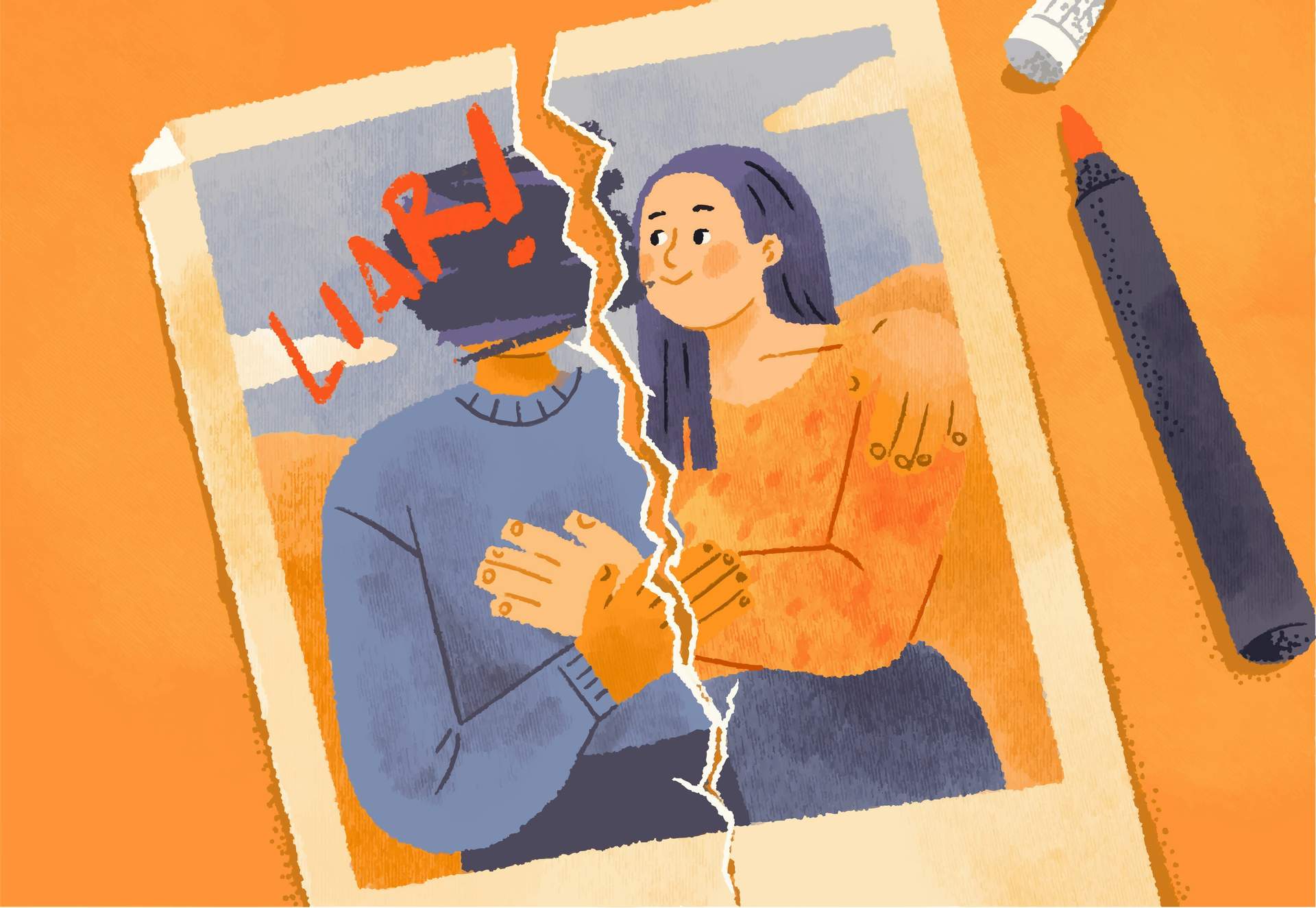
Many of us grew up believing that being flexible and easy to be with is one of the greatest qualities a partner can have. No drama, no fuss, always willing to compromise — what's not to love? People who adapt easily are often seen as calm, understanding, and low-maintenance.
But psychology tells a different story. Always being the one who adjusts comes with a hidden cost — one that builds quietly beneath the surface until it becomes impossible to ignore.
You slowly lose yourself
One of the biggest risks of constant adaptation is that your own voice gradually fades. It starts with small things: where to eat, what to watch, how to spend the weekend. These feel trivial in the moment — and that's exactly what makes them dangerous.
Research shows that chronic over-adaptation leads to a kind of self-silencing: you begin to minimize your own desires until it becomes genuinely hard to know what you actually want.
From the inside, this rarely feels like a problem at first. It just feels like being "flexible" — which is supposed to be a good thing. But over time, you lose touch with your own preferences, and with that, a piece of your identity quietly slips away.
Unspoken tension builds up
Here's one of the great paradoxes of the always-adapting role: from the outside, the relationship looks peaceful. From the inside, pressure is steadily accumulating.
Every time you swallow your disappointment, hold back your reaction, or decide not to "make a big deal" out of something, you are doing emotional labor. That energy doesn't disappear — it gets stored.
Over time, this creates a nagging sense that something is off, even when you can't point to a specific problem. Studies suggest that suppressed emotions don't protect a relationship — they erode intimacy and mutual connection.
This is why burnout and hidden resentment can appear even in relationships that seem conflict-free on the surface.
The relationship stays shallow
It seems logical: fewer conflicts should mean a better relationship. But real closeness doesn't come from always agreeing — it comes from your partner actually knowing your inner world. What hurts you. What excites you. What matters to you.
When you constantly smooth things over and hide your true feelings, your partner simply cannot get to know the real you. The result is a strange in-between state: the relationship functions, but something deeper is missing.
Experts call this quasi-intimacy — everything looks fine on the surface, but genuine emotional connection never fully forms.
It can actually create more conflict, not less
This might be the most counterintuitive part: over-adapting often produces the very thing you were trying to avoid.
Conflict-avoidant behavior usually comes from a genuine desire to keep the peace. But research consistently shows that suppressing your needs leads to more conflicts in the long run — and worse ones.
Why? Because unspoken things don't resolve themselves — they quietly pile up. And when they finally surface, they tend to come out with far more intensity than if they had been addressed early on.
There's another layer too: your partner never learns to consider your needs, simply because those needs are never visible to them.
The relationship becomes one-sided
When one person is always the one adapting, the dynamic can easily become unbalanced. One partner over-functions — paying attention, adjusting, managing the emotional atmosphere. The other, often without realizing it, gradually does less and less of the same.
This isn't necessarily about bad intentions. It's about dynamics: if one person always carries the weight, the other stops feeling the need to share it.
Over time, this can lead to a deeply one-sided relationship where one partner is exhausted and the other has simply grown accustomed to the imbalance.
Adaptation itself isn't the problem. In fact, it's an essential part of any healthy relationship. The issue begins when it becomes your default setting — the only mode you know.
Because when that happens, you're not just avoiding conflict. You're quietly pushing yourself to the side.