By the middle of August our house has a memory. The walls hold the heat of every afternoon we forgot to close the blinds, and no amount of flapping a duvet at midnight undoes it. I used to treat hot nights as an emergency to be solved at bedtime, standing in the dark with a fan in one hand and a damp flannel in the other. What actually works is duller and starts much earlier: the hour before bed, plus a few decisions made at breakfast.
Cool the room in the morning, not at midnight
The single biggest change in our house was treating daylight as the enemy. Blinds and curtains closed on the sunny side of the flat before the heat builds, doors shut on rooms you are not using, and no cooking in the late afternoon if it can be helped. A bedroom that never gets hot is far easier to manage than one you are trying to rescue.
Then, when the air outside finally drops below the air inside — often later than you think, sometimes not until after dark — open up properly. Two openings on opposite sides of the home create a through-draught that a single window never will. If you only have windows on one side, put a fan facing outwards in one of them to push the warm air out and let cooler air pull in behind it. Leave that going while you do the rest of the evening routine.
Lower your own temperature, gently
Your body needs to shed a little heat to fall asleep, which is why a stifling room keeps you hovering at the edge of sleep for hours. A lukewarm shower half an hour before bed helps more than a freezing one, because ice-cold water makes the body clamp down and hold heat in. Warm-ish water, then drying off slowly in the draught, is the trick.
After that, target the places where blood runs close to the surface: wrists, the insides of the elbows, the back of the neck, and above all feet. Cool feet are astonishingly effective at making the rest of you feel comfortable. A damp cotton flannel over the ankles, or five minutes with feet in a basin of cool water while you read, does more than any amount of fanning your face.
Strip the bed back to cotton and linen
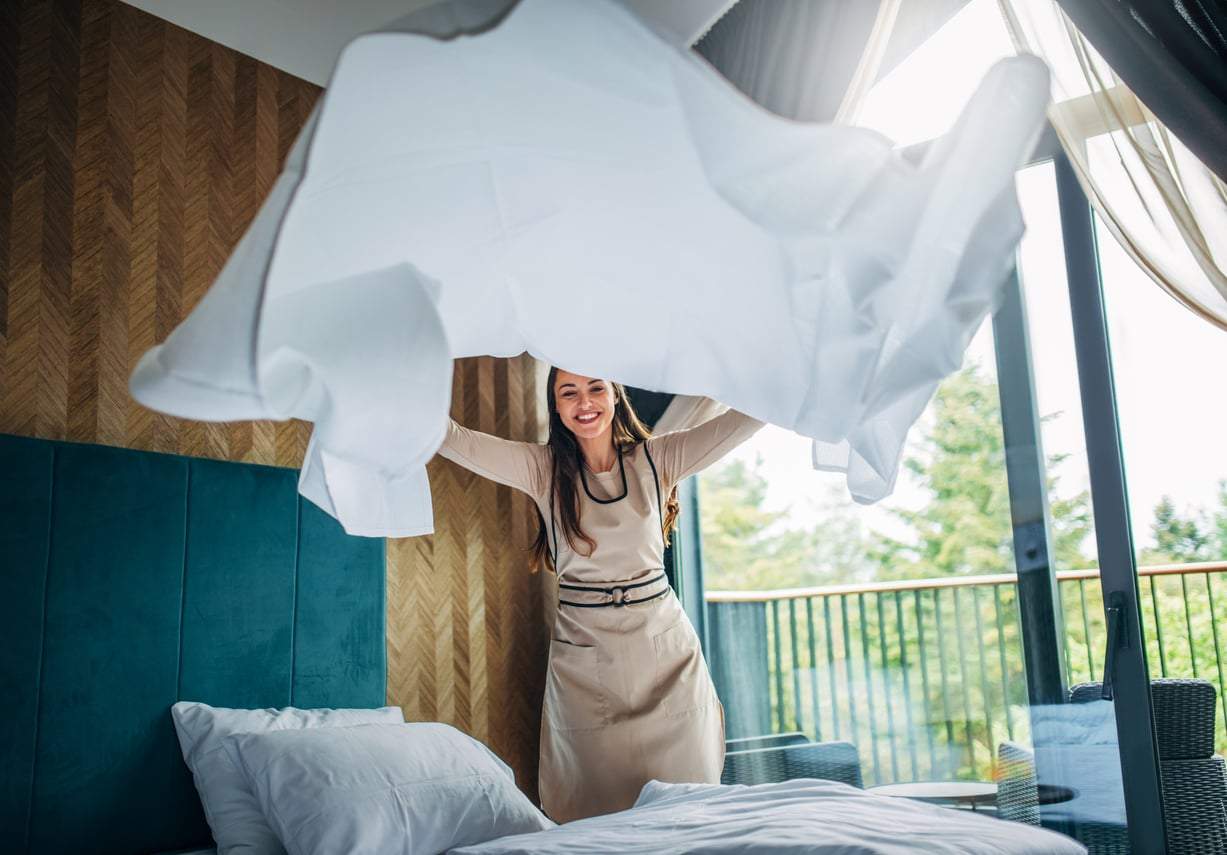
Hot nights expose everything synthetic. Waterproof mattress protectors, memory foam toppers and polyester-mix pillowcases all trap heat and moisture, and they are usually the invisible reason a bed feels swampy despite an open window. Swap to plain cotton or linen bedding for the summer weeks, take the duvet out of its cover and use just the cover as a sheet, and if a mattress protector is essential keep a folded cotton sheet on top of it.
One more thing worth doing before you get in: peel the top layer back for the last hour of the evening rather than leaving the bed made. A bed that has been aired feels cooler and drier the moment you lie down. Keep a glass of water at room temperature within reach — very cold water tends to wake you up properly if you drink it half-asleep.
Is it better to sleep with a fan on all night?
For most people yes, as long as it is not blowing straight onto your face for hours, which dries out eyes, nose and throat and can leave you with a stiff neck. Aim it across the foot of the bed or bounce it off a wall so you get moving air without a direct blast, and use the lowest setting that still feels like something. If the noise wakes you, a fan on a timer for the first hour is often enough to get you over the threshold into sleep.
What should children wear on a really hot night?
Less than instinct suggests: a short-sleeved cotton vest or a thin sleepsuit, no blanket, and a cotton sheet they can kick off freely. Babies and small children cannot regulate their temperature well or move covers off themselves, so check the back of the neck rather than hands and feet to judge whether they are too warm, and keep cots and beds well away from direct sun during the day. If a child is unusually floppy, refusing drinks or seems unwell in the heat rather than simply grumpy, that is a moment to call your GP or out-of-hours service rather than wait it out.
When the routine is not the problem
A run of hot nights makes everyone shorter-tempered and less able to cope, and it is worth naming that at the breakfast table rather than pretending the household is fine. Lower the bar for a week: earlier, simpler dinners, no evening screens in bedrooms, a slower bedtime that starts before anyone is desperate. But if you are still lying awake for hours once the weather breaks, or waking at three every morning with your heart going, the heat was a passenger rather than the driver, and that is genuinely worth raising with a doctor rather than solving with another fan.