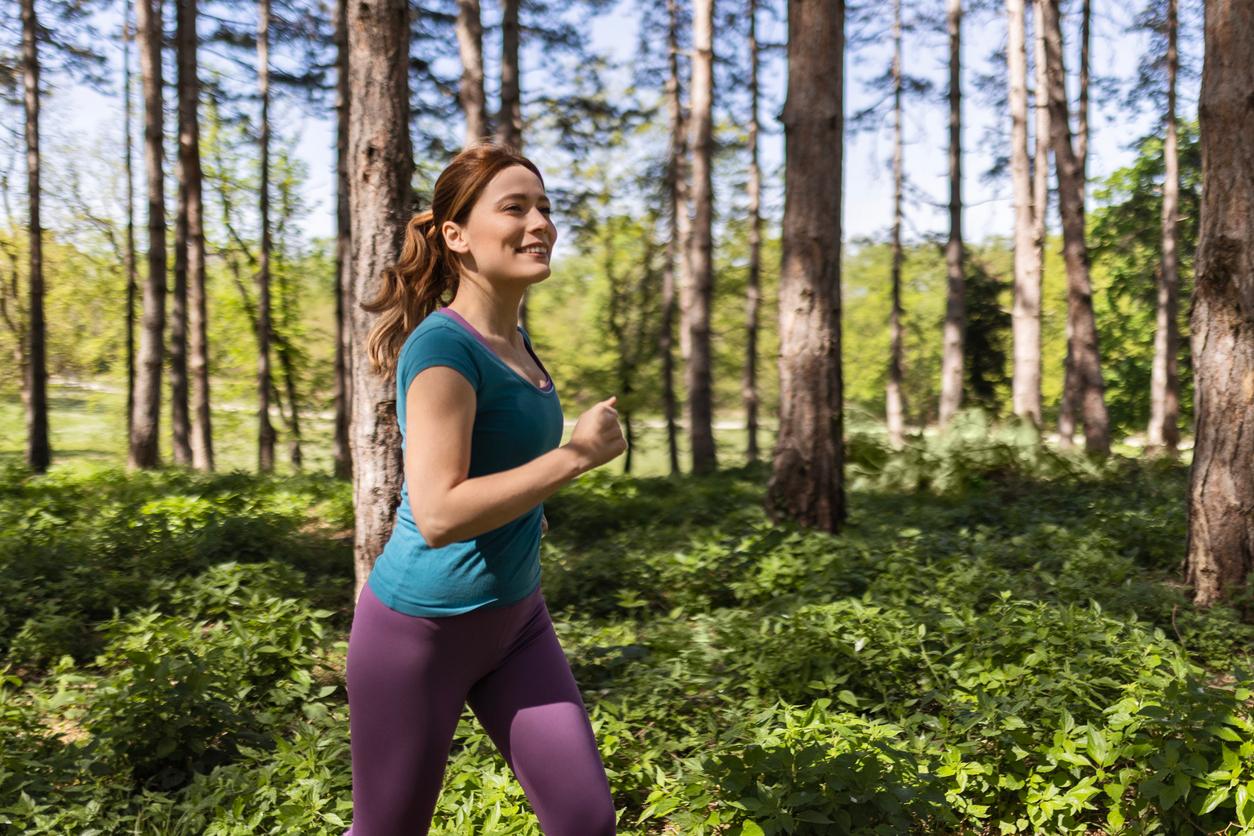
From the daily 10,000-step goal to popular treadmill workouts, walking has never been more loved. It offers plenty of health perks and is doable even for those who usually avoid exercise. There’s an easier walking workout many experts recommend—the Japanese walk.
As Shawn Anthony, MD, a sports medicine specialist at Mount Sinai, explains, the Japanese walk is a movement style that alternates faster and slower steps. It was first studied in 2004 by a Japanese research team, who found this walking method can boost cardiovascular health and physical function in older adults. Thanks to social media, this proven, reliable workout is back in the spotlight, and it seems everyone wants to join in. Keep reading to find out why the Japanese walk is winning hearts.
How Does It Work?
Heather Viola, DO, an adjunct in general internal medicine at Mount Sinai, explains that a typical Japanese walk routine alternates three minutes of brisk walking with three minutes of slower, recovery pace, for a total of 30 minutes. But the brisk part isn’t just casual walking. Dr. Viola emphasizes that during this interval, you should give it your all. “The high-intensity phase is key,” adds Dr. Anthony.
“During these three-minute intervals, you should walk at about 70–85% of your max heart rate, which feels like a 6–7 out of 10 effort.”
He says if you notice deeper breathing, stronger arm swings, and can only speak in short sentences, you’re doing it right.
The Benefits

Dr. Viola says the Japanese walk offers the same benefits as more intense workouts but with less strain on your joints. “It delivers a wide range of physical, mental, and lifestyle perks,” she says.
Improved heart health, lower blood pressure, better mobility, and a boosted metabolism (which helps with weight management and insulin sensitivity) are just a few physical gains you can expect. She adds that the alternating pace can strengthen leg and core muscles, enhance balance and coordination, and support bone density.
Mental health also benefits—walking is well-known for lifting mood, reducing stress, and sharpening cognitive skills. Studies show people living in “blue zones” (areas with many long-lived residents) partly credit their longevity to daily walking. The Japanese walk offers all this while boosting energy and improving sleep quality, she says.
Because it’s low-impact, it’s a safer choice for those worried about joint injuries. Everyone can benefit, but Dr. Viola and Dr. Anthony note it’s especially great for adults aged 40 to 75. “It directly counters age-related changes by improving aerobic capacity and muscle function while being gentle on aging joints,” says Dr. Anthony. “It’s also proven to help maintain balance and prevent age-related mobility decline, making it valuable for older adults who can’t tolerate high-impact workouts.”
Drawbacks
For most, the Japanese walk is a very safe workout. But there are exceptions. Dr. Anthony advises those with uncontrolled cardiovascular issues, severe hypertension, or advanced joint disease to consult their primary doctor before adding this to their routine. If you have significant balance problems, be cautious since the faster pace can increase fall risk. And as with any new exercise, start gradually to avoid injury, he recommends.
How to Try It Yourself
The Japanese walk is simple—even for those less familiar with gyms or who usually lead a sedentary lifestyle. For beginners, Dr. Viola suggests walking at a moderate pace for 30 minutes during the first week or two before increasing intensity and adding intervals the following week. Dr. Anthony adds it’s good to try it two to three times a week at first, then gradually build up to four to five times as you get comfortable.
She recommends choosing a pace that challenges you but is sustainable (“You should feel your breathing noticeably increase but still be able to speak in short sentences,” she says), and making sure you wear supportive shoes and walk on a safe, flat surface to minimize injury risk. So if you want to spice up your daily walks or find an effective yet gentle workout, give the Japanese walk a try.