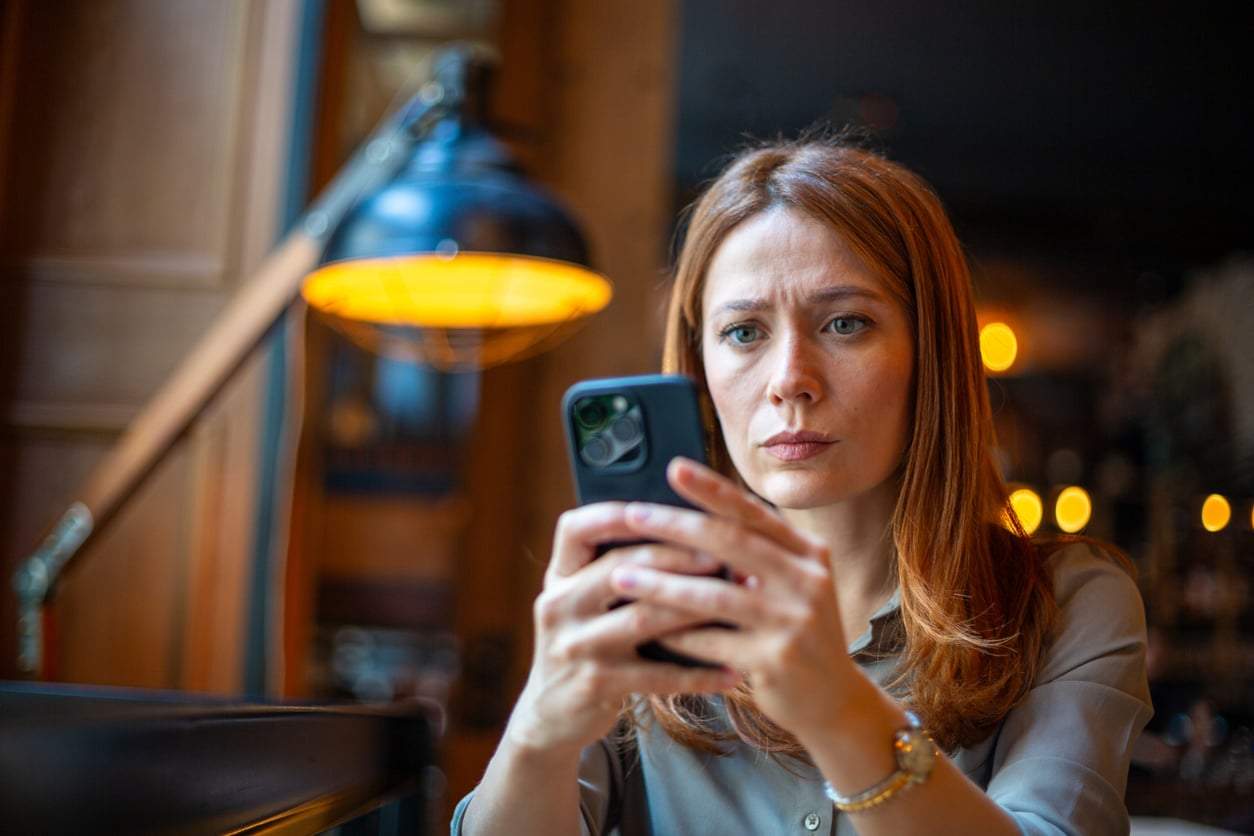
Your partner used to leave their phone lying around without a second thought. Now it's always face down, always within reach, and suddenly off-limits. Should you be worried, or are you reading too much into it?
The truth is, certain shifts in phone behavior can quietly signal that someone isn't being fully honest. Here's what to watch for, and how to handle it without turning into a detective.
Their phone habits suddenly changed
When a partner abruptly changes how they use their phone, it can be worth noticing. Maybe they used to leave it out in the open and now they hide it, place it screen-down on the table, or don't even glance at it when you're together.
That kind of shift can be a subtle red flag. Research has suggested that people living a double life often change their relationship with their phone, guarding it far more closely than they used to. On its own it doesn't prove anything, but it can be enough to make you rethink the dynamic between you.
They constantly change PINs and passwords
If your partner regularly updates their passwords or PIN code, it's natural to wonder what they're so keen to keep hidden.
To be fair, this doesn't automatically mean they're hiding something. Some people simply value their privacy and take digital security seriously. But when the changes are sudden and frequent, it's worth gently raising the topic face to face rather than letting it fester.
If you're not sure where healthy privacy ends and secrecy begins, it helps to talk about passwords, boundaries and trust in a relationship openly.
They live glued to their screen
Another telling change is when your partner becomes almost inseparable from their phone. They carry it everywhere, stare at the screen constantly, and get so absorbed in messages or scrolling that they barely register when you're talking to them.
Another sign to notice: they routinely step away to take calls where you can't hear, and when you ask who it was, the answer is a quick, dismissive "nobody important."
Hidden apps or secret folders
Hidden apps and locked folders have become a common trick for anyone trying to keep something out of sight. If you spot unfamiliar apps or a secret folder on your partner's phone that were never there before, it's fair to ask about them.
And if they repeatedly dodge the question with vague answers, they may have something they're working harder to conceal.
Communication is the real key to peace of mind
Reading through these signs, it's easy to let suspicion and jealousy take over, and that helps neither you nor the relationship. This isn't a signal to start snooping, because that usually creates even more distance between you.
Open, honest conversation is far more effective. Sit down together and talk through the feelings and doubts that have come up, instead of building a case in your own head.
Is a sudden change in phone habits always a sign of cheating?
No. A shift in phone behavior can raise questions, but on its own it doesn't prove anything. Some people simply become more protective of their privacy, so it's worth talking rather than assuming the worst.
Should I check my partner's phone if I'm suspicious?
The article suggests you shouldn't start snooping, as that tends to create even more distance between you. Open and honest conversation is a far more effective way to address your doubts.
What are the main phone-related signs to watch for?
Suddenly hiding the phone or placing it face down, frequently changing passwords or PINs, being constantly glued to the screen, stepping away to take calls, and having unfamiliar apps or secret folders.
How should I bring up my concerns?
Raise the topic face to face and talk openly about the feelings and doubts you have. Trust your instincts, but approach the conversation with honesty rather than accusation.