Comic books, video games, blockbuster films, hit series — the Viking world has captured our imagination like few other chapters of history. But behind the legends of longships and fearless raiders lies a story most people never hear: the story of Viking women.
They weren't only devoted mothers and homemakers. In many ways, they enjoyed more freedom and wielded more power than almost any other women of their era.
Here's what life was really like for them — and why it still surprises historians today.
Who were the Viking women, really?
Here's a detail few people know: strictly speaking, women couldn't even be Vikings. The Old Norse word "vikingar" referred to the men who set out from Scandinavia's shores in their long ships, reaching places as distant as Britain, mainland Europe, Russia, and even North America.
The Vikings earned their reputation as ferocious warriors and brutal raiders — an image the media still reinforces today. But they were also skilled traders, they founded cities (Dublin among them), and they left a lasting mark on the language and culture of every land where their ships came ashore.
Viking legends are almost entirely about men. Yet the latest DNA research tells a different story: many Scandinavian women joined the conquering warriors too, most likely alongside their husbands. And that makes perfect sense. The Vikings settled previously uninhabited lands like Iceland — and without Scandinavian women, they could never have populated them.
Viking women were essential to organizing life in the new settlements.
As was typical of civilizations at the time, Viking society was fundamentally ruled by men. They hunted, fought, traded, and worked the land, while women's lives revolved around cooking, caring for the home, and raising children.
Most Viking burials uncovered by archaeologists reflect these traditional roles. Men were usually buried with their weapons and tools, women with household items, needlework, and jewelry.
They married young
Still, Viking-age Scandinavian women enjoyed a level of freedom that was almost unheard of for women elsewhere in the world during that same period. They could own property, which meant they could become independent of both husbands and parents.
Women — or rather, girls — typically married between the ages of 12 and 15. The families negotiated who the husband would be, but the girls had a say in the matter too.
What was nearly unthinkable elsewhere was a basic right among the Vikings: if a marriage soured, a Viking woman could initiate a divorce — and even reclaim her dowry when the marriage ended.
If a woman wanted a divorce, she had to invite witnesses into her home and declare before them that she was ending the marriage. Dividing up the assets was made easier by the fact that families laid it all out in a contract before the wedding, spelling out exactly how the family wealth would be split in the event of a divorce.
If you're fascinated by the mindset behind this culture, you might also enjoy what we can learn from the life philosophy of modern Icelanders.
A Viking woman could step into her husband's place
The man may have been the head of the household, but the woman played an active role in running it too. Scandinavian women had full authority over the home — especially when their husbands were away.
And if the man died, which, given their way of life, could easily happen, the wife took over his role permanently. From that point on, she alone ran the family farm or the trading business.
In Viking-age Scandinavia, many women were buried with a set of keys — a symbol that they had managed the household and held real power.
Some Viking women rose to particularly high status. One of the most famous was Queen Åsa, whose grave is also a masterpiece of Viking art: a magnificently decorated luxury ship measuring 22 meters (about 72 feet) long.
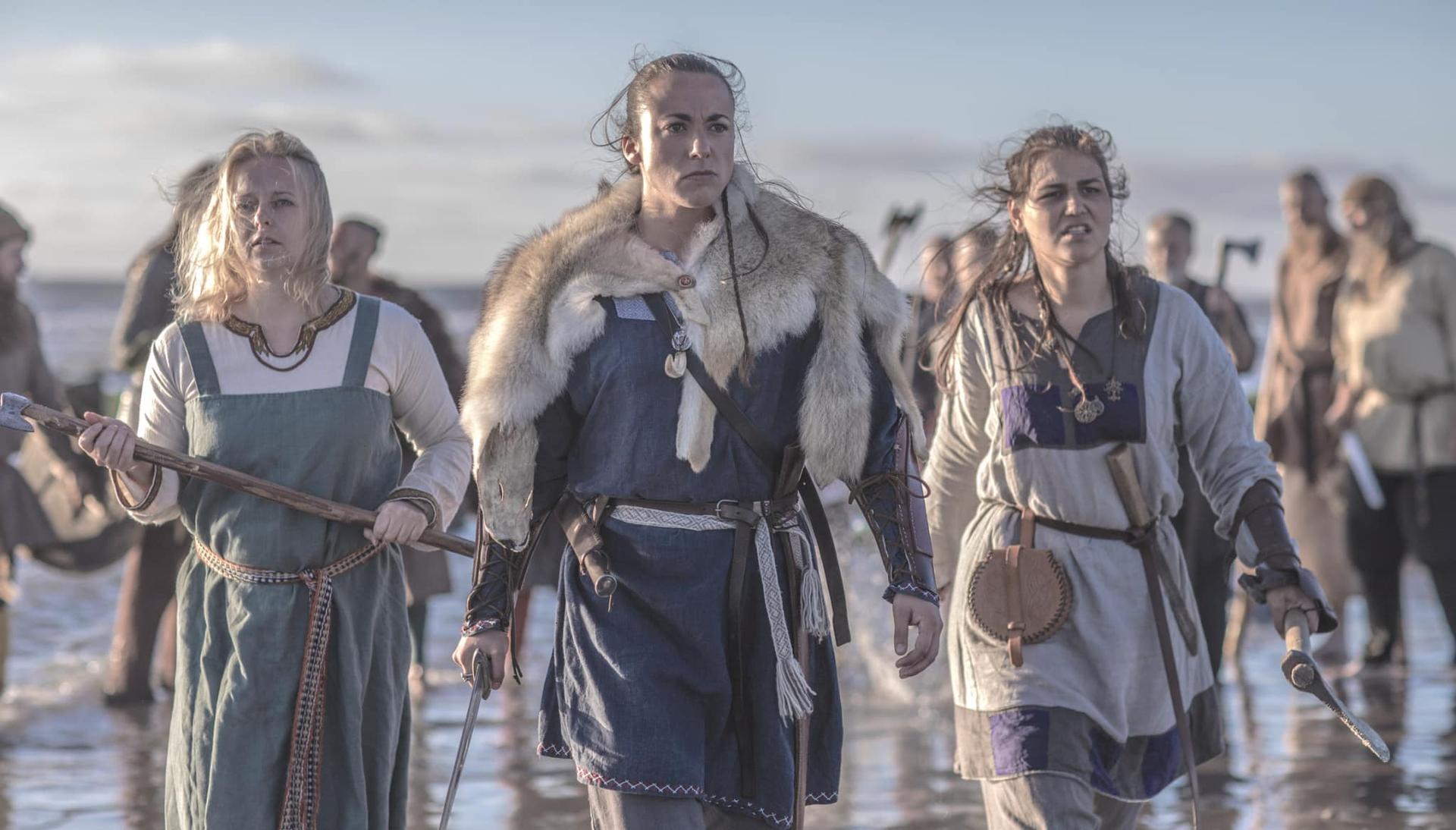
While relatively few historical records mention women's roles in Viking warfare, there's plenty of evidence that Viking women weren't only devoted mothers — some were fierce warriors as well. In the mid-8th century, roughly three hundred women are said to have fought in the Battle of Brávellir. They stepped onto the battlefield dressed as men, having spent much of their lives perfecting the art of the sword and mastering other combat skills.
The warrior maidens
Most of what we know about the female warriors of the Viking age comes from literature. The women warriors known as "valkyries" are a central part of Old Norse storytelling. According to the descriptions, valkyries were beautiful protector maidens who raced across the sky on winged horses, fighting in helmets and armed with spears.
Given how widespread these legends were, it seems likely that women in Viking society did, from time to time, take up arms and fight — especially when they felt themselves, their families, or their possessions were under threat.
Could Viking women really get divorced?
Yes. A Viking woman could initiate a divorce by declaring it before witnesses in her own home, and she could reclaim her dowry when the marriage ended — rights that were almost unthinkable for women elsewhere at the time.
Did Viking women actually fight in battles?
There's evidence that some did. Records mention around three hundred women fighting at the Battle of Brávellir, and the enduring legend of the valkyries suggests women sometimes took up arms, especially to protect their families and property.
What rights did Viking women have that others didn't?
They could own property, become financially independent of their husbands and parents, divorce, and take over the family farm or business if their husband died — a remarkable degree of freedom for the era.
Why were some Viking women buried with keys?
A set of keys in a woman's grave symbolized that she had managed the household and held genuine authority within it — a sign of her status and power.