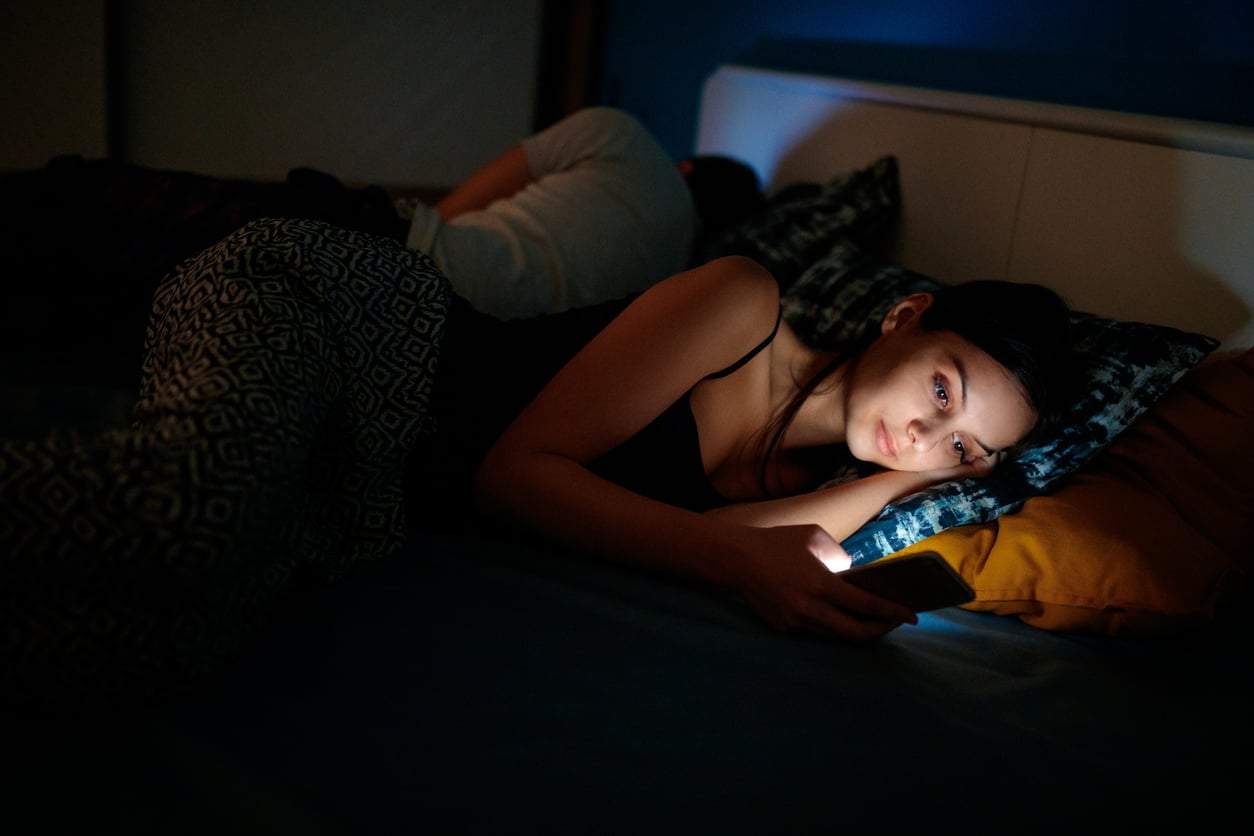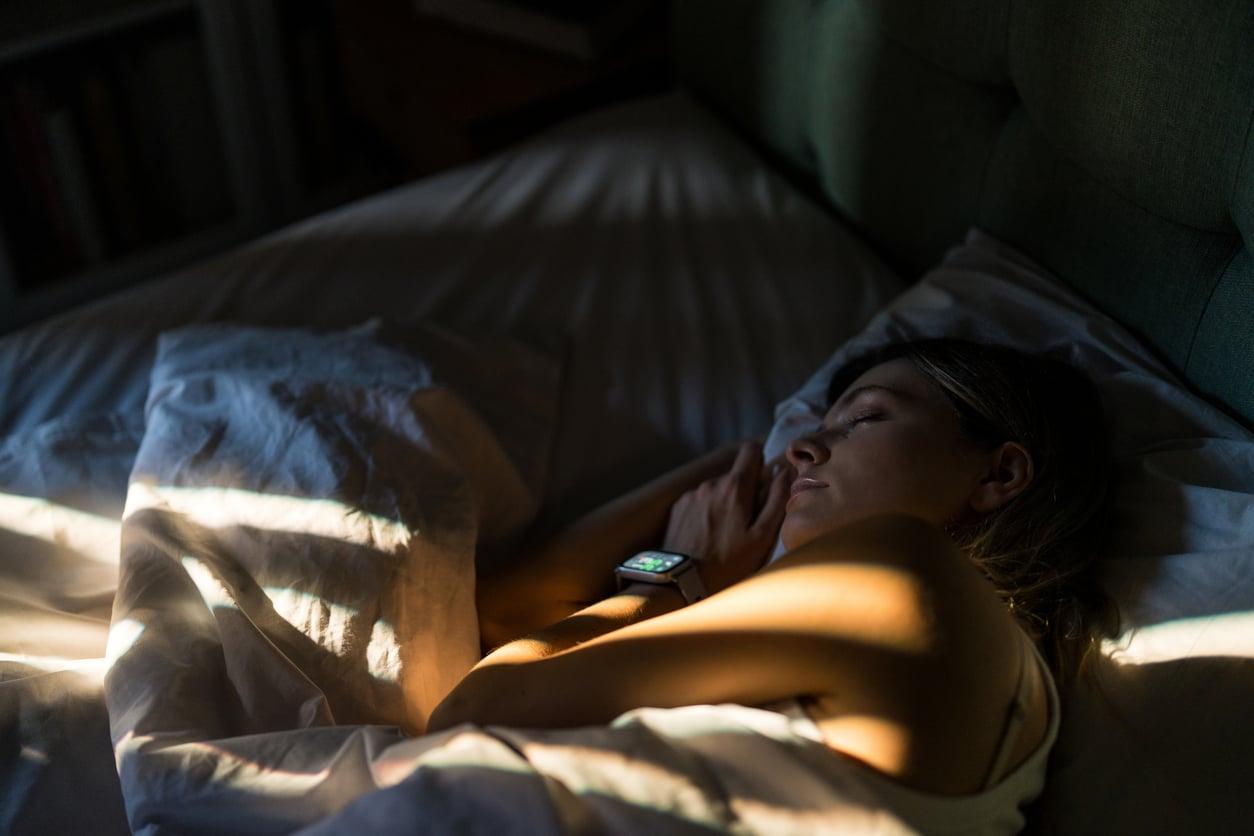
Picture a Tokyo office where the boss dozes off face-down on his desk in the middle of a meeting — and no one bats an eye. Or a Norwegian pram parked outside a café in freezing temperatures, a baby fast asleep inside while the mother shops nearby.
These aren't accidents or acts of neglect. They're centuries-old sleep habits, some of them backed by real science, that can look strange or even alarming to Western eyes — yet they've stubbornly survived for generations.
For a long time, sleep seemed like a universal, biologically fixed routine: go to bed at night, wake in the morning, get your eight uninterrupted hours. But anthropologists and sleep researchers keep finding examples that prove this pattern is far from universal.
1. Inemuri: napping in public in Japan
In Japan, the relationship with a midday snooze is completely different from ours. The word inemuri literally means "to be present while sleeping," and it perfectly captures the moment someone nods off for a few minutes on the subway, in a meeting, or right at their desk.
Far from being seen as laziness, in Japanese society it's treated as the opposite — proof of dedication. Someone this exhausted has clearly worked so hard that their body simply couldn't stay awake any longer.
Researchers, including anthropologist Brigitte Steger, who studied the phenomenon for years, concluded that inemuri is actually a finely tuned social code. It's accepted as long as the person dozes upright, half-alert, and can snap back into the conversation at any moment.
Fall asleep at work in Japan, and you're not seen as lazy — you're seen as loyal to the job.
Western workplace culture, by contrast, brands daytime sleep as weakness. Yet one of the core findings of sleep science is precisely that a short, 20-to-30-minute nap measurably improves focus and reaction time. Inemuri, then, isn't random. It's a social agreement that intuitively grasped, long ago, what science is only now beginning to fully understand.
2. Letting babies nap in the freezing cold in Scandinavia
In Norway, Sweden, and Finland, it's a completely ordinary sight: parents leaving their sleeping child in a pram out on the balcony or the street — even in sub-zero temperatures — while they stay inside the flat or sit in a café.
This habit doesn't come from carelessness. It stems from a long-held belief that fresh, cold air gives babies deeper, healthier sleep than warm, dry indoor air. Scandinavian parents take it so seriously that even daycare centers set up outdoor napping areas, where toddlers sleep bundled in thick sleeping bags in temperatures hovering around minus 10°C (14°F).
Several Finnish and Norwegian studies have looked into this and found that babies who nap outdoors really do show longer, calmer sleep cycles — provided they're dressed properly and a parent stays nearby. Cold-air napping isn't recklessness, then, but a practice refined over generations, one that Scandinavian culture still treats as almost unquestionable truth.
3. Balinese babies who don't touch the ground for months
On the island of Bali, traditional belief holds that newborns are still too close to the gods to touch the earth. So for the first three to six months of life, the baby is almost constantly held, carried, or sleeping beside someone — but never placed on the floor.
That means the infant sleeps in physical closeness even at night, often next to the mother or another family member, wrapped in warmth rather than lying alone in a separate crib. Behind the custom isn't superstition for its own sake, but a tight-knit community and family structure in which caring for a baby is never one person's job — it belongs to the whole extended family.
To Western eyes, this near-constant physical contact might look excessive. Yet anthropological observations suggest that Balinese babies cry noticeably little in their early months and sleep more calmly than Western peers who are regularly left alone in a crib. Close physical contact here isn't spoiling the child — it's the fundamental parenting philosophy of an entire culture.
4. Biphasic sleep in pre-industrial Europe
Historian Roger Ekirch spent decades researching the nighttime habits of old Europe, and he reached a striking conclusion: before industrialization — that is, before artificial lighting became widespread — a large share of people didn't sleep for eight hours straight. They slept in two separate stretches.
The essence of so-called segmented sleep was this: people went to bed shortly after dark, woke for an hour or two around midnight, and spent that time praying, talking, or even visiting neighbors — then lay back down for a second stretch of sleep until dawn. This pattern shows up in period diaries, court records, and medical notes as a completely natural daily routine.
According to Ekirch, this two-phase rhythm wasn't a sleep disorder. It was a natural pattern shaped by the absence of artificial light, aligned with the cycle of light and dark.
Modern sleep-lab experiments — in which volunteers were confined to long, dark nights without artificial light — surprisingly produced a similar, spontaneous biphasic pattern. In other words, that middle-of-the-night wakefulness so many of us experience as insomnia may actually be the return of an ancient rhythm coded into our bodies.
Is napping at work really beneficial?
Yes — sleep research shows that a short nap of about 20 to 30 minutes can measurably improve focus and reaction time, which is exactly the logic behind Japan's inemuri.
Is it safe for babies to sleep outside in the cold?
In Scandinavia it's a long-standing practice, and studies suggest outdoor-napping babies show longer, calmer sleep cycles — but only when they're dressed properly for the cold and a parent stays close by.
What is biphasic or segmented sleep?
It's a pattern where people sleep in two stretches: an early sleep after dark, a period of wakefulness around midnight, then a second sleep until dawn. Historian Roger Ekirch found it was common in pre-industrial Europe.
Could my nighttime waking actually be natural?
Possibly. Modern lab experiments recreated a spontaneous two-phase sleep pattern, suggesting that waking in the night may reflect an ancient rhythm rather than a sleep problem.