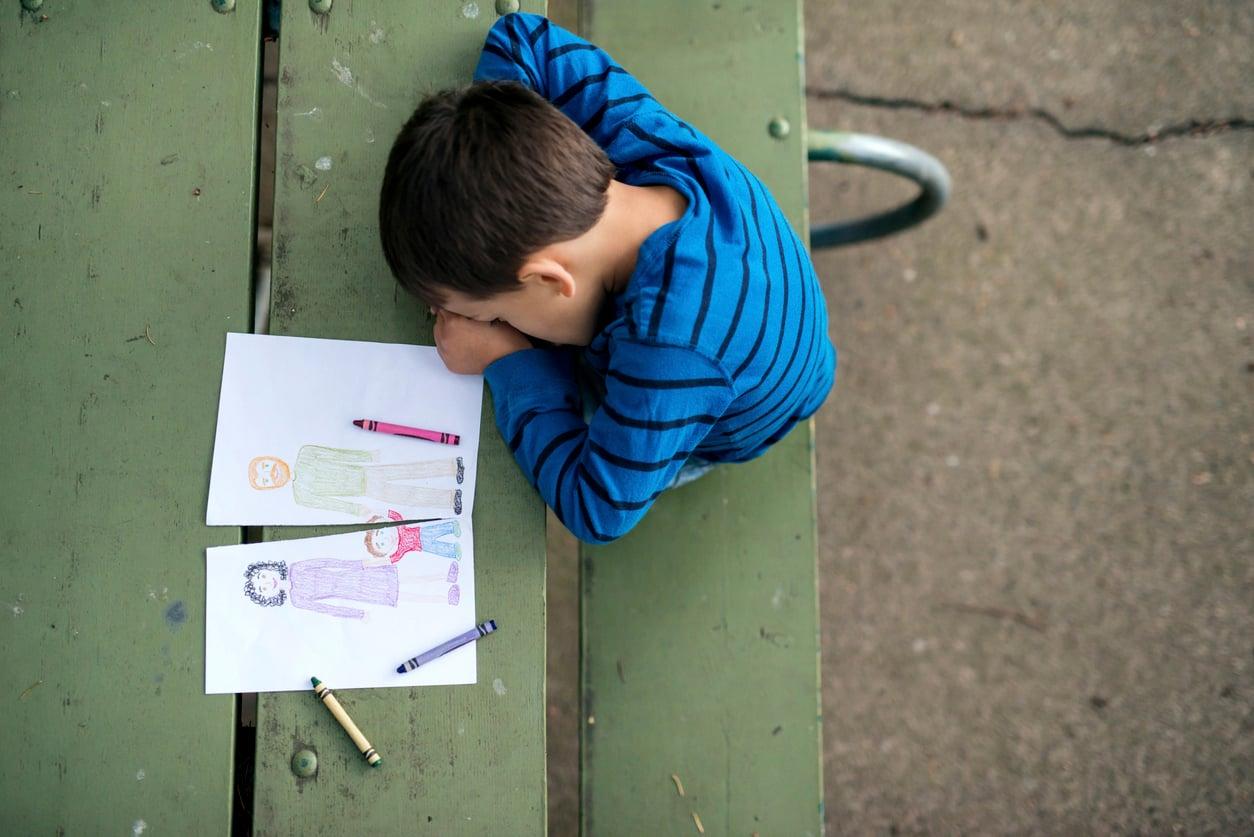
We signed the papers on a Wednesday, in the hallway of the family court, and I remember the sun was shining outside — which somehow felt insulting. I thought that would be the hardest day of my life. I was wrong.
The real hardest day came three months later, on a Tuesday evening, at the kitchen table. My son put down his fork and asked whether the three of us would ever have dinner together again.
Until that moment, I'd managed to believe we were doing it right
My ex-husband and I had a plan. We'd share custody, never argue in front of our son, and split every holiday fairly. On paper, it worked. The lawyers were satisfied. The therapist we'd seen before the split nodded along as we laid out our arrangements.
I thought that if the system was solid, my son would be fine inside it. He was eight then — old enough to understand the words, but too young to understand what an adult's pain can do with them.
That night I made spaghetti, because it was his favorite, and I tried to seem lighter than I've ever actually felt in my life. His dad wasn't there — he was working. It was my night. My son poked at his plate, then said, quietly, almost to himself: "Mom, I'm not sad because of the divorce. I'm sad because we'll never be three at one table again."
I put down my fork. I didn't know what to say. Until that moment, I'd thought my child was handling it well, because he didn't cry, didn't ask many questions, didn't protest when we told him we'd be living apart.
I thought his silence was peace. It wasn't. His silence was an eight-year-old trying to keep his parents together, because he could feel they weren't able to hold themselves together.
It wasn't the separation that hurt him. It was that there would never again be an evening when all three of us sat at one table, and no one was counting how many times someone still had to go home.
If you've ever wondered how children quietly carry what adults think they've moved past, you may recognize yourself in these stories of families living between two homes.
That evening, something inside me broke
Up until that conversation, I'd treated the whole thing like a project: how to divide the days, who takes him to swimming, who pays for music lessons. My son's words lifted all of it out of that logical frame and showed me that what he'd lost couldn't be scheduled or split across weekends.
He'd lost the picture of himself sitting at one table with his mom and dad, with no one glancing at the clock.
From then on, I watched him differently. Not to see whether he looked happy, but to notice when he went suddenly quiet, when he asked out of nowhere about something we thought we'd already settled.
One evening, weeks later, he crawled in next to me before bed and casually said he hoped that if he was good enough, maybe we'd move back in together after all. I didn't tell him it wasn't possible. I just held him and let the sentence sit there in the room, because I sensed he still needed to say it a few times before he could accept that none of this was because of anything he did.
There was anger in me too — at myself. For weeks I'd believed it was enough to keep things logistically tidy, and that the child would simply adapt, because children are adaptable. It just never occurred to me that adapting and processing are not the same thing.
He adapted: he didn't cry at the handovers, didn't shout, packed his bag neatly for both apartments. All the while, he was carrying a grief alone — one that we, the adults, assumed we were already past.
These days, we sit down to dinner differently
The old picture is gone — three chairs at one table every evening. But sometimes, around the holidays, his dad and I take him out to eat somewhere together, and in those moments I see a kind of relief on his face that he could never put into words.
I don't know if it's enough for him. I don't know when he'll feel that what he lost is no longer something he misses, just something he lives with differently.
What I do know is that since that Tuesday evening, I've stopped trying to justify our divorce to myself. Instead, I pay attention to what an eight-year-old says when he thinks he's only eating spaghetti.
Why do children often seem fine after a divorce when they're not?
As this story shows, a calm, quiet child isn't necessarily a child who has processed the change. Silence and cooperation can be a way of adapting to the new routine while a deeper grief goes unspoken.
What did the child in this story actually grieve?
Not the divorce itself, but the loss of a specific picture — all three family members sitting at one table, with no one keeping track of schedules or who had to leave. It was the everyday togetherness he missed most.
Is adapting to a new family setup the same as coping with it?
No. As the mother realized, a child can adapt — packing bags for two homes, not crying at handovers — while still carrying an unresolved grief. Adjusting to the logistics doesn't mean the emotional loss has been worked through.
How can a parent notice what a child isn't saying?
By paying attention to the quiet moments rather than just whether the child looks happy — the sudden silences, the unexpected questions, the hopes voiced at bedtime — and by letting the child say difficult things without rushing to correct them.