I thought I'd already lived through the hardest moment. I thought the divorce papers and that strange, awkward goodbye were the lowest point. I was wrong.
The real gut-punch didn't come from the courtroom or the empty side of the bed. It came from my four-year-old, in a single sentence she tossed out as casually as if she were asking for a snack.
The moment that changed everything came on a Tuesday afternoon
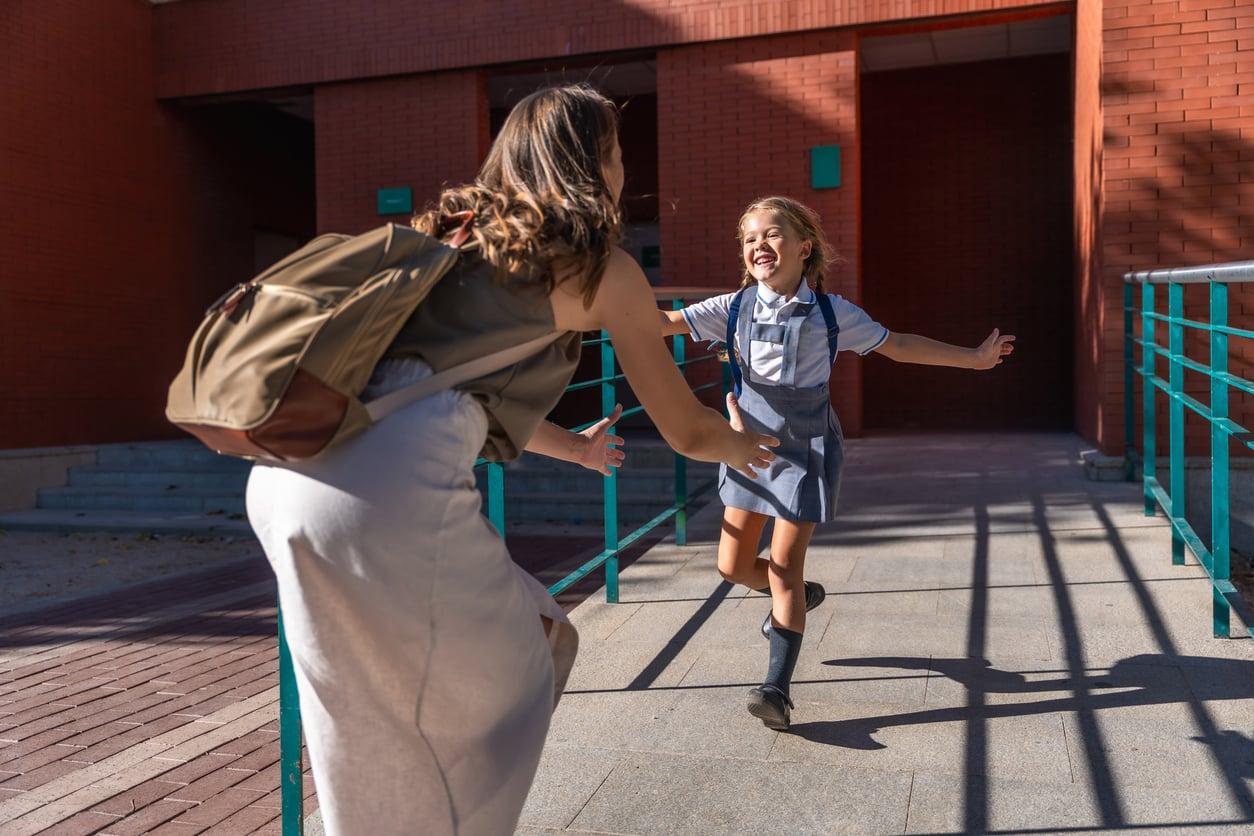
I was standing at the fence with the other parents, holding her little pink jacket — the one she always forgot — watching her run toward me. She hugged me, and then, before I could even ask about her day, she said it. Just like that, the way only children can drop the heaviest words as if they weigh nothing:
"Mommy, are you the one I go to visit now?"
I froze. Physically froze, right there by the fence, and felt my stomach drop somewhere far below me. I didn't cry — not then. I just stood there, trying to smile, while a single question spun in my head: where on earth did she get that word?
Then it hit me. She'd heard it from her dad. With all the good intentions in the world, that was simply how he'd explained our new life to her. That from now on there were two homes — and somehow mine had quietly become the "visiting" one.
The whole drive home I listened to her humming some nursery song from the back seat, while that one word kept turning over inside me. It wasn't the divorce itself that hurt in that moment. It wasn't even the lonely evenings, lying alone in the big bed listening to the neighbor's TV through the wall. What hurt was that in my own child's eyes, the home where she grew up, where she took her first wobbly steps across the living room, had suddenly become a stop between two other places.
It wasn't the divorce that broke me. It was the moment I realized that, in my child's eyes, my home had become just a stopover.
That night, after I put her to bed, I sat in the kitchen for a long time with a glass of wine I never really touched. I just rolled the stem between my fingers, trying to figure out exactly when the word home had slipped out of my hands. I remembered my ex-husband, on the day he moved out, saying, "Don't worry, both places will feel like home to her." And I nodded, because I wanted to believe it. It just never occurred to me that a child's mind arranges these things differently than ours do.
If you're going through something similar, you might recognize yourself in these honest lessons about raising kids between two homes — the small, painful details no one warns you about.
The next morning, before we left for preschool, I knelt down in front of her in the hallway, right where she puts on her shoes, and asked her where home was. She looked at me with that perfectly honest little face and said: "Where you are, and where Daddy is." Simple, for her. Not for me.
That sentence still comes back to haunt me
Sometimes, when we get back from a weekend and she flops down in her usual spot and turns on the TV as if she never left, I think maybe she isn't a visitor here after all. Other times, when she's packing her bag and asks whether she forgot her stuffed bunny because it stayed "at the other house," something clenches in my chest all over again.
I don't know when this will feel different — or if it ever will. Maybe children simply map love in a way we adults can't, because we cling so hard to words like home and family. Maybe she'll never feel it exactly the way I wish she would.
All I know is that the next time she comes running to me at the fence and throws her arms around me, I'll be listening to every word again — hoping this time she says we're going home.
Why did such a small sentence hurt more than the divorce?
Because it revealed how my daughter had quietly reclassified our home into a "visiting" place. The divorce was a decision between adults, but that sentence showed how differently a child experiences the same reality.
Where did my daughter get the idea that my home was for "visiting"?
She most likely picked it up from her father, who — with good intentions — explained our new life as two separate homes. In her mind, that framing turned one home into the main one and the other into a place she visits.
How does my child actually see the idea of home?
When I asked her directly, she said home was "where you are, and where Daddy is." For her, home isn't a single address — it's simply wherever the people she loves are.
Will this feeling ever get easier?
I honestly don't know. Children may map love differently than adults who hold tightly to words like home and family. All I can do is keep listening and stay present every time she runs to me.