My husband was loading the dishwasher. He paused for a second, then kept going, as if he hadn't heard. But he had. Neither of us knew what to do with what I'd just said.
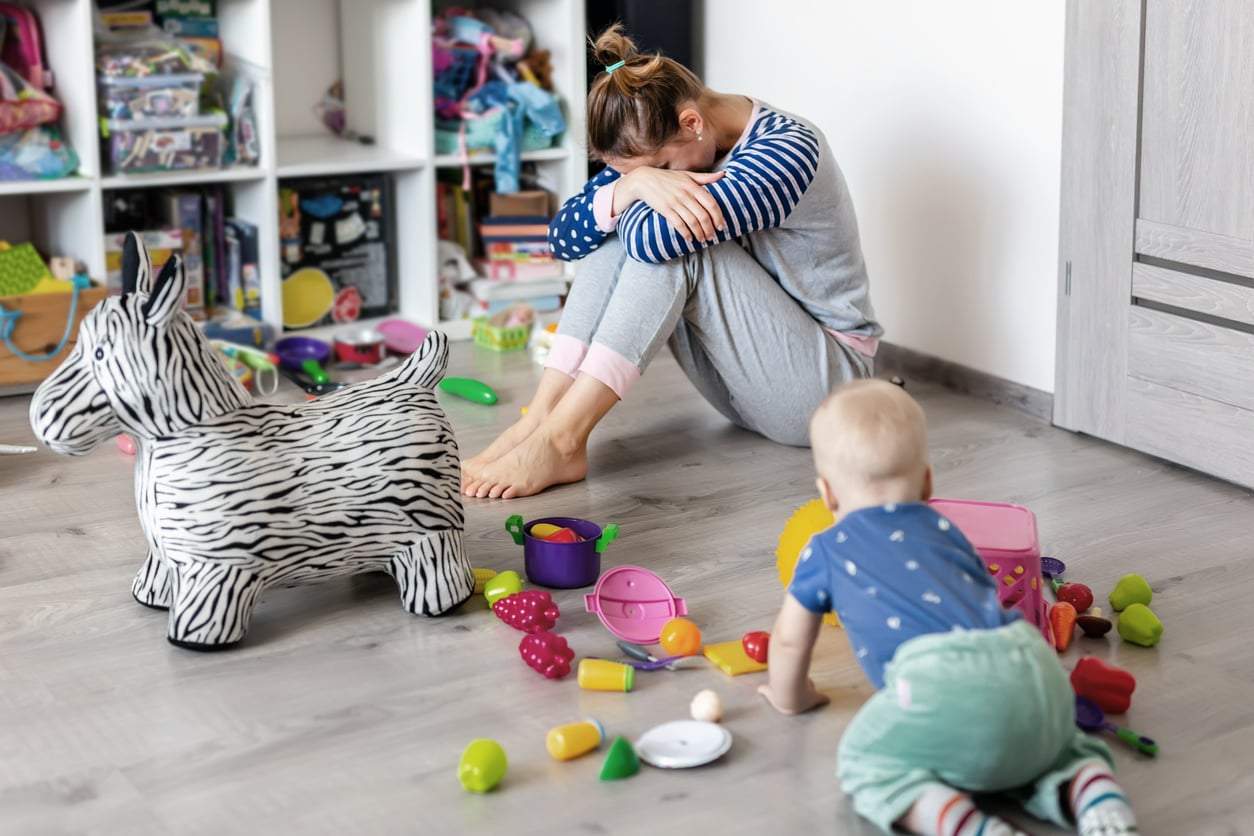
My daughter was two at the time, and she hadn't slept through the night in three days. Neither had I. The circles under my eyes were so dark that my mother-in-law told me to see a doctor, convinced I was ill. I wasn't ill. I was just exhausted — and somewhere deep in my mind, in a place I was ashamed to admit existed, a thought was hiding: I wish she weren't here. I wish I could go back to the life where I was only responsible for myself.
The maternal instinct that never came
When she was born, I thought that the moment I looked at her, something would wash over me — the feeling I'd heard about in movies and from my friends. I waited for the emotion that would set everything right. It didn't come. Instead came the pain of breastfeeding, the flood of hormones, a body that was no longer mine, and a tiny creature who constantly wanted something from me, while I didn't even know what I wanted from myself.
My friend Kate once told me she'd been through the same thing. In her case, her son was already four when she realized that for days she'd barely touched him out of love — only out of function: dressing him, feeding him, putting him to bed.
"I felt like a machine that had broken somewhere inside," she said, pressing her hand to her chest, as if that's where she was looking for the fault.
That was when I understood that I wasn't alone in this — but it still didn't make it any easier to say out loud to anyone who wasn't a mother.
I wanted to love her the way I was expected to, but love doesn't come on command, and no one had warned me about that beforehand.
If any part of this feels familiar, you may recognize yourself in these honest stories about postpartum depression — because so many mothers carry this in silence.
I lied and said I was fine
My health visitor once asked if I was okay, and I said of course, everything's fine, I'm just tired. But by then I'd been wondering for weeks what would happen if I simply left for a few days — alone, somewhere no one would call me "Mom." Not because I wanted to hurt my child, but because I felt I'd lost myself, and the missing piece was somehow stuck inside her world.
The turning point didn't happen in a single moment. It came little by little, as time passed and my daughter began growing into her own little person — someone who laughed at my jokes, and who once, when I tripped on the sidewalk, ran over and asked if it hurt. That was the first time I felt something other than duty.
But that earlier state, the emptiness that had lived in me for months, didn't vanish without a trace. I just learned to live alongside it. And sometimes it still comes back — after a bad night, when my patience runs out and I catch myself counting to ten with clenched teeth before I start shouting.
I have a friend who told me not to talk about this to anyone, because they'd judge me and assume I was a bad mother. Maybe she's right. But I wrote it down anyway, because when I said that sentence in the kitchen, a kind of relief came with it — as if I finally no longer had to carry alone the weight that silence had become.
Even today, there are days when I watch my daughter sleep and I don't feel that overwhelming, movie-scene love everyone talks about. I only feel that she's here, that she's mine, and that somehow — despite all the contradictions — I'll still be here beside her tomorrow.
Is it normal not to feel an instant bond with your baby?
For many mothers, the overwhelming love portrayed in films simply doesn't arrive at birth. As this story shows, the connection can build slowly over time rather than in a single instant.
Why is this experience so hard to talk about?
There's a strong fear of being judged or labeled a "bad mother." That fear keeps many women silent, which is exactly why hearing someone else say it out loud can feel like such a relief.
Does this feeling ever fully go away?
Not always. As the author describes, the emptiness can fade but still return after hard nights, even as moments of genuine connection begin to grow alongside it.
Am I alone if I feel this way?
No. The mother in this story discovered that friends had quietly gone through the same thing, and simply naming the experience helped her feel less isolated.