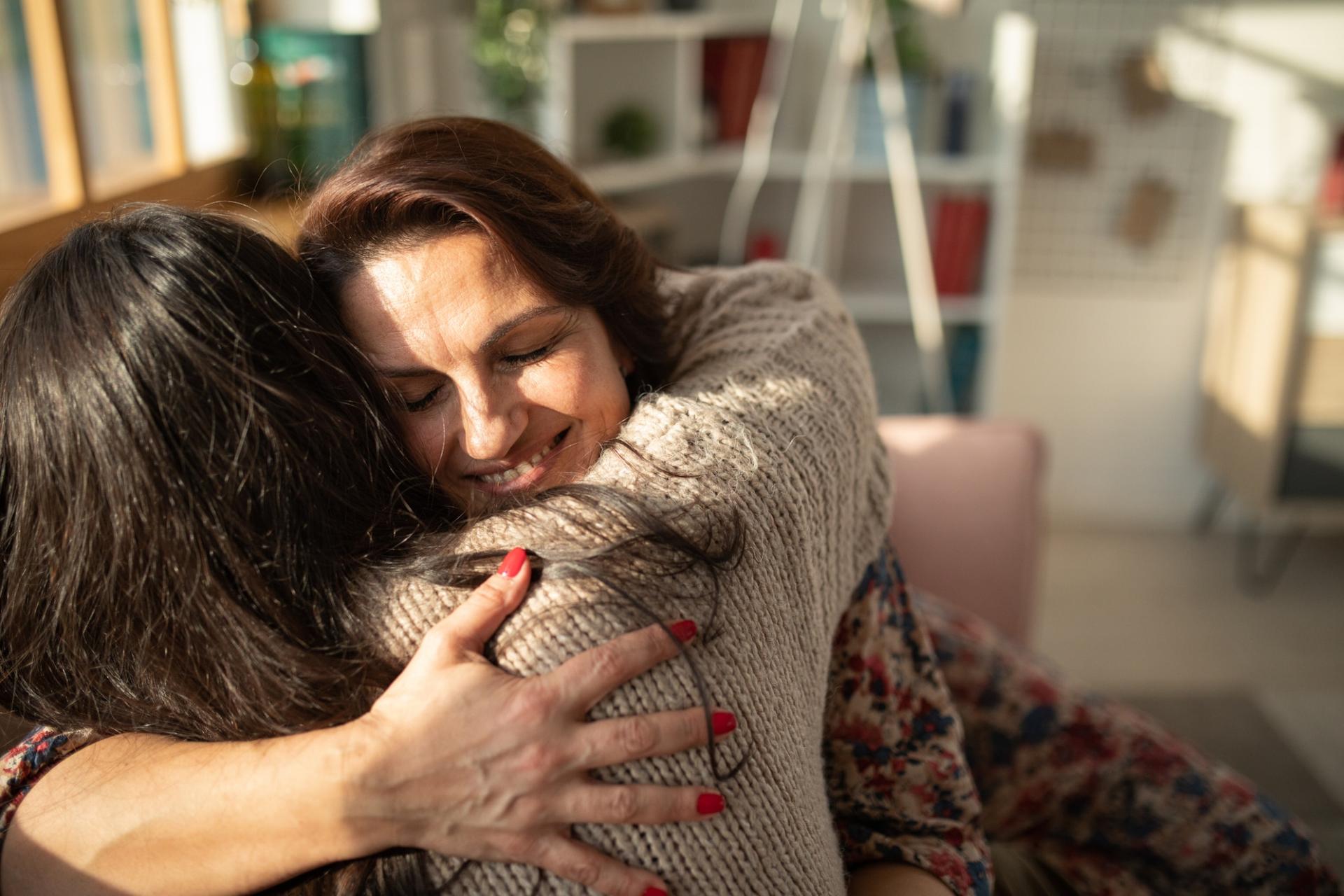
For me, hugging hasn’t always been a comfortable way to connect—in fact, I had to learn how to hug. But as I dive deeper into self-awareness, I find myself noticing more and more what different moments stir inside me. When does anger or fear switch on? These feelings act like inner warning lights, showing exactly where I still need to work on myself.
I Recently Hugged My Dad
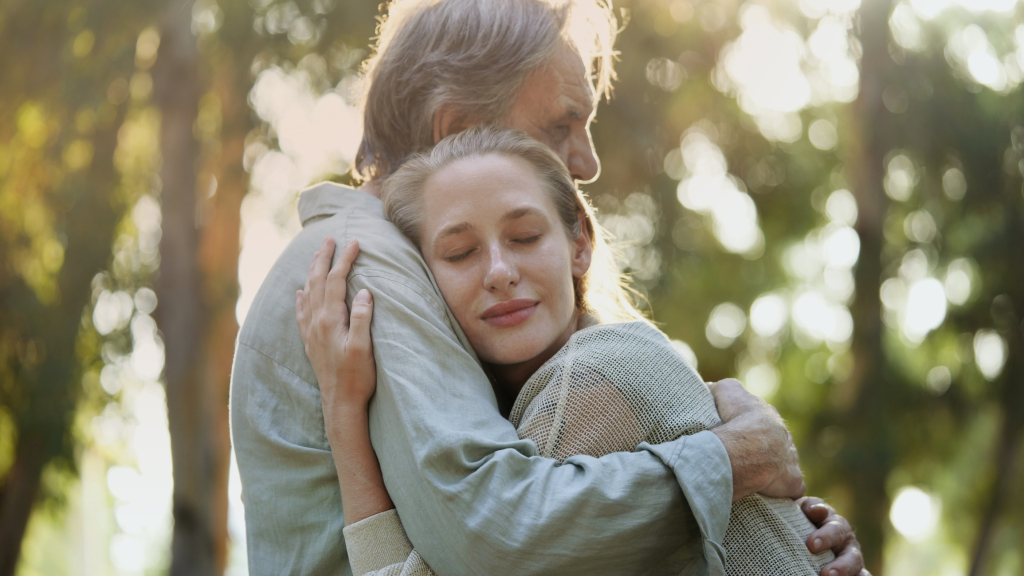
We don’t see each other often, and we live in different countries, so this hug was a brief goodbye moment. But somehow, I didn’t feel as much returned as I gave. You could say the connection stopped halfway. In the past, I would have taken this personally. I might have thought I did something wrong, that I wasn’t lovable enough, or that I was simply a bother to him.
Today, I see it very differently. Instead of pain, I had a realization: I saw the child in him who maybe was never truly hugged. The man coming from a family where showing love wasn’t natural.
It almost felt like a spiritual signal when, just days later, I experienced something eerily similar with my godmother. As if my soul already knew that this loving gesture would also stop halfway there. That’s when the question formed in me: who is an unreturned hug really about?
Learning to Hug
A hug says a lot—not just about our relationships but about us. How much we can give, how well we can receive, how much trust we carry, and what experiences we have with intimacy and showing emotions.
Some people have naturally given and received hugs since childhood, while for others, it’s an unfamiliar language. An uncertain space where they don’t know how to move, what they’re "allowed" to feel, or how to stay safe.
It’s no coincidence that hugs affect us so deeply. Science shows that when we hug someone, our bodies release hormones like oxytocin, dopamine, and endorphins. These “feel-good compounds” not only boost happiness but also strengthen our immune system, reduce stress, and protect our hearts. A deep, sincere hug can be a true medicine—not just for the receiver, but also for the giver.
When You Don’t Get It Back
An unreturned hug affects us in many ways, and how we experience it mostly depends on the story we’ve written around it. I used to feel that if someone didn’t truly hug me back, it was about me: I wasn’t enough, something was wrong with me. Now I know it’s much more about the person who doesn’t know how to give or receive this simple gesture. (Just like I couldn’t before.)
Someone who can’t return a hug doesn’t necessarily mean they don’t want to—it might be that they simply don’t know how or don’t feel safe when someone gets that close.
Maybe they’re still holding onto an old experience, a block, an unspoken hurt, or a buried trauma. And when I saw this in my dad, the situation didn’t hurt at all. In fact, I started feeling compassion for him—the dad who maybe subconsciously is just trying to survive not having had anyone to hug him.
This new perspective was freeing, and in that moment, it clicked. I no longer feel less if I don’t get back as much as I give. Instead, I explore what the feeling teaches me. Does it touch an old wound? Or maybe it points to my healing? This time, it was the latter.
Today, a Hug Means So Much More Than Just a Physical Gesture to Me
It’s a mirror. It shows where I’m open and where I’m still closed. Where I need healing and where I can truly connect with others without conditions. The pain an unreturned hug can bring also highlights my boundaries, where I feel lack, or where I have the chance to give without expecting anything in return. Because for me, the question isn’t "Am I loved enough?" anymore. It’s how much I can love myself even when love isn’t returned the way I wish.
Our family patterns and generational legacies often get woven into our bodies—our posture, movements, and how we give or receive a hug. But these aren’t set in stone. We can learn to connect differently, rewrite old habits with new moves. Sometimes, we rewrite these patterns simply by hugging even when we’re not sure we’ll get a response.