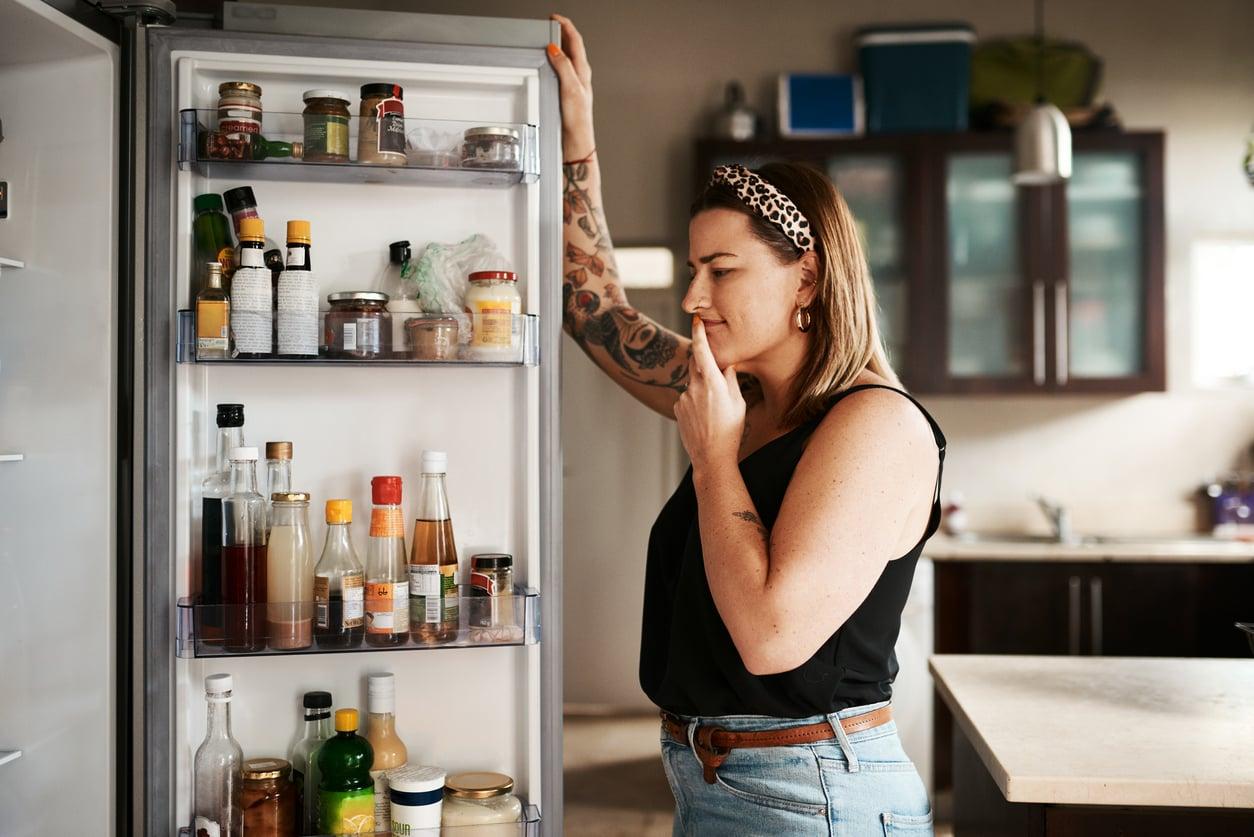
It's ten at night, the TV is on, and you're standing in front of the open fridge for the third time — even though two minutes ago you looked at the exact same milk, the same half a lemon, the same bag of ham. You're not hungry. You're not even really thirsty. You just had to check, in case something changed in there while you weren't looking.
If that scene sounds familiar, you're not alone — and there's nothing wrong with your fridge. Your brain is playing a very old, very simple trick on you, and it has nothing to do with real hunger.
It's not the food you're missing — it's the stimulation
Behind this little habit is your dopamine system, which doesn't respond to the food you eat but to the possibility of it. Opening the fridge door is a small, predictable event: a light flicks on, cold air spills out, and for a few seconds your brain has something new to process — even if that "something new" is just confirming the yogurt is still there.
That micro-event is enough for your brain to briefly read the movement as a reward, whether or not you actually eat anything.
Here's the twist: dopamine isn't really about pleasure — it's about anticipation. What you find in the fridge barely matters. It's those few seconds of not knowing exactly what's inside that do the work.
Boredom is the most common trigger
Researchers have long studied how the brain reacts to repetitive, low-stimulation situations — and fridge-staring fits that pattern perfectly. When an evening or an afternoon drags on, your attention fades, and your brain automatically starts hunting for actions that offer quick, easy, risk-free stimulation.
The fridge is ideal for that. There's no responsibility involved, no decision to make — you just have to open it.
Why the fridge, and not something else?
Because the fridge is one of the most accessible, least demanding sources of stimulation in your home. You barely have to leave the couch, it takes almost no energy, and the light, the cold air, and the soft hum all give instant sensory feedback.
Compare that to picking up a book or making a phone call — both require far more commitment. Opening the fridge door doesn't even burn a calorie. It just occupies your hands and your attention for a few seconds, which is exactly what your brain was after.
When the habit runs on autopilot
For a lot of people, this isn't even a conscious choice anymore — it's an automatism. You get up, walk into the kitchen, and your feet turn toward the fridge before you've even decided why you went in there.
What to do if the habit bothers you
- Notice the situations in which you open the fridge: is it really hunger, or is it boredom, tension, or procrastination?
- Build in a tiny, conscious pause before the movement: ask yourself how hungry you actually are on a scale of 1 to 10.
- Swap the movement for another quick source of stimulation: a glass of water, a few steps to the window, a short stretch.
- If you work or study in the kitchen, try relaxing in a different room so the fridge isn't constantly in your line of sight.
- Don't punish yourself for the habit — instead, watch with curiosity to see when it shows up most often.
Fridge-staring isn't a problem in itself. It's more of a gentle signal that your brain is craving a little stimulation or a pause, and it's reaching for the easiest option available. Once you become aware of that, you might just find yourself laughing and closing the door next time — before you even look inside.
Is opening the fridge when I'm not hungry a bad sign?
Not really. It's usually a harmless signal that your brain wants a quick pause or a little stimulation, not a sign that something is wrong. Noticing when it happens is more useful than worrying about it.
Why does the fridge feel so tempting when I'm bored?
Because it's one of the easiest, lowest-effort sources of stimulation at home. The light, the cold air, and the soft hum give instant sensory feedback without requiring any real commitment.
What does dopamine have to do with it?
Dopamine responds to anticipation rather than pleasure. Those few seconds of not knowing exactly what's inside are enough for your brain to treat opening the door as a small reward.
How can I break the habit?
Pause before you open the door and rate your hunger from 1 to 10, or swap the movement for another quick action like drinking water or stretching. Staying out of the kitchen when you're idle also helps.