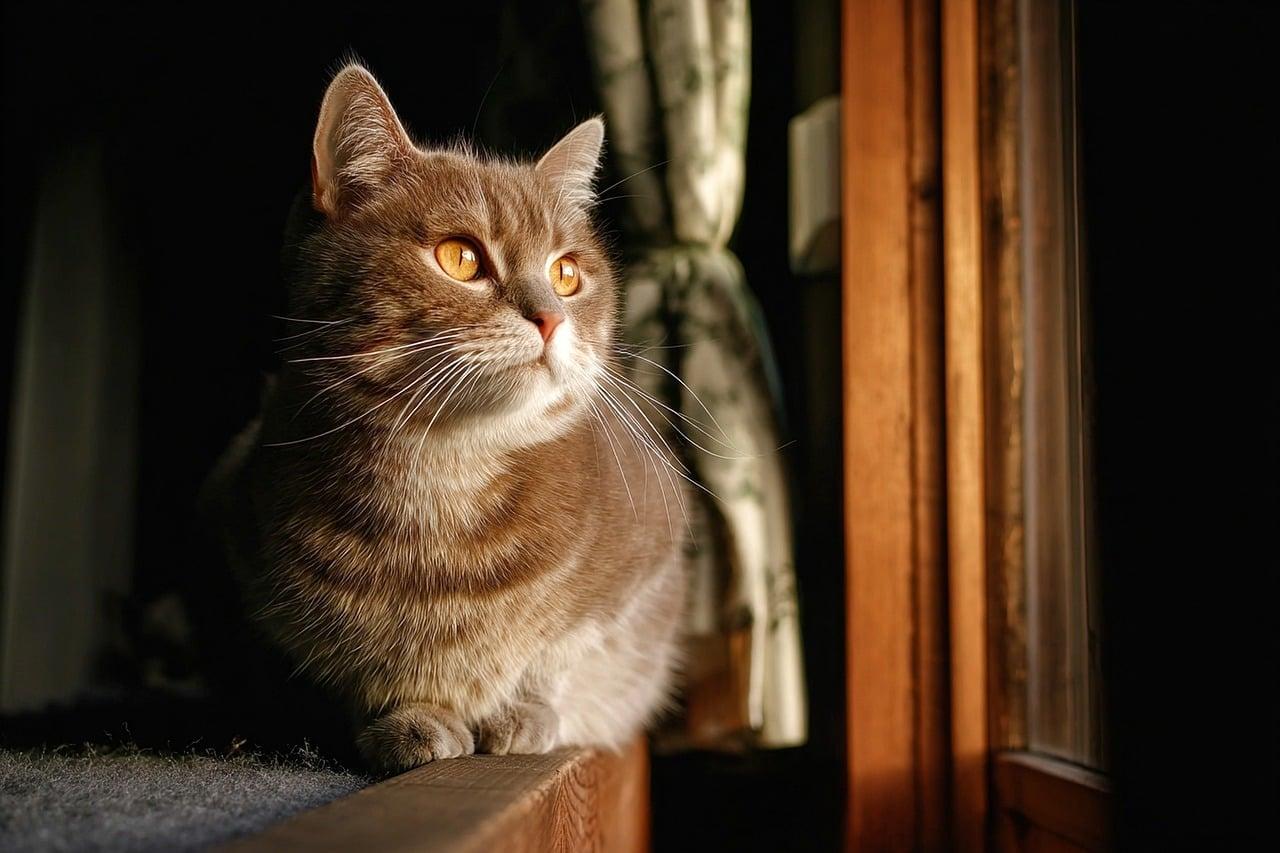
Your cat is perched on the windowsill, tail twitching, eyes wide — and then it starts: a fast, staccato chattering of the teeth, almost like it's sending Morse code to a pigeon strolling by outside.
If you've ever watched a cat stalk a bird or an insect through the glass, you know exactly the sound. Scientists call it chattering, and animal behaviorists have spent decades trying to figure out what's actually going on inside a cat's head in that moment.
When hunting instinct collides with frustration
The most widely accepted explanation is that this odd movement is born from a clash between frustration and a hardwired predatory instinct.
In your cat's brain, every condition for a hunt is suddenly met: it spots the small, moving prey, and its body instantly flips into hunting mode. But the glass, the window screen, or simply the distance makes it impossible to finish the pounce.
That abruptly interrupted sequence — muscles primed and ready, but no way to actually strike — is what produces the telltale trembling of the jaw.
The deadly bite hiding behind the chatter
Some researchers take this a step further. They believe the movement is a kind of nervous-system rehearsal of the fatal bite cats use in the wild to target the back of the neck of small mammals or birds.
This so-called killing bite — which big cats and house cats alike know instinctively — is a fast, precise strike aimed at the prey's neck vertebrae. When the real target is out of reach, the muscles still run through a stunted, rapid version of the motion. And that's what you hear as chattering.
The signs that your cat is on the hunt
Behavior researchers have noticed that chattering rarely happens alone. It usually comes bundled with other signs of frustration:
- the tip of the tail flicks involuntarily
- the ears swivel forward
- the body tenses slightly, as if ready to leap
All of these point to one thing: your cat isn't just passively watching. It's actively, physically taking part in a hunt that has already begun in its mind — one that reality simply won't let it finish. If you're curious about the subtle ways cats communicate, their body language reveals far more than most owners realize.
Not just instinct — it might be physical too
There's another, less dominant theory as well. According to this idea, the sound is a kind of involuntary breathing or muscular reaction, a side effect of intense, heightened focus paired with a sudden change in breathing.
This explanation doesn't contradict the frustration theory — it complements it. The body reacts to the tension on a physiological level too, not only through a decision made by the nervous system.
An ancient predator's instinct that still lives in your house cat
What makes this behavior so fascinating is that it shows up across species.
Chattering isn't limited to house cats — it's seen in their larger relatives too, which suggests this is a very old, deeply embedded instinct that even domestication couldn't switch off.
Cats have lived alongside humans for thousands of years. They sleep on comfortable sofas, eat from a bowl — and yet they still produce the exact same tooth-chattering at the sight of a fly that a wild ancestor would in front of a bird perched on a branch.
Many owners who watch this at home assume their cat is expressing excited joy, as if inviting the spider or the bird to play. The reality is far more raw: the body is trying to complete an unfinished hunt, and because the climax never comes, all that's left is the chatter — a kind of nervous, involuntary aftermath.
That tiny, noisy movement reveals just how close a true predator still lives beneath even the coziest sofa throw.
Why do cats chatter their teeth at birds?
Because their hunting instinct kicks in when they spot moving prey, but the glass or distance prevents the actual pounce. The interrupted sequence leaves the jaw trembling in that distinctive chattering motion.
Does chattering mean my cat is happy or excited?
Not exactly. While it may look like playful excitement, it's actually driven by frustration and an unfinished predatory sequence rather than pure joy.
Is tooth chattering in cats normal?
Yes. It's a completely natural expression of a deeply rooted predatory instinct, seen in house cats and their larger wild relatives alike.
What other signs show my cat is in hunting mode?
Look for a flicking tail tip, ears swiveled forward, and a body that tenses as if ready to leap — all classic signs your cat is mentally on the hunt.