
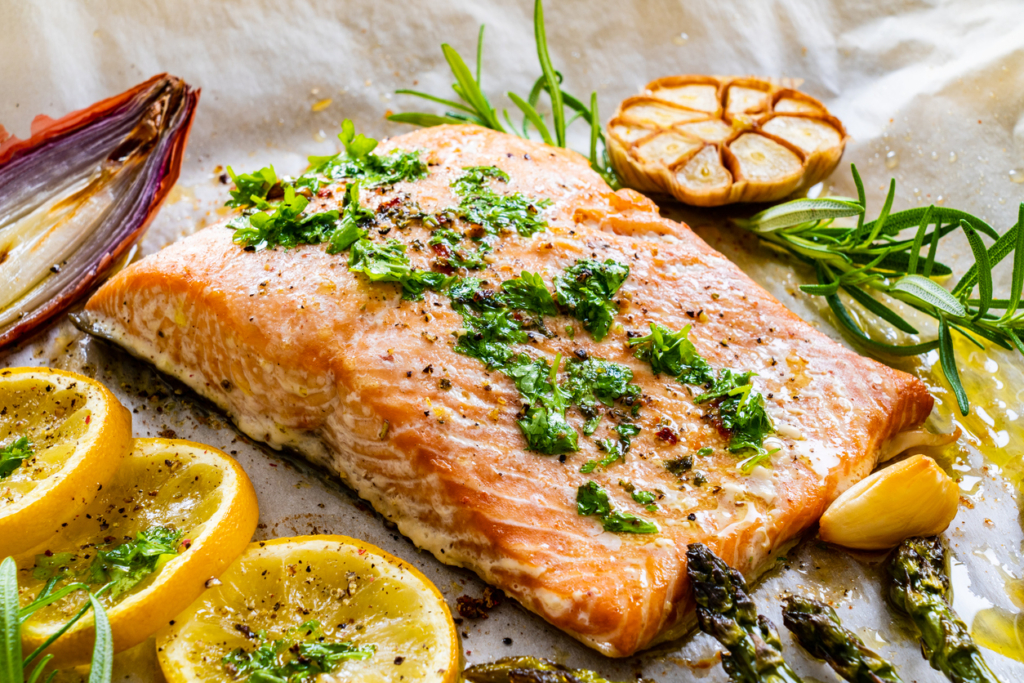
Imagine a holiday table centerpiece that’s not only delicious but also kind to your body! If you love salmon, here’s some great news: eating it regularly can help keep your blood sugar steady.
Picture this: a beautiful, fragrant roasted salmon on your plate, paired with crisp veggies… and knowing it won’t send your blood sugar soaring. Verywell Health recently highlighted how salmon supports healthy blood sugar, benefits your heart, and how to prepare it to get the most out of it—even during the holidays.
Why Doesn’t Salmon Raise Blood Sugar?
Blood sugar is mostly influenced by carbohydrates. When you eat bread, pasta, or sweets, your body turns those carbs into glucose, causing a quick spike in blood sugar.
Salmon, on the other hand, is practically carb-free. A typical 3-ounce (85 g) serving packs 17 g of protein and 6 g of healthy fats—but zero carbs. That means eating salmon alone won’t cause your blood sugar to rise.
Plus, the protein and omega-3 fats in salmon slow down digestion.
Serving salmon with veggies or whole grains leads to a much steadier blood sugar response than eating carbs alone.
Salmon’s Protein and Fat: Your Secret Allies
Protein and fat affect blood sugar differently than carbs. Protein provides essential amino acids and keeps you feeling full longer. Omega-3s, especially EPA and DHA, may reduce inflammation and support insulin sensitivity—the hormone that regulates blood sugar.
Studies show that people who eat two servings of fatty fish like salmon weekly experience fewer blood sugar swings after carb-rich meals. While not always dramatic, salmon can support balanced metabolism over time.
Salmon in a Diabetes-Friendly Diet
If you have diabetes or prediabetes, salmon is an especially smart choice:
- Low glycemic impact: Carb-free, so it won’t cause sudden blood sugar spikes.
- Heart-healthy fats: Omega-3s can lower blood fats and inflammation, which is crucial for diabetes management.
- Long-lasting fullness: The combo of protein and fat helps keep hunger in check.
- Rich in nutrients: Vitamins and minerals like B12, vitamin D, selenium, and potassium support your energy and overall health.
Two servings of salmon a week fit easily into a blood sugar-friendly diet—and make a festive table even better.

How to Cook Salmon for Maximum Benefits
- Healthy cooking methods: Grill, bake, steam, or air-fry. Avoid deep-frying.
- Go easy on sauces: Skip sugary glazes in favor of lemon juice, fresh herbs, mustard, or olive oil.
- Smart pairings: Combine with veggies, quinoa, brown rice, or lentils for steady blood sugar.
- Portion size: About 3 ounces (85 g) per serving.
If you’re pregnant, breastfeeding, or have a health condition, check with your doctor about the best types and amounts of fish for you.
Aim for Balance
Salmon won’t raise your blood sugar and delivers plenty of protein and heart-healthy fats. Adding two servings a week can support steady blood sugar and overall wellness. Enjoy this nourishing dish both at holiday feasts and everyday meals.
Remember, blood sugar control isn’t about one food alone. A balanced diet, regular movement, stress management, and good quality sleep all play a role.